Topic

Machine Learning

All digests tagged Machine Learning

Robot Demos Are Easy. Reliability Is Hard — Jason Ma, Dyna Robotics thumbnail

· 26:42

Robot Demos Are Easy. Reliability Is Hard — Jason Ma, Dyna Robotics

Dyna Robotics focuses on developing highly robust, generalist robotic policies for commercial deployment, arguing that high reliability is more critical than high performance in demos. The company utilizes a 'research and deployment flywheel' to build foundation models, achieving a 99.4% success rate in complex tasks like napkin folding over 24 hours. Key technical advancements include a 'pre-training data pyramid' (over 200,000 hours) and the use of reward models for scalable supervision, allowing the system to detect and recover from errors in long-horizon tasks.

Key takeaways

  1. The Reliability Gap in Robotics 10:10

    Achieving a high success rate (e.g., 99.4%) over extended periods (24 hours) is necessary for commercial viability, as standard models often stall at 80–90% success rates, making repeated tasks highly improbable.

  2. The Research and Deployment Flywheel 2:00

    Dyna Robotics combines frontier research with active commercial deployments to gather high-quality data, which informs and sharpens the focus of their model development, ensuring the product solves real-world problems.

  3. Scalable Error Recovery via Reward Models 18:59

    Instead of relying on manual oversight, the team developed reward models that score the robot's progress during complex tasks. Dips in this score signal a mistake, enabling targeted data collection and a human-in-the-loop active learning cycle for robust error recovery.

  4. Generalization Across Sites

    The model architecture is designed to generalize, allowing deployment at new customer sites (e.g., a laundromat, Red Bull events) without requiring site-specific fine-tuning or additional data.

Watch on YouTube Full article

Robotics Has Been Stuck for 70 Years — Deepak Pathak, Skild AI thumbnail

· 28:18

Robotics Has Been Stuck for 70 Years — Deepak Pathak, Skild AI

Deepak Pathak argues that robotics progress has stalled for approximately 70 years because the field has been treated as a hardware problem rather than a general intelligence problem. He introduces the concept of 'omni-bodied intelligence'—a single brain model applicable to any robot and any task, regardless of hardware. This approach leverages a 'data flywheel' that combines highly scalable data (simulation, human video) with high-quality, low-volume data (teleoperation) and, critically, real-world deployment data. Demonstrations include complex tasks like AirPods insertion, omelet cooking on $4,000 arms, and robust GPU assembly for NVIDIA's factory, showcasing the system's ability to handle real-world disturbances and zero-shot transfers.

Key takeaways

  1. Robotics Stagnation and the General Brain 5:57

    Robotics has historically been limited by approaching it as a hardware problem. The field is constrained by the lack of a general brain, leading to the 'Moravec's paradox' (what is easy for humans is hard for machines, and vice versa).

  2. The Data Bottleneck 9:02

    Collecting robot data via teleoperation is extremely slow and expensive. To reach the data scale of models like GPT-3, the entire US population would take over a century, highlighting the need for scalable data sources.

  3. Omni-bodied Intelligence and the Data Flywheel 12:02

    The proposed solution is an 'omni-bodied brain': one model for any robot and any task. This system utilizes a data flywheel, pre-training on scalable data (simulation, human video), post-training on teleoperation, and continuous improvement via deployment data.

  4. Real-World Deployment and Robustness

    The system demonstrates extreme robustness, performing tasks like GPU assembly in a randomized, noisy factory environment, and adapting to disturbances (e.g., recovering movement after disabling legs) without explicit mapping or planning.

Watch on YouTube Full article

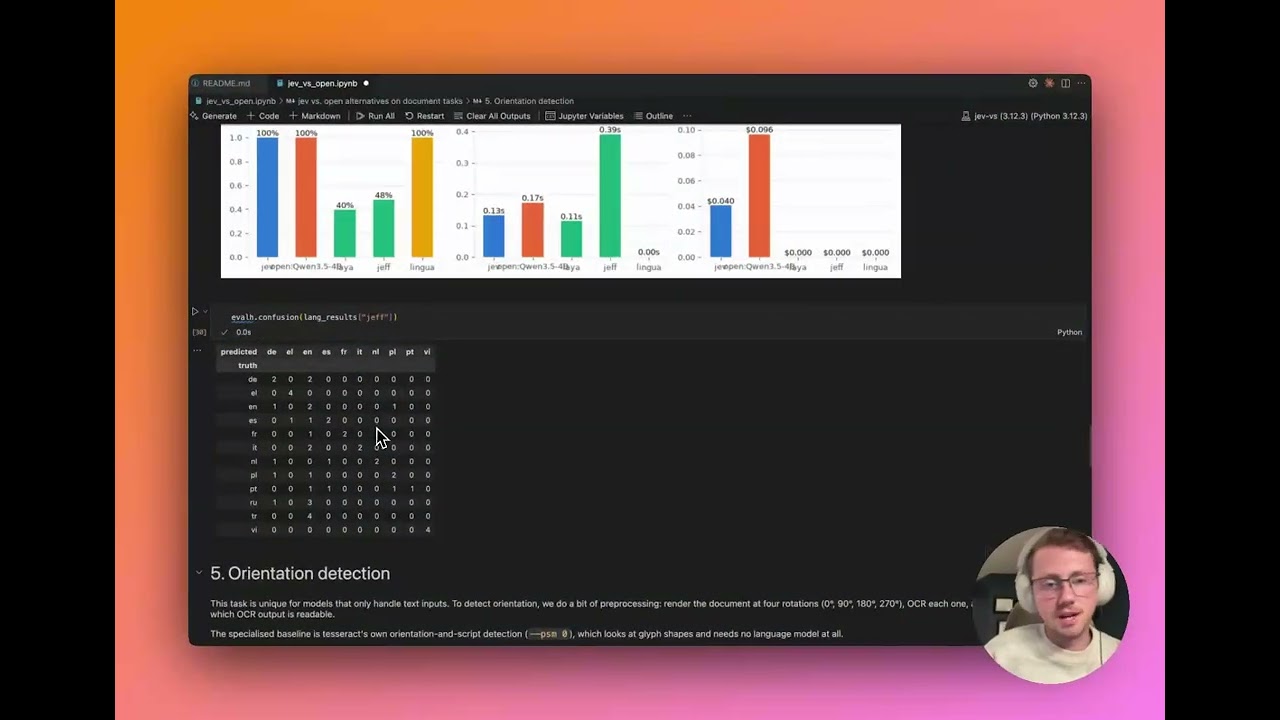
Processing Documents: Jev vs OSS Models thumbnail

· 16:48

Processing Documents: Jev vs OSS Models

This video compares several model architectures (Jev, Quen, Leia, Jeff) for automating decision-making and classification tasks within document processing pipelines. The core finding is that the open decoder model, Quen, performs remarkably close to the generalized classifier, Jev, across various tasks (language detection, document classification, document routing). The approach demonstrates that robust classification can be achieved without requiring pre-training on specific labels, making it highly valuable for building flexible, automated document pipelines.

Key takeaways

  1. Quen's Performance in Classification

    The Quen decoder model, which is a standard Language Model (LM) and not specifically trained for classification, showed accuracy very close to Jev in tasks like language detection and document routing, suggesting its utility for general document understanding.

  2. Model Architecture Comparison 7:16

    Jev is a generalized classifier trained with reinforcement learning, optimized for confidence scoring. Quen is a decoder LM. Leia and Jeff are encoder models (Leia predicts a mask token; Jeff is good for entity/relation extraction). While encoders are smaller and easier to fine-tune, they were less accurate than the decoders in this demonstration.

  3. Document Processing Tasks Covered

    The models were tested on five key document pipeline tasks: Language Detection (using Lingua as baseline), Orientation Detection (using Tesseract as baseline), Document Classification, Document Splitting, and Document Routing/Triage.

Watch on YouTube Full article

🔬Bio-security is an AI Arms Race - Eric Nguyen (CEO, Radical Numerics) thumbnail

· 1:31:59

🔬Bio-security is an AI Arms Race - Eric Nguyen (CEO, Radical Numerics)

The video details the rapid evolution of Generative Genomics, focusing on how large language models (LLMs) trained on DNA sequences (Genome Language Models or GLMs) have advanced from merely reading DNA to actively designing functional biological sequences. Key models discussed include Hyena DNA, EVO, and the latest iteration, Omni. The core technical leap is Omni's ability to outperform specialized models across diverse tasks, such as predicting disease-causing mutations and understanding non-coding regulatory regions. This capability creates a dual mandate: advancing biological design while simultaneously developing advanced biosecurity tools to detect and counter engineered pathogens, framing the field as an AI arms race.

Key takeaways

  1. The Leap from Reading to Writing DNA

    Early models like Hyena DNA focused on reading DNA and predicting function using convolutions for long context (up to a million). Generative models like EVO marked the shift to generating sequences, culminating in the ability to generate functional genomes from scratch, a feat previously impossible for humans.

  2. Omni's Advancement via Alignment 18:30

    Omni represents a significant step beyond EVO by incorporating extensive mid-training and post-training (alignment). This process makes the pre-trained base model useful for specific scientific tasks, such as identifying causal variants, allowing it to outperform specialized models across a wide range of genomic tasks.

  3. The Biosecurity Arms Race 20:10

    The capability to design novel biological sequences necessitates a corresponding defensive capability. The defense must move beyond simple sequence matching and become function-aware, capable of detecting pathogens that look structurally different but maintain the same biological function.

  4. Mechanistic AI for Biology 29:10

    Mechanistic approaches involve probing the model's internal representations (embeddings and activations) to distill underlying biological patterns, such as GC content or transcription factor motifs. This allows researchers to understand the 'rules' the model has learned from the raw data.

Watch on YouTube Full article

🔬 Google's AI Scientist Started as an Attempt to Automate Kaggle — John Platt, Google Fellow thumbnail

· 2:01:26

🔬 Google's AI Scientist Started as an Attempt to Automate Kaggle — John Platt, Google Fellow

John Platt discusses Google's Empirical Research Assistance (ERA), an AI system designed to accelerate scientific discovery by mapping complex scientific problems into 'scorable tasks.' ERA combines Large Language Models (LLMs) with advanced search techniques like Monte Carlo Tree Search and Upper Confidence Bound (UCB) to iteratively propose and refine code that maximizes a defined score. The discussion highlights the critical distinction between descriptive models (what science aims for, allowing extrapolation based on physical laws) and purely predictive statistical models. The system's power lies in its ability to automate the initial coding and hypothesis generation, allowing human experts to focus on the high-level scientific creativity and defining the correct scoring function.

Key takeaways

  1. ERA: Automating Scientific Hypothesis Generation 20:20

    ERA maps scientific problems into 'scorable tasks,' allowing the system to iteratively propose and mutate code to maximize a defined score. This process moves beyond traditional machine learning by leveraging LLMs' vast prior knowledge and combining it with algorithmic search (Monte Carlo research) to solve problems like estimating CO2 concentrations or predicting wildfire boundaries.

  2. The Importance of Scientific Rigor and Domain Expertise 28:20

    Platt emphasizes that while AI is a powerful tool, human input remains crucial for defining the correct scoring function and maintaining scientific rigor. He warns against 'reward hacking' and the risks associated with overfitting, noting that the ability to distinguish between predictive and descriptive models is a core human task.

  3. AI's Role in Climate and Earth Science 1:03:20

    AI is being applied to complex, non-stationary problems like climate modeling and contrail warming. For instance, ERA helped solve a counterfactual problem—estimating the effect of contrails on outgoing longwave radiation—by finding a simple model that previously went unnoticed.

  4. The Future of Scientific Computing 1:50:00

    The field is undergoing a 'phase change,' moving from specialized, single-problem models to general AI toolchains. The optimal approach for young scientists is to combine deep domain expertise (scientific taste) with the ability to utilize and experiment with multiple advanced tools.

Watch on YouTube Full article

A Worm With 302 Neurons Inspired Their Architecture — Ramin Hasani, Liquid AI thumbnail

· 1:09:52

A Worm With 302 Neurons Inspired Their Architecture — Ramin Hasani, Liquid AI

Liquid AI presents a comprehensive view of the next generation of AI architectures, moving beyond pure Transformer models. Their approach is inspired by biological systems, specifically the continuous-time dynamics of worms, leading to the development of Liquid Neural Networks (LNNs). The company emphasizes a 'meta AI' system that systematically searches for hybrid, hardware-aware architectures (e.g., combining convolutions, attention, and LNN elements) to achieve high quality while minimizing memory and latency. A major focus is enabling reliable, high-intelligence deployment at the edge (on-device, in cars, and on laptops), addressing critical needs for privacy, cost efficiency, and air-gapped capabilities.

Key takeaways

  1. Biological Inspiration and Continuous Dynamics 1:55

    Liquid AI's foundational research is inspired by the worm's nervous system, which uses simple first-order differential equations. This leads to Liquid Neural Networks (LNNs), which are continuous-time, differentiable systems, allowing for backpropagation and learning while maintaining biological fidelity. (01:15-02:00)

  2. Architectural Search for Efficiency 4:20

    Instead of committing to a single architecture, Liquid uses a meta AI system to search for optimal hybrid architectures. This search optimizes four criteria: no sacrifice on quality, minimizing memory consumption, minimizing latency, and maximizing computation speed, making the models hardware-aware. (04:20-05:30)

  3. Edge and On-Device Intelligence 8:20

    The company is focused on bringing high-quality intelligence outside of data centers (e.g., cars, laptops, mobile devices). This is driven by cost considerations and the need for enhanced privacy, enabling local, air-gapped capabilities. (08:20-09:30)

  4. The Future of AI: Multimodality and Adaptability 12:40

    Future research focuses on massively multimodal systems (audio, vision, text, DNA) and achieving 'adaptive intelligence'—systems that can combine forward and backward passes simultaneously, moving beyond static training paradigms. (12:40-13:30)

Watch on YouTube Full article

Can you forecast next week's weather? thumbnail

· 31:21

Can you forecast next week's weather?

This technical discussion explores the evolution of weather forecasting, detailing the shift from resource-intensive physics-based models to more efficient AI/ML approaches. The conversation highlights how modern ML tools, particularly those provided by Hugging Face, are standardizing the workflow for running, evaluating, and fine-tuning these complex scientific models. Key focus areas include using the `EarthMover` marketplace for scientific data, leveraging object storage (`buckets`) for data management, and utilizing Hugging Face Jobs for scalable, accessible computation.

Key takeaways

  1. Paradigm Shift in Forecasting Models

    Historically, forecasting relied on physics-based models, which are accurate but computationally demanding and resource-intensive. AI-based models offer a significant advantage by requiring substantially less time and energy for computation, allowing for faster experimentation and iteration.

  2. ML/LLM Parallelism in Weather Prediction

    Weather forecasting models share conceptual similarities with Large Language Models (LLMs). Both utilize an autoregressive paradigm: taking an initial state (like a token or a snapshot of the atmosphere) as input, and predicting the next state (e.g., what happens in the next six hours) sequentially.

  3. Standardizing Data and Compute Infrastructure

    The complexity of scientific data is managed through the `EarthMover` marketplace, which allows users to fetch specific variables (e.g., temperature, wind) on demand, rather than downloading all global data at once. Hugging Face provides infrastructure solutions, including Jobs and object storage (`buckets`), to make running these models accessible even without dedicated GPU clusters.

  4. Ensemble Modeling and Evaluation

    To improve forecast reliability, ensemble models are used, predicting a range of possible outcomes rather than a single deterministic forecast. Evaluation is challenging because ground truth data is often unavailable; thus, reanalysis (e.g., ERA5) or analysis data is used as a proxy for ground truth, and specialized metrics are needed to assess performance on skewed variables like precipitation.

Watch on YouTube Full article

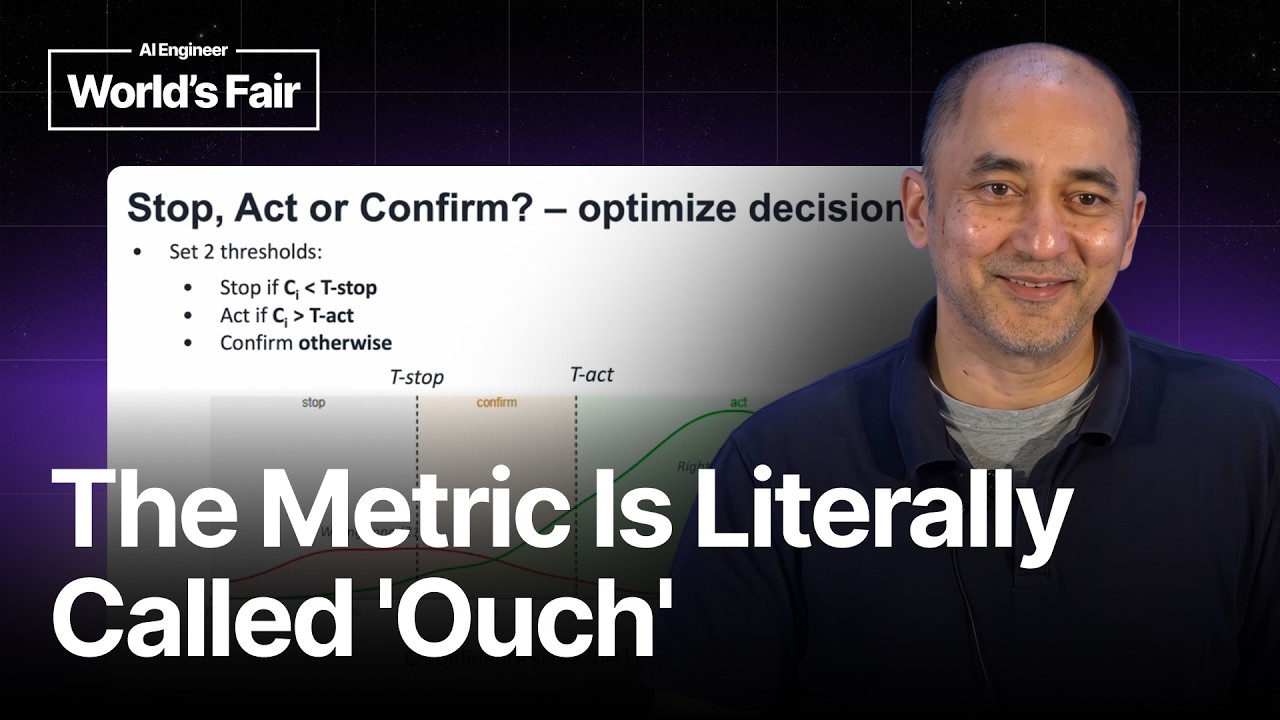
Act, Confirm, or Stop? Smarter behavior for AI assistants, wearables & robots — Amit Desai, Roku thumbnail

· 20:25

Act, Confirm, or Stop? Smarter behavior for AI assistants, wearables & robots — Amit Desai, Roku

The presentation argues that improving voice AI user experience requires focusing on a second, often neglected dimension: system behavior under uncertainty. While increasing accuracy (Knob One) is critical, the system's ability to intelligently decide what to do when it is unsure (Knob Two) can yield greater user satisfaction. This is quantified using the Outcome User Cost Heuristic (OUCH), which minimizes the total user effort by assigning differential costs to various bad outcomes (e.g., playing the wrong song vs. simply stating 'I did not understand').

Key takeaways

  1. The Two Knobs of Voice AI Improvement 0:03

    User satisfaction can be improved by increasing technical accuracy (Knob One) or by optimizing the system's decision-making process when confidence is low (Knob Two). The latter is often overlooked.

  2. The Outcome User Cost Heuristic (OUCH) 0:10

    Instead of treating all errors equally, OUCH minimizes the total user cost by quantifying the relative pain of different bad outcomes (e.g., the effort required to stop a wrong song vs. the time taken to hear 'Sorry, I did not understand').

  3. Adding Conversational Behavior 0:13

    Introducing a third behavior—confirming the guess out loud (e.g., 'Did you mean ABC?')—splits the confidence range into three regions (Stop, Confirm, Act) and further lowers the overall user cost.

Watch on YouTube Full article

Event Recap: Build Smarter Voice Agents - New York Edition thumbnail

· 29:13

Event Recap: Build Smarter Voice Agents - New York Edition

This recap details the complexities of building and deploying production-grade voice AI agents across two distinct sectors: professional networking (Boardy) and regulated healthcare (Flagler Health). Key challenges discussed include maintaining conversational flow, establishing user trust, managing multi-party video meeting interactions, and ensuring subsecond latency for natural conversation. The discussion highlights the difference between highly structured, goal-oriented flows (healthcare) and highly conversational, relationship-driven interactions (networking).

Key takeaways

  1. Design Flow Differences 10:20

    Healthcare voice agents require highly structured, step-by-step flows with strict guardrails (e.g., collecting insurance info) to prevent medical advice or deviation. Conversely, networking agents are designed to handle highly conversational, open-ended interactions to facilitate connections.

  2. The Importance of Trust and Disclosure 21:20

    Building user trust is critical. Speakers emphasized that being upfront and immediately disclosing that the user is speaking to an AI (e.g., 'I'm Sarah and AI') is essential to prevent user frustration and loss of trust.

  3. Technical Challenge: Multi-Party Meetings 24:10

    Handling voice agents in multi-person video meetings (like Google Meet) is technically difficult. The primary challenge is determining when the agent should speak (turn-taking) to avoid false positives (randomly jumping in) or false negatives (failing to reply).

  4. Achieving Low Latency 25:00

    To feel like a natural conversation, the system must achieve subsecond latency. This requires advanced architecture, such as preemptively generating the entire voice pipeline while the user is speaking.

Watch on YouTube Full article

OpenAI talks GPT-6 Astra and Millenium Prize, researchers create WeWorm exploit & IBM’s US Open app thumbnail

· 33:07

OpenAI talks GPT-6 Astra and Millenium Prize, researchers create WeWorm exploit & IBM’s US Open app

This episode reviews rapid advancements in AI, covering OpenAI's GPT-6 Astra model, its application in solving the Millennium Prize problem (Navier-Stokes), and the use of AI for complex tasks like 3D rendering and code generation. The discussion also details IBM's use of AI for personalized sports analytics at the US Open, including biomechanical limb tracking and real-time match forecasting. Finally, the segment warns about the increasing accessibility of advanced cyber threats, exemplified by the WeWorm exploit, which uses AI to discover zero-click vulnerabilities in messaging apps.

Key takeaways

  1. GPT-6 Astra and AI's Role in Solving Math Problems

    OpenAI introduced GPT-6 Astra, a model capable of state-of-the-art performance across computer use, software engineering, and cybersecurity. Astra reportedly solved the Navier-Stokes equation, a Millennium Prize problem, using 10,000 AI agents and requiring massive computational resources (estimated at $15 million worth of compute for a $1 million prize).

  2. IBM's AI for US Open Analytics 0:14

    IBM enhanced the US Open experience by implementing AI features, including pre-match likelihood forecasting (using classical ML models like boosted trees and logistic regression), real-time match probability tracking, and 'Serve Quality' metrics derived from tracking 21 points across a player's body at 50 frames per second.

  3. WeWorm: AI-Assisted Exploits 0:22

    A security firm used AI to discover a zero-click exploit (WeWorm) in WeChat's VoIP stack. This worm can autonomously spread and infect contacts simply by receiving a call, highlighting the growing threat of AI-assisted offensive security.

Watch on YouTube Full article

Training Taste — Thais Castello Branco, Taste Labs thumbnail

· 15:06

Training Taste — Thais Castello Branco, Taste Labs

Taste Labs addresses the problem of 'AI slop'—the homogenization and lack of context in AI-generated content—by proposing a shift in focus from model training to the application layer (inference time). The core methodology involves quantifying subjective domains like design by training 'probes' (small classifiers) on massive datasets (over 2 million websites). This approach allows for the measurement and prediction of slop, which is superior to traditional LLM-as-a-judge methods. Solutions include the 'Brand API' for structuring brand guidelines into machine-readable components and the 'Creativity API' for intentionally generating out-of-distribution content while respecting domain rules.

Key takeaways

  1. Defining Slop and Greatness 4:13

    Slop is defined by three characteristics: repetition, lack of fit (contextual incoherence), and low intent. While defining 'greatness' is subjective, defining slop is easier, as it represents a general sense of soullessness and convergence.

  2. Measuring Slop Quantitatively 5:46

    Taste Labs analyzed over 2 million websites from the past decade to understand design trends. They developed 'probes'—small classifiers—that extract objective features (e.g., contrast, alignment, palette) to predict slop, achieving higher accuracy than LLM-as-a-judge methods.

  3. Focusing on Inference Time 5:46

    The most critical intervention point is the application layer (inference time), where user context and intent are exchanged. Improving quality here is considered equally, if not more, important than improving the base model itself.

Watch on YouTube Full article

Can AI help us better predict the weather? thumbnail

· 44:25

Can AI help us better predict the weather?

Google DeepMind's research demonstrates how AI is fundamentally transforming global weather forecasting by moving beyond traditional Numerical Weather Prediction (NWP). The latest model, WeatherNext 3, is notable for taking raw satellite imagery and predicting raw station observations in a single, end-to-end architecture. The discussion highlights the shift from deterministic single-point forecasts to probabilistic forecasting, which provides a range of possible scenarios crucial for managing extreme events and informing critical infrastructure decisions like energy load forecasting and disaster preparedness.

Key takeaways

  1. AI's Advantage in Forecasting 23:33

    AI models learn statistical patterns from historical weather data, allowing them to capture large-scale structures (e.g., across an entire hurricane) that traditional, localized NWP models might miss. This ability to process global structure improves accuracy, especially for complex events.

  2. WeatherNext 3 Architecture 43:20

    WeatherNext 3 represents a significant architectural leap by taking raw satellite imagery and predicting raw station observations simultaneously, consolidating multiple traditional stages into a single, highly accurate model.

  3. Probabilistic Forecasting 35:55

    Modern AI models generate multiple possible future scenarios (spaghetti plots) rather than a single deterministic guess. This probabilistic approach is vital for decision-making during extreme or rare events, allowing forecasters to quantify uncertainty.

  4. Hurricane Melissa Case Study 0:38

    The model's ability to predict the rapid intensification and specific trajectory of Hurricane Melissa, providing critical lead time (3+ days) for evacuation and preparation, demonstrated the operational value of the AI system.

  5. Impact on Critical Systems

    Beyond general weather, the model can predict specific variables like wind, solar, and temperature with high resolution, enabling better predictions for electrical load forecasting and agricultural planning.

Watch on YouTube Full article

We shipped 207 WebGPU Kernels for Browser AI thumbnail

· 11:44

We shipped 207 WebGPU Kernels for Browser AI

Hugging Face has released over 207 open-source WebGPU kernels for browser AI and a new library, `@huggingface/kernels`, to manage their execution. This system allows developers to run complex machine learning operations (like attention mechanisms or large matrix calculations) directly on the GPU in the browser using JavaScript APIs. The core innovation lies in generating optimal WebGPU shaders (WGSL) via Jinja templates, ensuring that the kernel is tailored to the specific data types and workgroup sizes of the user's device for maximum performance.

Key takeaways

  1. WebGPU Kernels for Browser AI

    Over 207 open-source WebGPU kernels are available on the Hugging Face Hub, enabling high-performance computation directly in the browser.

  2. The @huggingface/kernels Library

    This new library abstracts the complexity of GPU interaction, allowing users to load, validate, and execute various kernels (e.g., `add`) using simple asynchronous JavaScript functions.

  3. Performance Demonstration 5:58

    Demos show significant performance gains: an attention mechanism is implemented in ~20 lines of JS, and a 1M+ cell wave animation runs at up to 60 FPS (capped by `requestAnimationFrame`), vastly outperforming plain JavaScript calculations.

Watch on YouTube Full article

Hugging Face Journal Club: AI Research Preference Models thumbnail

· 34:48

Hugging Face Journal Club: AI Research Preference Models

This discussion summarizes Meta's research on Research Preference Models (RPMs), which utilize Large Language Models (LLMs) to predict the success of machine learning experiments. Given that ML evaluations are computationally expensive (potentially taking days or weeks on GPUs), RPMs guide autonomous agents by selecting the most promising candidates for evaluation, drastically reducing required compute time while maintaining high performance. The process involves complex tree search mechanisms and can be enhanced through ensembling multiple LLM judges.

Key takeaways

  1. RPM Goal: Reducing Compute Budget 2:35

    The primary goal is to avoid evaluating all possible ML candidates, which consumes excessive compute resources. RPMs select the most promising experiments (mutations) to evaluate next, reducing required time from potentially days down to hours while achieving performance comparable to an 'Oracle' [0:02:35].

  2. RPM Types and Functionality 2:58

    Two main types are discussed: the Inference-only RPM (using a frozen LLM to reason over plans/code) and the Agentic RPM, which can run small-scale pilot experiments to further refine predictions [0:02:58].

  3. The Search Process (Tree Traversal) 3:45

    The process is modeled as a tree search, starting from a root node (initial experiment). Candidates are generated as children nodes; the RPM scores these candidates, and the agent selects the best one to explore next. This mechanism resembles Monte Carlo Tree Search (MCTS) [0:03:45].

  4. Ensembling for Robustness 8:13

    To improve reliability, the research suggests evaluating candidates using ensembles of multiple frontier models (e.g., GPT-5 Opus). Techniques include majority vote and an LLM arbiter ensemble to mitigate issues like reward hacking [0:08:23].

Watch on YouTube Full article

LLM & AI Agent Benchmarks vs Reality: Why AI Applications Break thumbnail

· 15:01

LLM & AI Agent Benchmarks vs Reality: Why AI Applications Break

The performance of Large Language Models (LLMs) in real-world AI applications often deviates significantly from high benchmark scores. Building reliable AI systems requires balancing three critical factors—accuracy, latency/performance, and cost. Evaluation must therefore encompass both 'model evaluation' (assessing intelligence and accuracy) and 'system evaluation' (measuring scalability, throughput, and cost). For complex agents, this process extends to evaluating every step in the decision chain.

Key takeaways

  1. Benchmark vs. Reality Gap

    A high score on a leaderboard does not guarantee real-world performance; production environments test for latency, accuracy, and cost simultaneously.

  2. The Three Pillars of AI Design 2:05

    AI applications must balance Accuracy (correctness), Performance (response time/latency), and Cost. Optimizing for two often compromises the third.

  3. Agent Evaluation is Multi-Layered 11:20

    Evaluating agents requires checking every link in the decision chain, including system performance, formatting, safety/bias, factual accuracy, and domain-specific checks.

Watch on YouTube Full article

Trading Desks to Clinical Trials: Parallels in Applied Vertical AI — Ayush Bhardwaj, Allos AI thumbnail

· 20:02

Trading Desks to Clinical Trials: Parallels in Applied Vertical AI — Ayush Bhardwaj, Allos AI

The talk outlines a structured methodology for building and iterating in applied vertical AI, arguing that model infrastructure and APIs are commodities. The true 'moat' lies not in the technology itself, but in proprietary data and deep domain expertise. The process requires narrowing the problem scope, curating unique datasets (like failed experiments or trade theses), and crucially, integrating a human domain expert ('the user') to create an endless learning loop that guides prompt refinement and error analysis.

Key takeaways

  1. The Moat is Domain Expertise 12:30

    In vertical AI, the competitive advantage does not come from the model (e.g., Claude or ChatGPT) or the infrastructure; it comes from proprietary data and domain expertise which must be curated by human experts.

  2. Focus on Narrow Tasks 6:35

    When formulating a problem for an AI agent, do not try to solve everything at once. Break down complex tasks into very narrow, specific steps (e.g., ranking stocks based on IT capital expenditure in US equities).

  3. The Importance of Proprietary Data 8:00

    Generic data sources are insufficient. The most valuable assets are proprietary datasets that are expensive to acquire or withheld by industry players (e.g., failed clinical trials, internal trade theses).

  4. Hire the User, Not Just the Model 15:30

    The single most critical step is hiring a domain expert ('the user'). This person guides the tool by curating sources, refining prompts, and performing judgment—a process that transforms generic AI tools into industry-specific assets.

Watch on YouTube Full article

While my guitar gently speaks — Todd Fisher, Philo Ventures thumbnail

· 18:35

While my guitar gently speaks — Todd Fisher, Philo Ventures

Todd Fisher details his project to make a guitar speak, showcasing an evolution from simple audio effects to complex AI-driven speech and singing synthesis. The process involves integrating multiple technologies: using JUCE for plugin development, employing advanced signal processing techniques like Energy Gap Segmentation and Sonority Peak Syllabification for word slicing, and utilizing algorithms such as YIN pitch detection and vocoders to achieve synthesized vocals.

Key takeaways

  1. Initial Goal: Making the Guitar Speak

    The project started with the goal of having a guitar respond to questions from the room, moving beyond traditional effects like the talk box. This was initially achieved by playing pre-recorded audio files.

  2. Word Segmentation Challenges 12:30

    Automatically slicing speech into words is challenging because standard methods (like Energy Gap Segmentation, which relies on silence) fail when spoken words run together. The speaker explored Sonority Peak Syllabification as an alternative.

  3. Singing Synthesis Pipeline 17:03

    To make the guitar sing, the process requires detecting the fundamental frequency using the YIN algorithm. This pitch is then used to shape a synthesized note (via ADSR) and passed through a vocoder, which maps it onto pre-baked, pitch-shifted vocal samples.

  4. Advanced Interaction: LLM Integration

    The most advanced step involves using speech-to-text (Whisper) to capture a question, feeding it into a local Large Language Model (LLM), and then playing the resulting text response through the guitar's synthesis system.

Watch on YouTube Full article

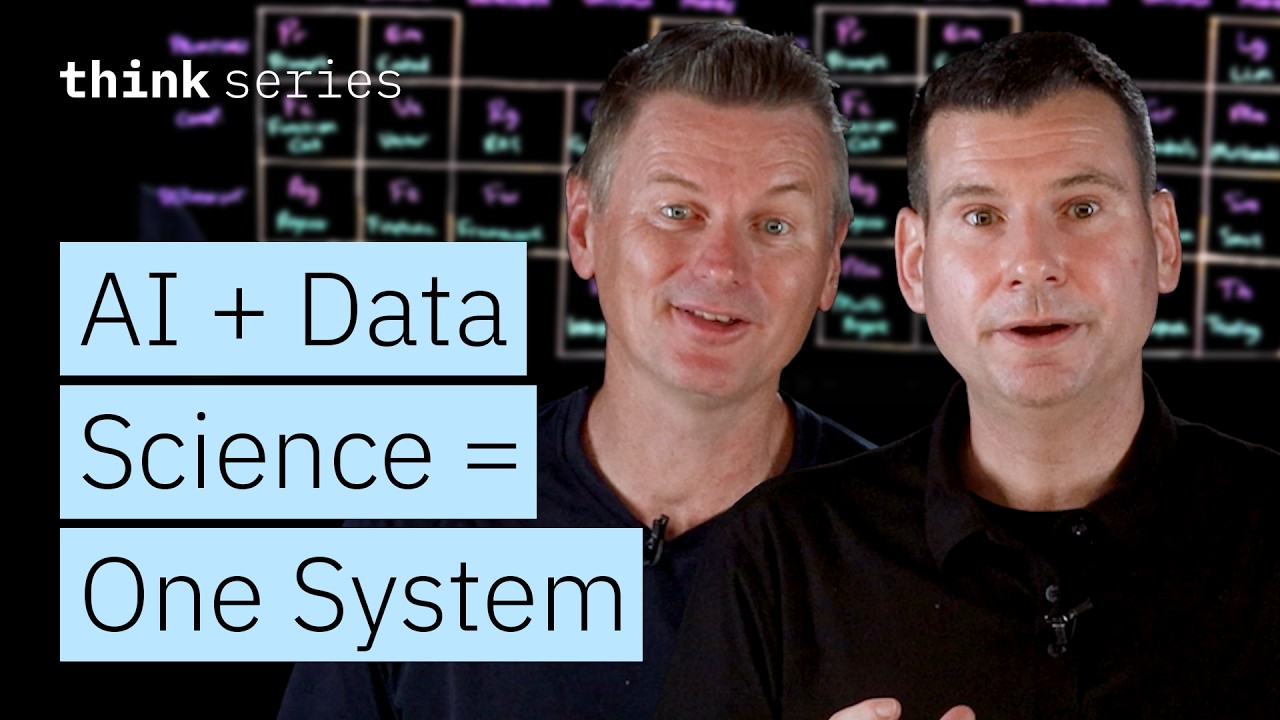
AI & Data Science Periodic Tables: How They Work Together thumbnail

· 13:21

AI & Data Science Periodic Tables: How They Work Together

The video details the synergistic relationship between Data Science and Artificial Intelligence (AI), presenting both disciplines using 'Periodic Tables' as a conceptual framework. It emphasizes that modern AI applications are built upon robust data science foundations. A comprehensive example—Document Q&A—is used to illustrate a full pipeline, detailing how elements like Extract Transform Load (ET), Data Ingest (DI), and Data Cleansing (CD) prepare the data, which is then processed by AI components such as Embeddings (EM), Retrieval Augmented Generation (RAG), and Guardrails (GR). The process can be completed into a continuous loop using Drift Detection (DR) and Synthetic Data generation for continuous system improvement.

Key takeaways

  1. AI relies on foundational data science work 0:25

    The speaker notes that all advancements in AI sit atop the groundwork laid by data science, creating a feedback loop where models inform how data is prepared for future use. (0:15-0:30)

  2. Data Science Pipeline Stages 1:38

    The Data Science periodic table defines five groups across the top (Acquisition, Preparation, Modeling, Generation, Evaluation) and tracks data maturity through rows: Raw Data $\rightarrow$ Prepared Data $\rightarrow$ Model Data $\rightarrow$ Validated Insight. (1:30-2:25)

  3. AI Pipeline Core Elements 2:40

    The AI periodic table features groups like Retrieval and Orchestration, with core primitives including Prompt, Embed, and LLM. Key components include embeddings (encoding info into numbers) and RAG (coordinating retrieval). (2:35-3:40)

  4. The Full Document Q&A Pipeline 3:30

    Building a system requires combining elements from both tables. The process moves linearly through data preparation (ET $\rightarrow$ DI $\rightarrow$ CD $\rightarrow$ ST $\rightarrow$ EN $\rightarrow$ GO) and then AI processing (EM $\rightarrow$ Vx $\rightarrow$ RAG $\rightarrow$ PR $\rightarrow$ LG $\rightarrow$ GR). (4:30-6:20)

  5. Closing the Loop for Continuous Improvement 6:20

    To prevent the system from being a one-way street, the pipeline is closed using Data Drift (DR) detection and Synthetic Data generation. This allows the embedding model to fine-tune itself continuously based on failing patterns. (6:40-7:50)

Watch on YouTube Full article

The Sound of Your Secrets: Teaching Your Model to Spy, So You Can Learn to Defend - David vonThenen thumbnail

· 51:32

The Sound of Your Secrets: Teaching Your Model to Spy, So You Can Learn to Defend - David vonThenen

This talk details acoustic keystroke logging—a method of intercepting typed information purely from sound rather than physical interception. The speaker outlines how deep learning models can be trained using spectrographic images derived from recorded key presses to classify specific letters (e.g., 'S'). While demonstrating the high accuracy of single-keyboard attacks (100%), the presentation shows that multi-keyboard logging is challenging but feasible, especially when combined with context prediction and spell-checking algorithms. The session concludes by emphasizing defensive measures, including two-factor authentication using physical keys and implementing strong, unique, offline password policies.

Key takeaways

  1. Acoustic Keystroke Logging Mechanism 16:22

    The attack relies on machine learning audio classification. Audio files (linear 16 format) are converted into spectrographic images (frequency over time, visualized as a heatmap), which serve as the input for training models like Convolutional Neural Networks (CNNs).

  2. Multi-Keyboard Attack Complexity 28:12

    While single-keyboard classification can achieve 100% accuracy, using multiple keyboards significantly lowers confidence scores. The problem is made solvable by decomposing the text based on space delimiters and employing spell-checking/context prediction (e.g., predicting 'hello people' from partial sound inputs).

  3. Defensive Strategies 40:50

    Defense requires layered security: use physical two-factor authentication keys (like YubiKey) instead of SMS; utilize unique, complex passwords that are not known to the user; and be aware of potential signal interference or noise.

Watch on YouTube Full article

How builders at YC Startup School are using Gemini & Google AI thumbnail

· 2:05

How builders at YC Startup School are using Gemini & Google AI

Founders and students at the YC Startup School demonstrated diverse applications of Google AI tools, including Gemini and Gemma. Use cases ranged from leveraging Gemini 3.1 Flash for multilingual document parsing (e.g., international receipts) to utilizing AlphaFold for visualizing bacterial mutations related to antibiotic resistance research. The speakers highlighted the efficiency and context window capabilities of models like Gemini Flash for complex tasks.

Key takeaways

  1. Multilingual Document Parsing 0:25

    Gemini 3.1 Flash is used to parse international receipts from various locations (e.g., Japan, Korea), demonstrating robust multilingual capabilities.

  2. Antibiotic Resistance Research 0:37

    AlphaFold is employed to visualize and study different bacterial mutations, supporting global impact in the pharma and drug discovery industry.

  3. AI for Deep Research Synthesis 0:58

    Gemini's research mode (Deep Research) assists with synthesizing ideas and connecting concepts, particularly useful for neuroscience research or academic papers.

Watch on YouTube Full article