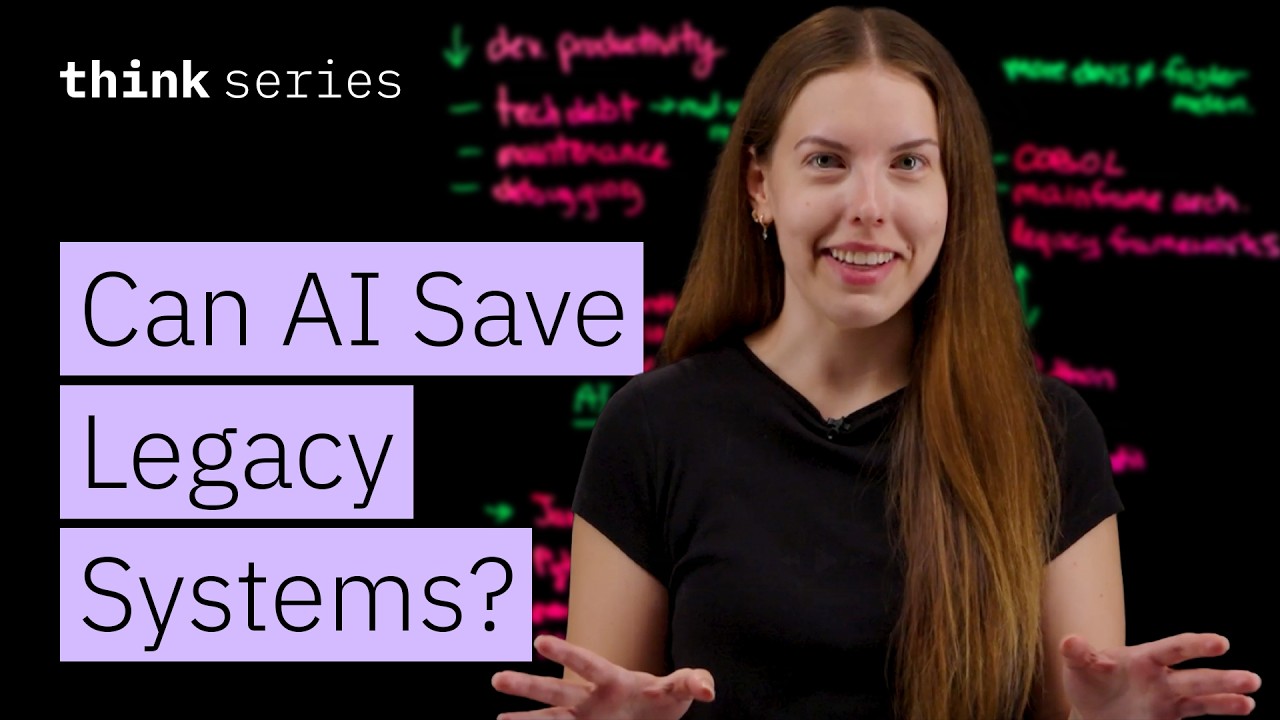
What Is Legacy Code? How AI Is Modernizing Legacy Systems
Legacy code, while functional, poses significant risks due to outdated languages (e.g., Cobol, Mainframe), lack of documentation, and deep, misunderstood domain-specific logic. Modernization is challenging due to retiring expert developers and compounding technical debt. Generative AI is emerging as a force multiplier, accelerating the modernization lifecycle by summarizing code, translating languages (e.g., Cobol to Java), and autonomously generating plans, tests, and documentation, allowing teams to focus on innovation rather than maintenance.
Key takeaways
-
The Risk of Legacy Systems
Legacy code is mission-critical software that is difficult to maintain, often lacking automated tests and documentation, and handling core infrastructure like financial transactions and healthcare data.
-
Modernization Challenges
The industry faces a widening skills gap as experts in old systems retire, and technical debt compounds, creating security vulnerabilities because systems don't receive modern security patches.
-
AI's Role in Modernization
2:00
AI accelerates the modernization process by allowing Large Language Models (LLMs) to read entire codebases, summarize module functions, and convert code between languages (e.g., C to Python) much faster than manual effort.
-
Best Practices for Modernization
4:30
Successful efforts focus on three areas: breaking monolithic applications into smaller, independent services (architecture); replacing aging infrastructure with modern, cloud-integrated platforms (technology); and implementing automated testing and continuous deployment (process).
