Topic

Edge Computing

All digests tagged Edge Computing

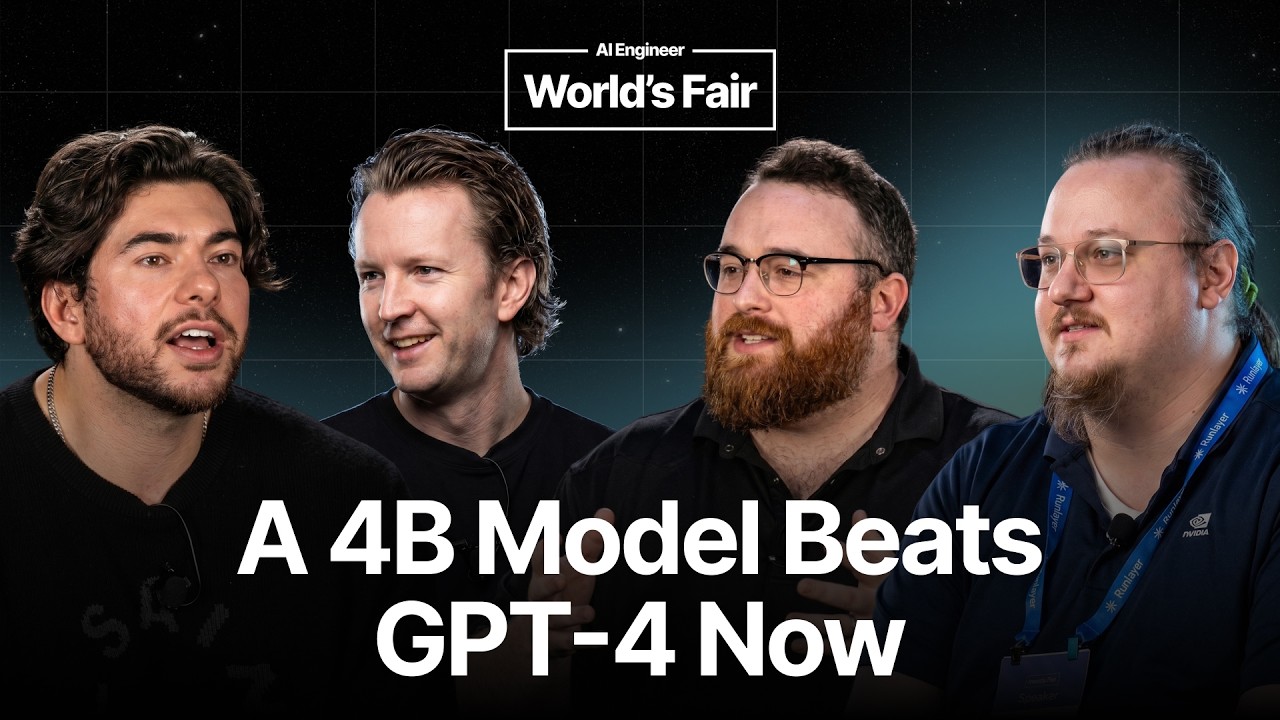
Local Models: Trust, Control, Optimization — Carter Abdallah, NVIDIA thumbnail

· 43:21

Local Models: Trust, Control, Optimization — Carter Abdallah, NVIDIA

The panel emphasized that for AI systems to achieve true sovereignty and trust, the ecosystem must be open—encompassing not just models but the entire training stack. Open weights allow users to own their data traces and customize models (e.g., Neotron, Trinity) via post-training environments, enabling specialized performance far exceeding generalized frontier closed APIs. The future points toward local/on-device compute becoming viable for most daily tasks, shifting AI development from relying solely on massive cloud endpoints.

Key takeaways

  1. Open Models Ensure Trust and Sovereignty 17:32

    Trust in open models is derived from verifiability: users can inspect the files, matrices, and running code (e.g., implementations from Prime Intellect, VLM, SGLang) rather than relying on unverifiable closed APIs. The ability to run a model locally ensures predictable output regardless of geopolitical or corporate access changes.

  2. Specialization Outperforms Generalization 22:00

    Open models allow for deep customization and post-training on specific use cases (e.g., finance automation). This specialization can yield better performance than generalized frontier models while being significantly cheaper to operate, enabling a data flywheel by allowing users to own their output traces.

  3. Local Compute is the Next Inflection Point 40:01

    The industry is moving toward local AI capability. The panel predicts that within the next year, open models will achieve capabilities comparable to frontier closed models (e.g., better than Fable), making it possible for most daily tasks to run on personal devices.

Watch on YouTube Full article

Compression at the Edge — Chris Alexiuk, NVIDIA thumbnail

· 46:01

Compression at the Edge — Chris Alexiuk, NVIDIA

This panel discusses model compression techniques—primarily quantization—that enable running massive Large Language Models (LLMs) on resource-constrained edge devices. Key advancements include formats like NVFP4 and the ability to shrink models dramatically (e.g., GLM 5.2 from 1.5 TB to 250 GB). The discussion emphasizes that successful compression requires understanding model architecture, using advanced methods like Quantization Aware Distillation (QAD), and prioritizing evaluation metrics such as KL divergence over simple accuracy scores.

Key takeaways

  1. Model Compression is Critical for Edge AI

    Compression techniques are essential to democratize LLMs, making them viable for local deployment on consumer hardware (e.g., laptops/phones). The goal is enabling powerful models to run without constant reliance on cloud APIs.

  2. Advanced Quantization Formats and Techniques 0:04

    NVIDIA's NVFP4 is a specialized 4-bit float format where every group of 16 values shares one FP8 scale. For large models (>20B parameters), Post-Training Quantization (PTQ) works well, while smaller models (<20B) require Quantization Aware Distillation (QAD).

  3. Evaluation Focus Shifts to Logits and Architecture 0:08

    Verifying model integrity after compression is complex. The Super Weights paper suggests that quantizing even one number can degrade performance by 20%. Therefore, the preferred signal for evaluation is KL divergence between BF16 and quantized output logits, rather than traditional accuracy scores.

Watch on YouTube Full article

Leopold Aschenbrenner's Warning Signal Apple Completely Missed thumbnail

· 12:15

Leopold Aschenbrenner's Warning Signal Apple Completely Missed

The video analyzes two contrasting investment strategies for Artificial Intelligence: Leopold Aschenbrenner's highly leveraged 'Situational Awareness' thesis and Apple's long-term hardware approach. The discussion highlights how external financial pressures (like Federal Reserve rate calls) can impact high-leverage AI bets, while simultaneously emphasizing that Apple's focus on chips designed for local inference provides a strong, multi-decade competitive advantage in the AI race.

Key takeaways

  1. Aschenbrenner's Thesis and Leverage Risk

    Leopold Aschenbrenner built his success on a thesis of predicting AI investments by reasoning back from compute requirements. His high returns were amplified by leverage, leading to significant pressure when the market faced volatility (e.g., after SK Hynix IPO).

  2. Citadel's Market Intervention 8:27

    Following AI trade pressure and a note predicting Federal Reserve rate hikes (which makes volatile assets less attractive), Citadel Capital stepped in to buy out Aschenbrenner’s entire public equities book, allowing them to enter the AI trade at a discount.

  3. Apple's Hardware Advantage 10:49

    Unlike short-term investment plays, Apple's strategy is focused on 20-30 year hardware longevity. Their chips are optimized for local inference (running AI models directly on the device), positioning them as a default winner regardless of which large model or open-source framework dominates.

Watch on YouTube Full article

Build Small Winners Reveal thumbnail

· 53:45

Build Small Winners Reveal

The Build Small Hackathon winners reveal celebrated projects that emphasize building highly functional applications using small, efficient models and local/on-device processing. The community demonstrated a strong focus on 'local first' AI solutions, achieving impressive metrics like 64% of apps running fully offline. Winning projects showcased practical utility—such as scam defense (Jawbreaker) or specialized coaching (Posify)—proving that powerful, real-world impact can be achieved with tiny model footprints.

Key takeaways

  1. Focus on Local and Small Models 18:05

    The hackathon emphasized building small apps using sub-32 billion parameter models. Key metrics showed that 64% of submissions ran fully offline, highlighting the viability of 'local first' AI architectures.

  2. High Utility in Niche Applications 27:20

    Winning projects demonstrated significant real-world utility. Examples include Jawbreaker (a private scam defense tool for suspicious text/emails) and Agenda Parser (breaking down dense local government agendas), proving the value of small, focused solutions.

  3. Advanced Technical Implementation 30:30

    Winners utilized advanced techniques like WebGPU for browser-based real-time games (Parry) and quantization methods (GGUF) to drastically reduce cold boot times, demonstrating high technical polish.

  4. Open Source Model Ecosystem 22:20

    The most popular model family used was Qwen (288 spaces), followed by MiniCPM OpenBMB and Nematron, confirming the community's reliance on diverse open-source models.

Watch on YouTube Full article