IBM’s cloud collab, Meta’s Muse Glimmer & OpenAI’s upcoming Astra model
Summary
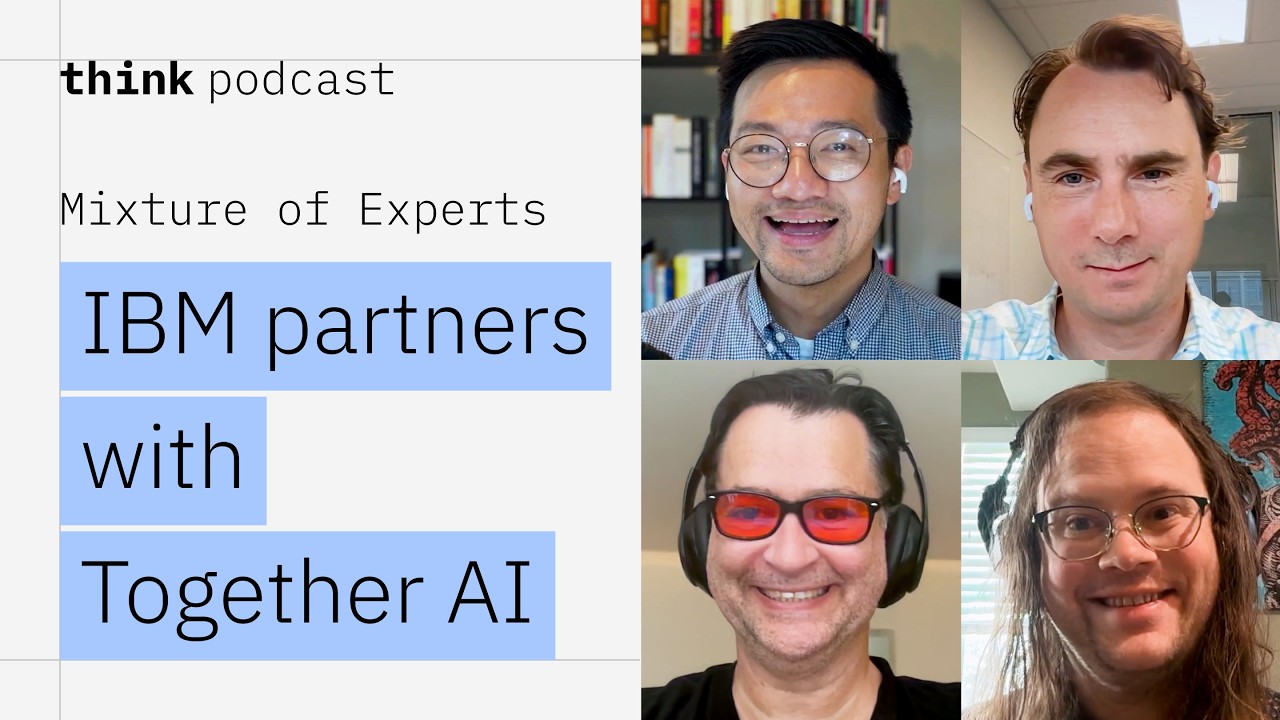
The discussion covers major shifts in AI infrastructure and model deployment. IBM is partnering with Together AI to build a massive inference cluster on IBM Cloud using NVIDIA's B300 generation chips for open-source models (expected early 2027). Meta released Muse Glimmer, an open, 30B-parameter dense model designed to run locally on consumer GPUs. Finally, OpenAI discussed its upcoming Astra model, which may achieve 'Critical' cybersecurity capabilities, raising significant concerns about zero-day exploit potential and the need for robust security guardrails.
Key takeaways
-
IBM Cloud AI Cluster Partnership
1:15
IBM is teaming up with Together AI to launch an inference cluster on IBM Cloud utilizing NVIDIA's B300 generation chips. This aims to provide cheaper, faster access to open-source AI models for enterprises (1:03).
-
Meta Muse Glimmer Release
11:29
Meta open-sourced Muse Glimmer, a 30B-parameter dense model optimized to run locally on consumer GPUs (e.g., Mac M3). It is designed for agentic tasks and tool calling without requiring cloud access (11:43).
-
OpenAI Astra Model Capabilities
22:36
OpenAI's upcoming Astra model may achieve 'Critical' cybersecurity capability levels, potentially allowing it to find and exploit zero-days. This raises concerns about the speed and scale of cyber warfare using AI (24:10).
Technical details
-
AI Infrastructure Scaling
120s
The industry is transitioning from esoteric hardware to industrial-scale computing, requiring massive buildouts in power, cooling, and network capacity. The discussion highlighted the tension between large hyperscalers and specialized 'neo clouds' (75).
-
Model Architecture & Optimization
715s
Muse Glimmer is noted as a dense model, utilizing techniques like speculative decoding with a flash drafter to achieve high speed. The model is optimized for small context windows (e.g., the last 2000 tokens) while retaining global context awareness (689).
-
Deployment Strategy: Edge vs. Cloud
1490s
There is a trend toward running smaller, specialized models on-device for privacy and connectivity reasons, while large Mixture of Experts (MoE) models remain in industrial cloud settings due to cost constraints (1520).
-
Data Sovereignty & Load Balancing
1580s
In highly regulated industries, data sovereignty requirements make load shifting difficult. Providers are mitigating fluctuating workloads by using batch processing to backfill daytime interactive loads (1625).
Mentioned resources
Channel & topics
Watch on YouTube · Back to latest
This independent, AI-assisted summary is provided for commentary and informational purposes. It may contain errors or omit important context. Please watch the original video for the creator's complete presentation. Video, thumbnail, and related copyrights belong to their respective owners.