Local Models: Trust, Control, Optimization — Carter Abdallah, NVIDIA
Summary
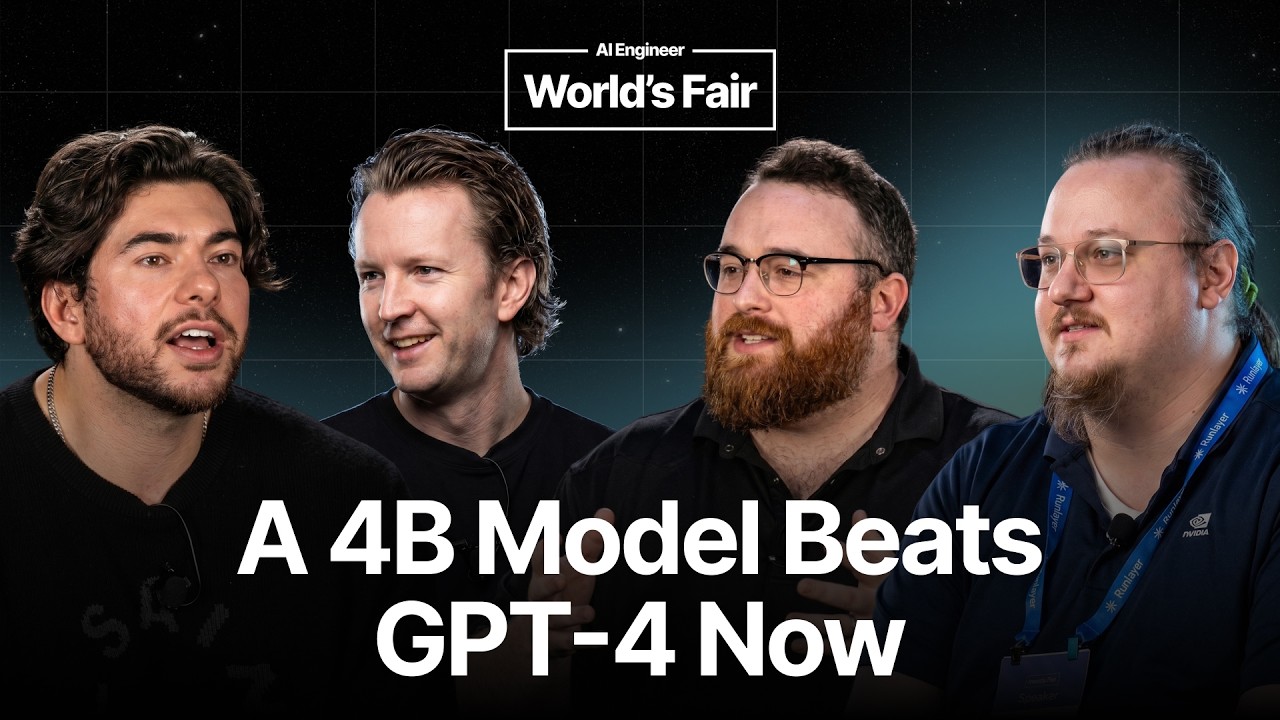
The panel emphasized that for AI systems to achieve true sovereignty and trust, the ecosystem must be open—encompassing not just models but the entire training stack. Open weights allow users to own their data traces and customize models (e.g., Neotron, Trinity) via post-training environments, enabling specialized performance far exceeding generalized frontier closed APIs. The future points toward local/on-device compute becoming viable for most daily tasks, shifting AI development from relying solely on massive cloud endpoints.
Key takeaways
-
Open Models Ensure Trust and Sovereignty
17:32
Trust in open models is derived from verifiability: users can inspect the files, matrices, and running code (e.g., implementations from Prime Intellect, VLM, SGLang) rather than relying on unverifiable closed APIs. The ability to run a model locally ensures predictable output regardless of geopolitical or corporate access changes.
-
Specialization Outperforms Generalization
22:00
Open models allow for deep customization and post-training on specific use cases (e.g., finance automation). This specialization can yield better performance than generalized frontier models while being significantly cheaper to operate, enabling a data flywheel by allowing users to own their output traces.
-
Local Compute is the Next Inflection Point
40:01
The industry is moving toward local AI capability. The panel predicts that within the next year, open models will achieve capabilities comparable to frontier closed models (e.g., better than Fable), making it possible for most daily tasks to run on personal devices.
Technical details
-
Model Ownership and Licensing
1502s
Adopting licenses like the open MDW (Model Data Weights) license is critical to ensure that users retain rights over model outputs, allowing them to train custom models and build data flywheels. This contrasts with closed terms of service that restrict training on outputs.
-
Model Optimization and Specialization
1650s
Instead of relying on hyper-generalized frontier models, the focus should be on taking an open model (e.g., Neotron or Trinity) and specializing it through dedicated RL environments for a specific domain/harness. This approach is key to maximizing value per unit of input.
-
The Open Stack Architecture
1200s
Building an AI application requires integrating the model, the training methodology (pre-training, mid-tuning, post-training), and the product harness. The open stack approach ensures that all components are accessible for customization, preventing 'mismanaged genius' where models are not fit to the specific use case.
Mentioned resources
- Neotron
- Trinity
- Prime Intellect
- Arcee AI (RCAI)
- MDW License
Channel & topics
Watch on YouTube · Back to latest
This independent, AI-assisted summary is provided for commentary and informational purposes. It may contain errors or omit important context. Please watch the original video for the creator's complete presentation. Video, thumbnail, and related copyrights belong to their respective owners.