Topic

Nate B Jones Newsletter

All digests tagged Nate B Jones Newsletter

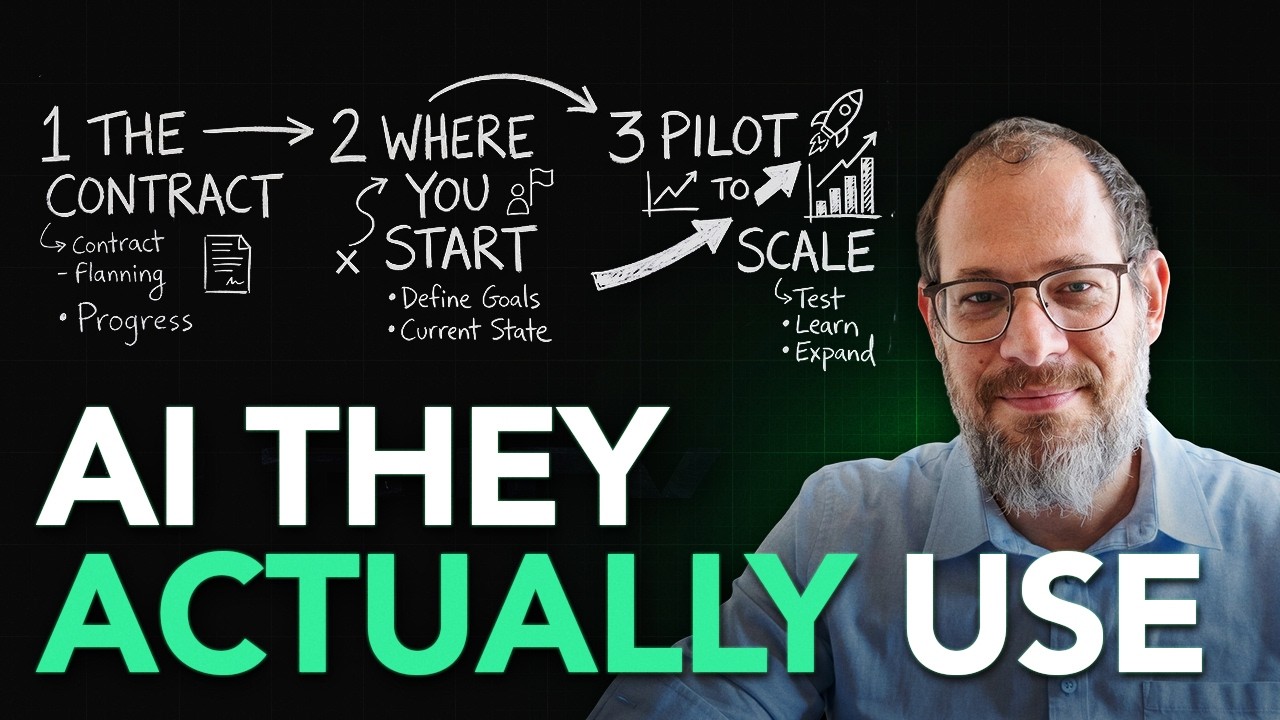
Your Engineers Are Resisting Your AI Rollout. 3 Things Turn That Around. thumbnail

· 17:43

Your Engineers Are Resisting Your AI Rollout. 3 Things Turn That Around.

Successfully rolling out AI requires more than technical capability; it demands strategic leadership and transparent communication. The speaker outlines three core principles for leaders: making a public commitment regarding job security to address employee fears (the 'elephant in the room'); starting with a narrow, bottom-line focused pilot project; and managing the transition from pilot success to enterprise scale by defining where human expertise remains critical.

Key takeaways

  1. Principle 1: Make a Public Employment Commitment

    Leaders must address job risk directly, stating that the AI rollout is not designed to destroy jobs or take away roles. Framing AI as an 'expansion of horizons' rather than cost-cutting helps build trust and encourages participation.

  2. Principle 2: Pick a Specific, Bottom-Line Pilot 8:58

    Instead of attempting a generic AI transformation across the entire organization, start by selecting a specific use case that demonstrably drives the bottom line (e.g., cutting tooling costs or expanding revenue). This focus prevents scope creep and confusion.

  3. Principle 3: Define Human Value at Scale

    When scaling, the conversation must shift from technical details to people impact. Leaders must articulate how humans and AI agents will work together (e.g., defining safeguards against cyber attacks or maintaining a 'human edge') to ensure roles evolve rather than disappear.

Watch on YouTube Full article

Leopold Aschenbrenner's Warning Signal Apple Completely Missed thumbnail

· 12:15

Leopold Aschenbrenner's Warning Signal Apple Completely Missed

The video analyzes two contrasting investment strategies for Artificial Intelligence: Leopold Aschenbrenner's highly leveraged 'Situational Awareness' thesis and Apple's long-term hardware approach. The discussion highlights how external financial pressures (like Federal Reserve rate calls) can impact high-leverage AI bets, while simultaneously emphasizing that Apple's focus on chips designed for local inference provides a strong, multi-decade competitive advantage in the AI race.

Key takeaways

  1. Aschenbrenner's Thesis and Leverage Risk

    Leopold Aschenbrenner built his success on a thesis of predicting AI investments by reasoning back from compute requirements. His high returns were amplified by leverage, leading to significant pressure when the market faced volatility (e.g., after SK Hynix IPO).

  2. Citadel's Market Intervention 8:27

    Following AI trade pressure and a note predicting Federal Reserve rate hikes (which makes volatile assets less attractive), Citadel Capital stepped in to buy out Aschenbrenner’s entire public equities book, allowing them to enter the AI trade at a discount.

  3. Apple's Hardware Advantage 10:49

    Unlike short-term investment plays, Apple's strategy is focused on 20-30 year hardware longevity. Their chips are optimized for local inference (running AI models directly on the device), positioning them as a default winner regardless of which large model or open-source framework dominates.

Watch on YouTube Full article