Topic

Natural Language Processing (NLP)

All digests tagged Natural Language Processing (NLP)

How builders at YC Startup School are using Gemini & Google AI thumbnail

· 2:05

How builders at YC Startup School are using Gemini & Google AI

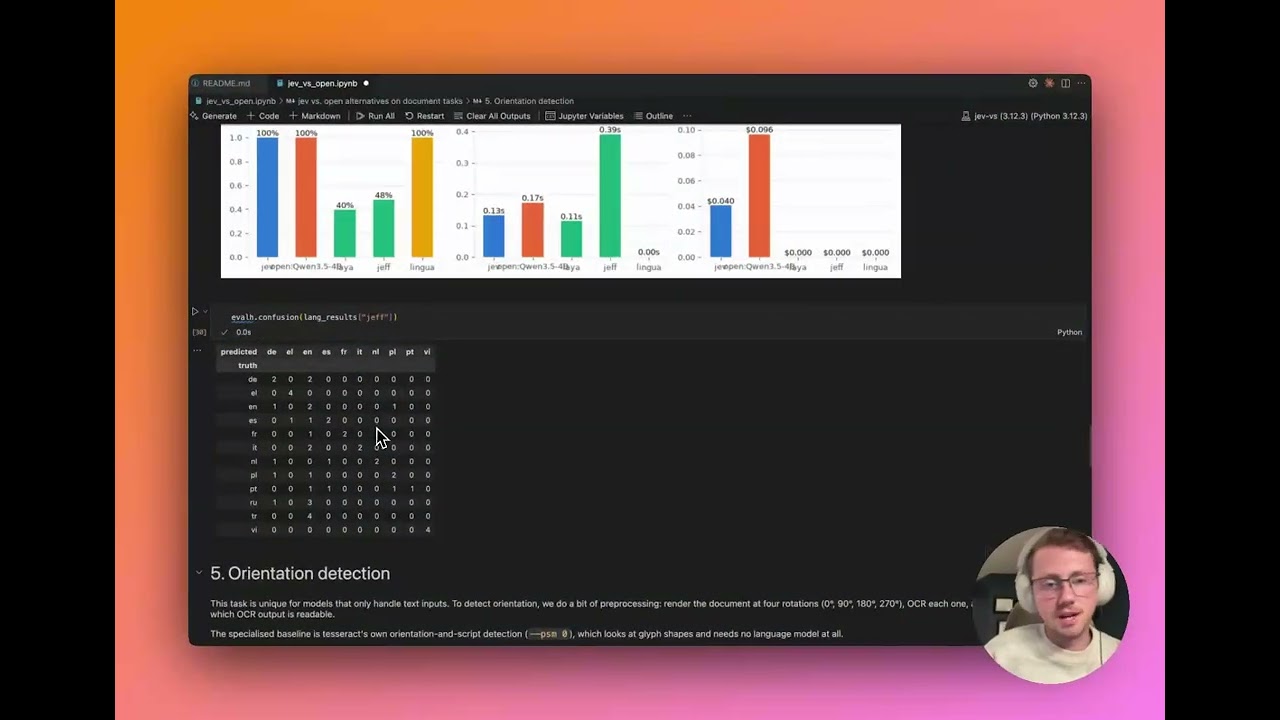
Founders and students at the YC Startup School demonstrated diverse applications of Google AI tools, including Gemini and Gemma. Use cases ranged from leveraging Gemini 3.1 Flash for multilingual document parsing (e.g., international receipts) to utilizing AlphaFold for visualizing bacterial mutations related to antibiotic resistance research. The speakers highlighted the efficiency and context window capabilities of models like Gemini Flash for complex tasks.

Key takeaways

  1. Multilingual Document Parsing 0:25

    Gemini 3.1 Flash is used to parse international receipts from various locations (e.g., Japan, Korea), demonstrating robust multilingual capabilities.

  2. Antibiotic Resistance Research 0:37

    AlphaFold is employed to visualize and study different bacterial mutations, supporting global impact in the pharma and drug discovery industry.

  3. AI for Deep Research Synthesis 0:58

    Gemini's research mode (Deep Research) assists with synthesizing ideas and connecting concepts, particularly useful for neuroscience research or academic papers.

Watch on YouTube Full article

Write Drunk, Edit Sober: Creating Generative Content Responsibly - Matthijs van der Veer thumbnail

· 56:54

Write Drunk, Edit Sober: Creating Generative Content Responsibly - Matthijs van der Veer

The talk addresses the proliferation of 'AI Slop'—low-quality, inauthentic content generated by LLMs—and provides a framework for developers to build automated systems that enforce quality. The core philosophy is shifting focus from merely generating content ('Write Drunk') to defining clear intent and implementing rigorous review processes ('Edit Sober'). Practical solutions involve using structured data inputs (like GitHub Issues) to capture user intent, applying Natural Language Processing (NLP) techniques like lemmatization for stylistic checks, and building automated quality gates that flag common LLM patterns (e.g., excessive emojis, M dashes, or generic corporate tropes).

Key takeaways

  1. Identify 'AI Slop' Patterns 0:23

    Common signs of low-quality AI content include overuse of emojis, the M dash (`—`), bold text, overly positive/generic language, and vague phrasing like 'In an era...' (0:023 - 0:045).

  2. Focus on Intent over Content 2:38

    The most critical step in generating quality AI content is defining the core intent: What do you want the audience to learn? Who should be here? And what can they accomplish? This structured approach guides the LLM (0:158 - 0:236).

  3. Automated Quality Gates are Essential 7:55

    Developers can build tools that enforce quality by implementing deterministic checks. Techniques include using NLP libraries like `spacy` for lemmatization to identify overused or non-standard vocabulary, and running pattern matching against known 'tropes' (0:475 - 1:239).

  4. Mitigate Automation Bias with Metrics 23:10

    To combat the tendency to overly trust machine output (automation bias), systems should provide explicit metrics, such as a confidence score or probability of error, rather than simply offering recommendations. Offering raw information is safer than recommending an action (1:390 - 2:150).

Watch on YouTube Full article

Stanford CS547 HCI Seminar | Spring 2026 | Show It or Tell It? Text, Visualization, and Combination thumbnail

· 56:19

Stanford CS547 HCI Seminar | Spring 2026 | Show It or Tell It? Text, Visualization, and Combination

This seminar explores the complex intersection of text and data visualization, arguing that language is a critical component of effective information design. The discussion moves from established cognitive theories (like Dual Coding Theory) to modern AI architectures, detailing how Multimodal Large Language Models (MLLMs) process combined visual and textual inputs using mechanisms like cross-attention. Key findings suggest that while the optimal balance between text and visuals is highly context-dependent, MLLMs are capable of deeply integrating both modalities.

Key takeaways

  1. Language is a key component of visualization 5:19

    Studies show that titles and labels receive long fixations during encoding and are the most likely elements to be recalled, suggesting language significantly impacts how data visualizations are understood. The speaker notes this was historically under-explored in the visualization community.

  2. Optimal design favors annotation over minimalism 21:30

    Research suggests that 'more text is better' for general information displays, provided the text is relevant and properly annotated. This finding challenges traditional minimalist principles in UI/UX design.

  3. MLLMs integrate modalities via cross-attention 41:20

    Multimodal LLMs (MLLMs) process text and visuals by transforming inputs into embeddings. The 'cross-modality embedding architecture' uses a cross-attention mechanism, allowing information to flow between the two distinct sequences (e.g., image tokens interacting with text tokens).

  4. Cognitive processing is context-dependent 30:00

    The speaker notes that understanding how humans integrate text and visuals is complex, citing conflicting evidence across theories (Dual Coding vs. Cognitive Load Theory). The choice of representation depends heavily on the specific task or cognitive ability.

Watch on YouTube Full article