Topic

Live API

All digests tagged Live API

Build voice-first apps with Gemini 3.5 Transcribe thumbnail

· 1:44

Build voice-first apps with Gemini 3.5 Transcribe

Google launched Gemini 3.5 Transcribe, an advanced LLM-based model designed for building voice-first applications. This model is available via both the Interactions API and the Live API, offering fast, contextually accurate transcription of multi-speaker recordings. Key strengths include superior recognition of structured data like email addresses and phone numbers, as well as robust support for over 70 different languages.

Key takeaways

  1. Model Availability

    Gemini 3.5 Transcribe is available on both the Interactions API and the Live API.

  2. Structured Data Recognition

    The LLM-based model excels at transcribing alphanumerics, such as email addresses (e.g., thorwebdev@google.com) and recognizing correct US phone number formats.

  3. Multi-Language Support

    The model can recognize and transcribe over 70 different languages, even when language hints are set to English.

Watch on YouTube Full article

How to build with Gemini 3.5 Transcribe thumbnail

· 4:50

How to build with Gemini 3.5 Transcribe

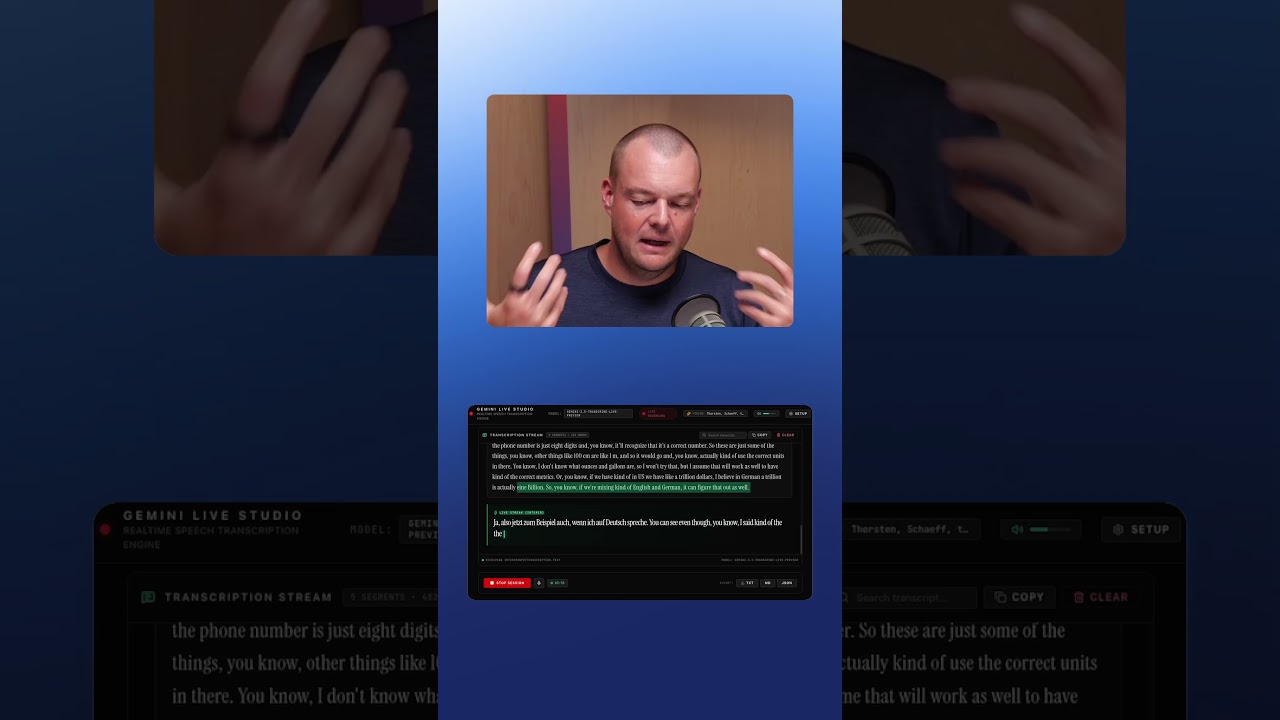
Google DeepMind launched Gemini 3.5 Transcribe, an LLM-based transcription model available via both the Interactions API and the Live API. This model significantly enhances accuracy by correctly transcribing complex data types—such as email addresses, phone numbers, and mixed units of measurement—and maintaining high performance across over 85 supported languages, even when language codes are set to English.

Key takeaways

  1. LLM-Based Transcription Model

    The model's LLM foundation allows it to handle complex data structures and context better than traditional transcription models. For example, it can correctly identify and edit email addresses even if spoken phonetically (e.g., 'tosten at google.com').

  2. Handling Complex Data Types 2:00

    Gemini 3.5 Transcribe accurately recognizes specific formats, including US phone numbers and international variations (e.g., Singapore's 8-digit format). It can also correctly interpret units of measure (e.g., meters vs. centimeters).

  3. Multilingual and Customization Support 0:40

    The model supports over 85 languages, automatically recognizing spoken language even if language hints are set to English. Accuracy can be further improved by providing custom vocabulary (e.g., names of people in a meeting) or setting specific language codes.

Watch on YouTube Full article