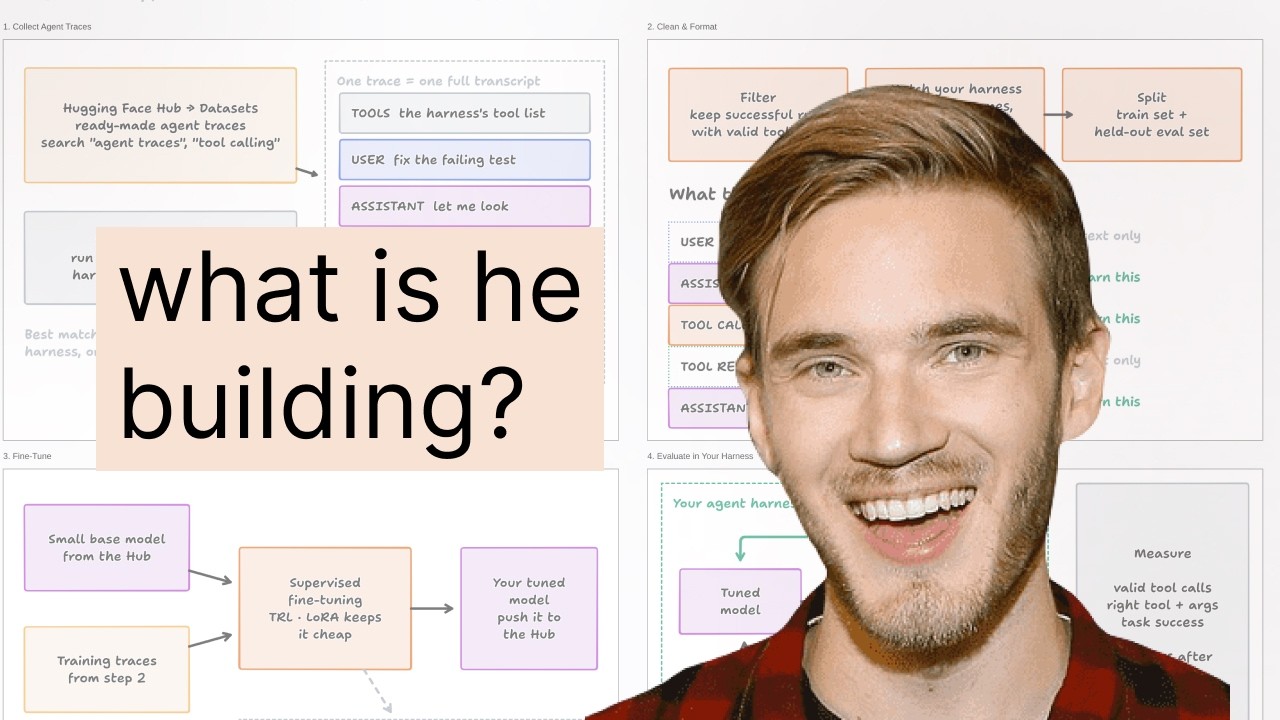
What Is PewDiePie Building? | For Beginners
Learn how to build local AI agents using Odysseus and llama.cpp. We break down agent harnesses, tool calling, and fine-tuning Qwen 3.5 9B on agent traces for maximum privacy and control.
Read article
Learn how to build local AI agents using Odysseus and llama.cpp. We break down agent harnesses, tool calling, and fine-tuning Qwen 3.5 9B on agent traces for maximum privacy and control.
Read article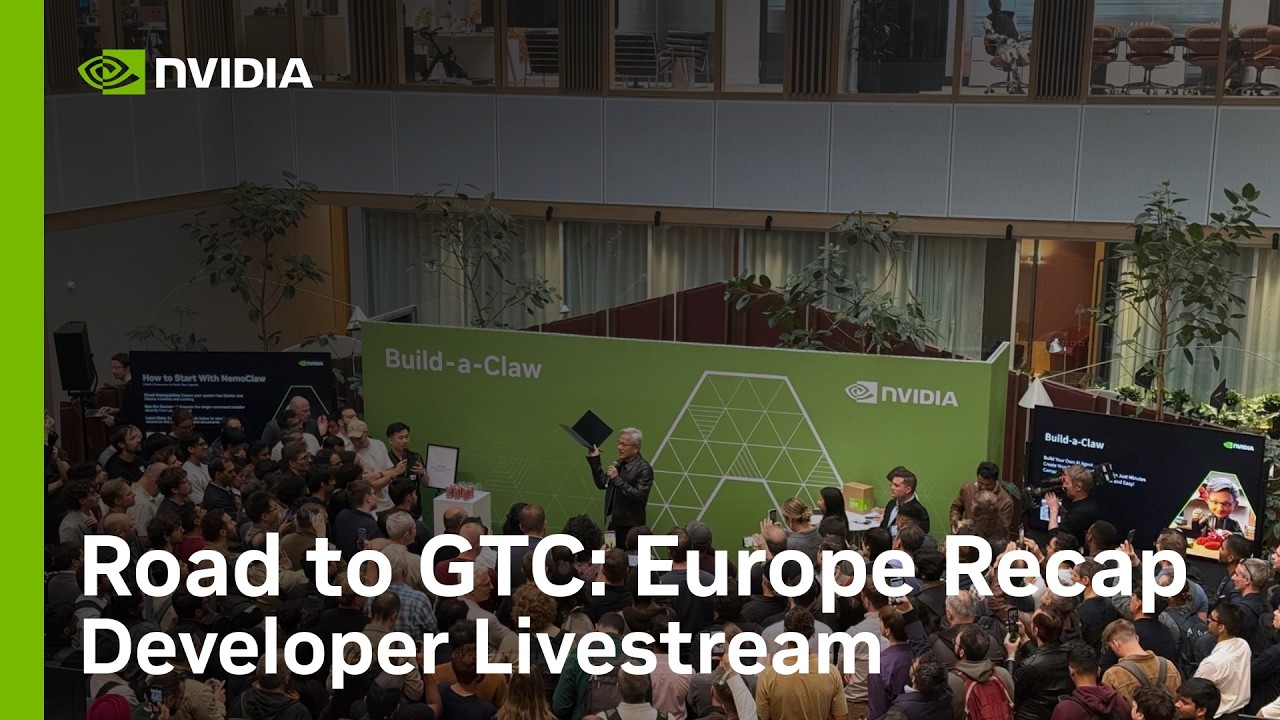
The video summarizes the 'Road to GTC Berlin' build series, focusing on advanced AI agents, open models, and physical AI. Key themes include agent safety, sovereign edge deployment, and multimodal interaction.
Read article
Learn the 7 most common mistakes in AI evaluation (Evals). From using generic metrics to failing to validate LLM judges, this guide shows how to build Evals you can actually trust.
Read article
Flywire's Orbit platform integrates LLMs into deterministic workflows using YAML definitions, ensuring AI-driven automation maintains strict control and compliance within existing CI/CD infrastructure.
Read article
The talk details a hybrid workflow architecture for regulated industries, using deterministic systems to control flow and evidence, while restricting LLMs to typed, auditable judgment points. This approach ensures compliance and reliability.
Read article
The reading group explores agent policy compliance, noting that LLMs struggle to follow complex SOPs. Solutions involve implementing deterministic and model-based guards outside the LLM to ensure reliable policy adherence.
Read article
Building internal tools with AI agents requires more than just prompting. Achieving a polished, usable product demands implementing advanced patterns like optimistic updates, autosave, and rigorous end-to-end verification.
Read article
The future of AI agents lies in specialization. We must move from 'god models' to thousands of hyper-scoped, domain-specific agents, requiring standardized runtimes and a microservices mindset.
Read article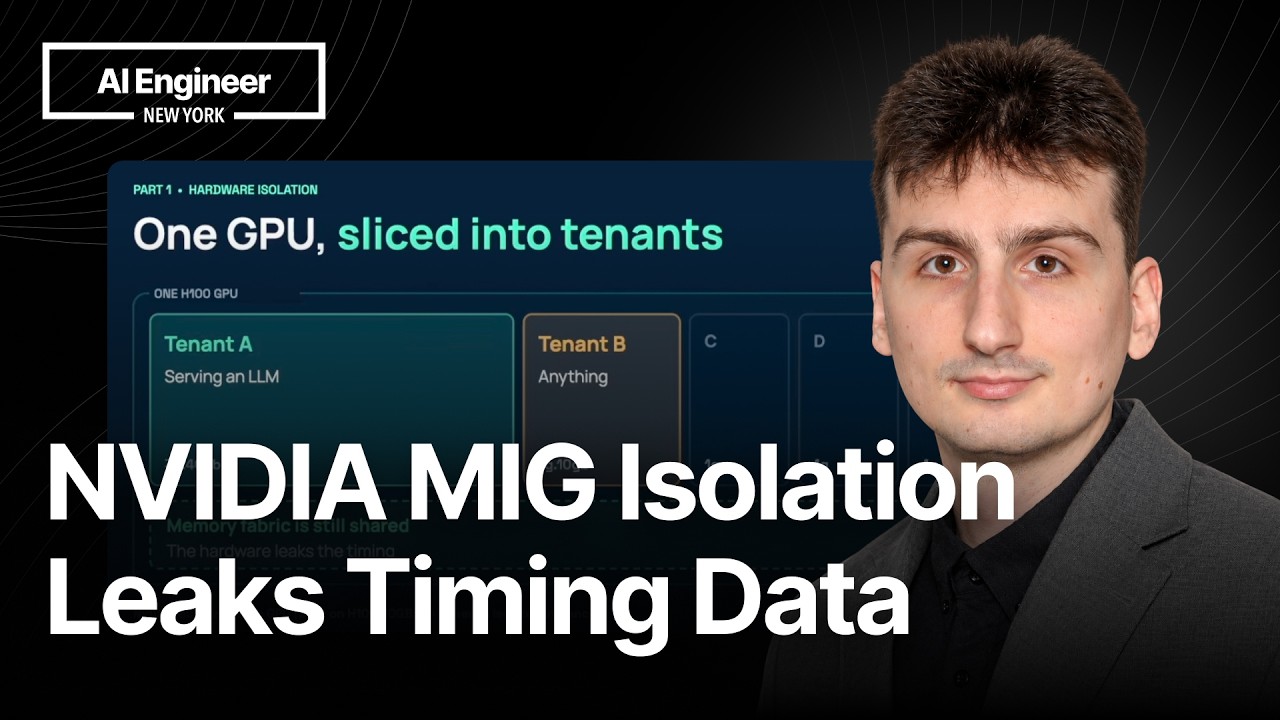
An H100 timing side channel allows an attacker to infer an LLM's model type, depth, and decoding speed by monitoring microsecond timing variations on shared GPU hardware, even without reading memory or exploiting bugs.
Read article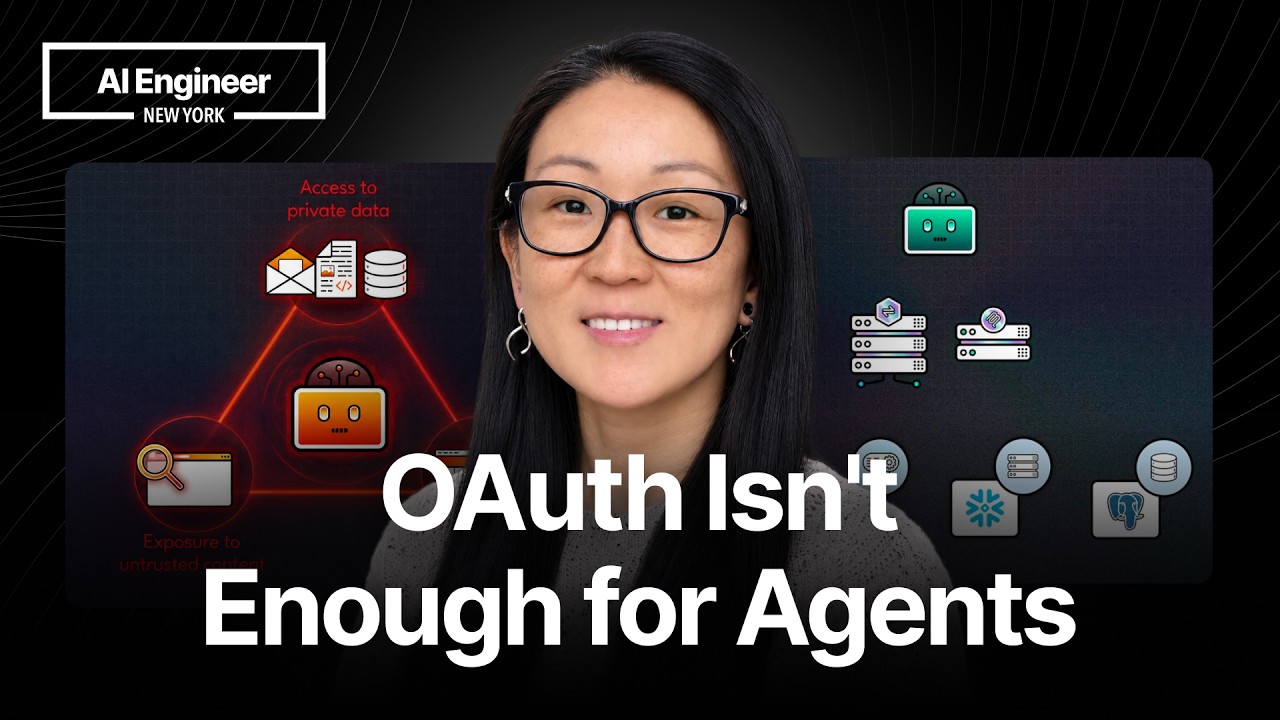
Securing AI agents requires moving beyond standing credentials. By implementing OAuth token exchange and using a Security Token Service (STS), organizations can enforce task-scoped, ephemeral access, mitigating the risk of the 'lethal trifecta.'
Read article
Pi Durable revolutionizes agentic engineering by creating proactive, persistent agents. Learn how these durable agents manage state, automate incident response, and operate autonomously across multiple clients, moving development from reactive to proactive.
Read article
Financial planners can build AI agents without writing code by capturing institutional judgment. The process involves five steps: Pick, Teach, Pack, Test, and Ship.
Read article
AI is changing software development from manual coding to architectural orchestration. Learn the five concepts—Spec-Driven Development, Context Engineering, and Loop Engineering—needed to master AI agents and build robust systems.
Read article
Functional programming offers a powerful, declarative alternative to imperative coding. Learn how FP leverages functional composition, and critically, how to use AI to accelerate development without sacrificing code quality or fundamental knowledge.
Read article
AI success is an ecosystem problem, not a model problem. The Full-Stack AI Engineer must orchestrate intelligence across data platforms, agents, and low-code tools, while prioritizing governance and data quality.
Read article
Learn to build a 'research desk' app using Claude Managed Agents. We cover multi-agent coordination, Outcomes for self-supervision, and secure credential injection via Vaults.
Read article
Learn how to manage Claude Managed Agents in CI/CD using Ancho CLI and YAML. We cover multi-tenancy, the coordinator pattern, and scaling with self-hosted sandboxes.
Read article
Adi Singh argues that agent identity will be accumulated on existing human surfaces like email, not issued by a new spec. He details how existing protocols and surfaces are critical for agent adoption, using the Telnyx case study to illustrate the power of API-driven integration.
Read article
Stripe reveals four patterns for top AI companies: building faster, selling globally, hybrid pricing, and adapting GTM motions. Learn how agentic tools and unified systems are redefining product monetization.
Read article
Robert Brennan details four strategies for sandboxing AI coding agents: Docker, GitHub Actions, VMs, and Kubernetes. He argues that Kubernetes offers the best isolation and scale for autonomous agents.
Read article