Channel

DeepLearningAI

Digests from DeepLearningAI — DeepLearning.AI videos on AI education and applied machine learning.

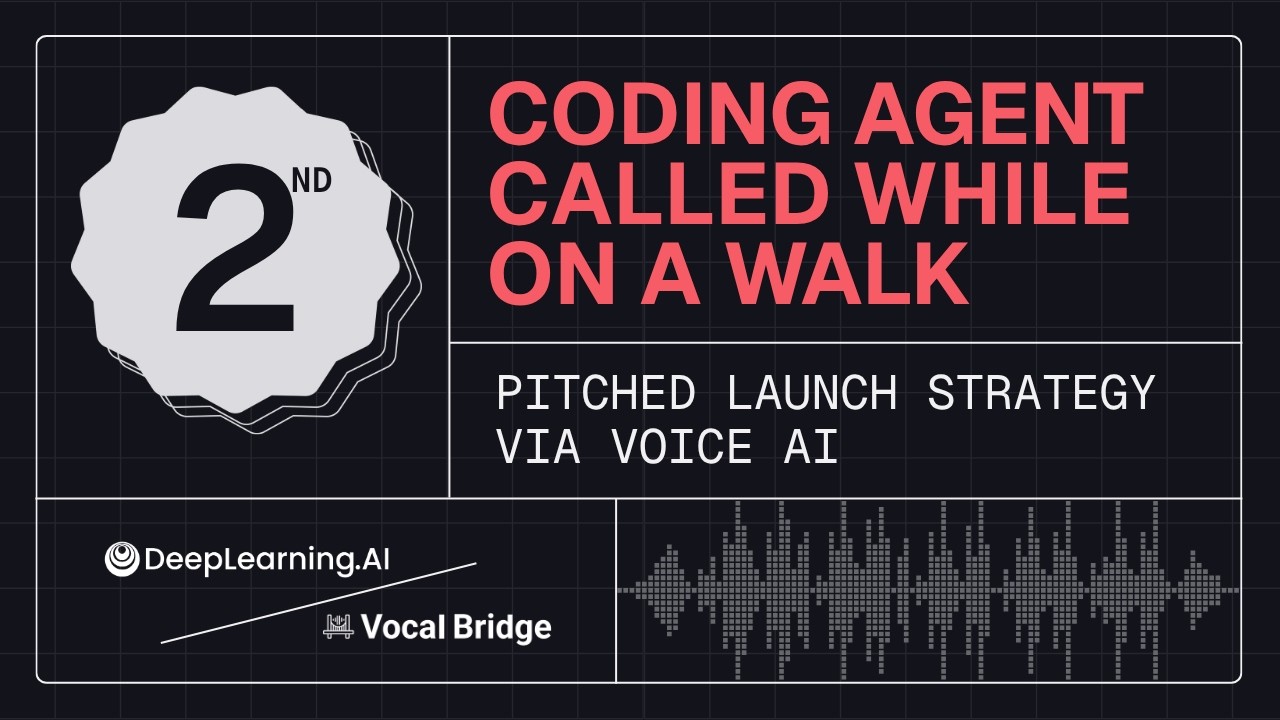
2nd Place Winner: Coding Agent Calls Developer to Pitch Launch Strategy thumbnail

· 5:12

2nd Place Winner: Coding Agent Calls Developer to Pitch Launch Strategy

The video demonstrates an autonomous AI agent designed for product positioning strategy that operates while the developer is away (AFK). The agent handles routine tasks but utilizes a defined escalation matrix to call the human developer only when faced with non-reversible, high-stakes decisions. This process not only facilitates real-time discussion via voice call but also ensures all resulting decisions and follow-up action items are automatically logged back into the project documentation for transparency.

Key takeaways

  1. Autonomous AFK Operation

    The agent is instructed to run autonomously, completing all tasks it can handle without human intervention. It also checks working hours to prevent calling outside designated times.

  2. Strategic Escalation Matrix 1:40

    When the agent reaches a critical decision point (e.g., Lead on Value vs. Lead on Price), it triggers an escalation, presenting structured options and recommendations rather than asking for generic input.

  3. Decision Logging and Transparency

    Following the human decision (e.g., 'Lead on Value'), the agent automatically logs the approved decision and creates a follow-up task (e.g., 'follow up in 7 days') directly into the project files, ensuring decisions are never lost within transcripts.

Watch on YouTube Full article

1st Place Winner: Coding Agent Calls Developer to Resolve Code Block thumbnail

· 6:17

1st Place Winner: Coding Agent Calls Developer to Resolve Code Block

The demo showcases an advanced AI coding agent that autonomously handles a critical bug fix in a checkout API. When faced with a technical decision requiring human judgment—specifically, whether to maintain backward compatibility (Option A) or implement a clean refactor causing breaking changes (Option B)—the agent initiates an automated phone call to the developer for real-time guidance and execution.

Key takeaways

  1. Autonomous Agent Setup

    The setup involves running a coding agent via the Claude Code CLI, monitored by the Vocal Bridge dashboard, targeting a validation bug across five checkout API handlers (e.g., create order, apply coupon).

  2. Decision Point Triggered 3:26

    The agent identifies that fixing the bug requires a judgment call: Option A maintains backward compatibility but involves code duplication; Option B is a clean refactor but introduces a breaking change to the error format.

  3. Human-in-the-Loop Communication 1:52

    Instead of guessing, the agent initiates an outbound phone call (via VocalBridgeAI) to present the technical trade-offs and obtain a decision from the developer while they are away from their keyboard.

  4. Automated Execution

    Upon receiving the final verbal confirmation (Option B), the agent automatically executes the chosen path, logs the decision, and updates the code base without manual developer intervention.

Watch on YouTube Full article

Build Your Own App In Just 30 Minutes! Full Course with Andrew Ng thumbnail

· 25:58

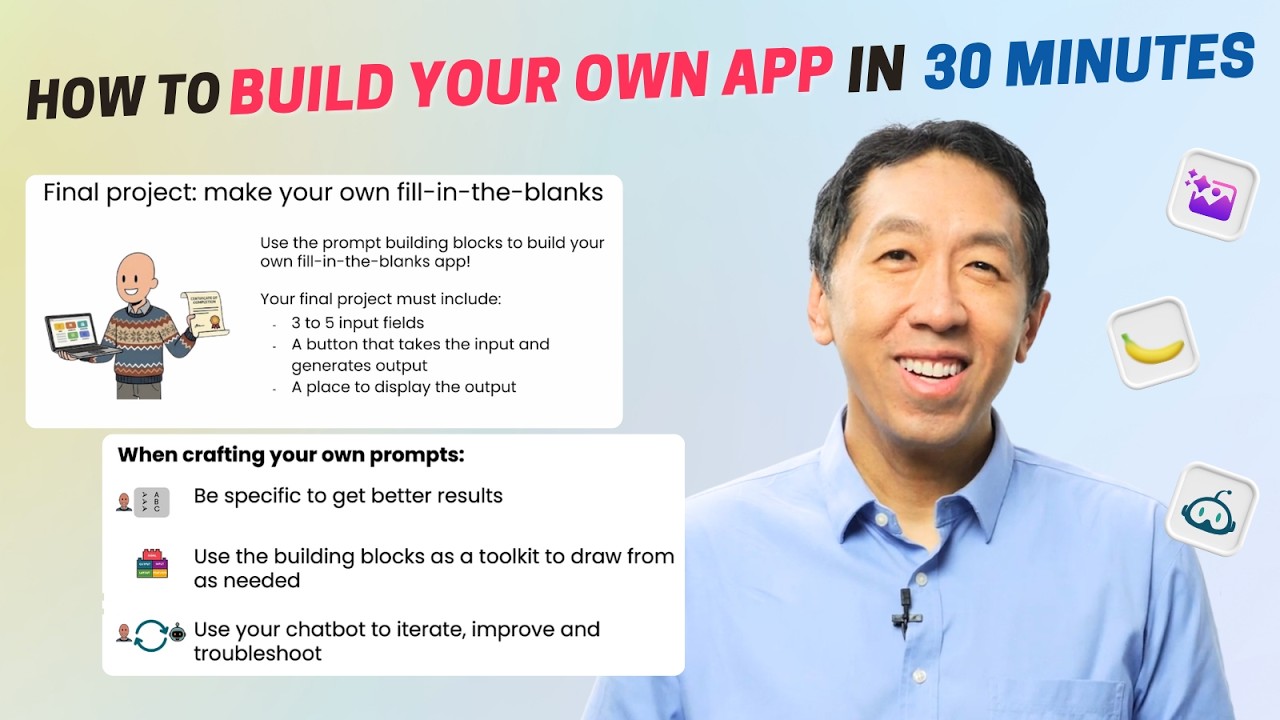
Build Your Own App In Just 30 Minutes! Full Course with Andrew Ng

This course teaches build-engineering principles for modern software development by leveraging AI tools (like ChatGPT or Gemini). Instead of writing code manually, users learn 'prompting'—the art of giving precise instructions to an AI system to generate functional web applications (HTML files). The process emphasizes iterative refinement and mastering five key building blocks: Goal, Input, Layout, Special Features, and Output. By following this framework, users can build complex tools, such as a birthday card generator or a ping pong game, with minimal coding experience.

Key takeaways

  1. The Power of Prompting 4:30

    Creating software in the AI era involves telling the AI what to do (prompting) rather than typing out code. The more specific and precise the prompt, the more predictable the resulting application will be.

  2. The Five Building Blocks of Prompts 6:10

    To build effective prompts, consider these five components: 1) The Goal (what to create), 2) User Input (data the user provides), 3) Layout (arrangement of parts), 4) Special Features (additional functionality), and 5) Output (the desired result format).

  3. Iterative Development and Troubleshooting 11:20

    Software development is an iterative process. If the initial AI-generated app has bugs or needs improvement, users must continue the conversation with specific instructions (e.g., 'Nothing happens when I click on the generate card button. Can you fix it for me?').

Watch on YouTube Full article