Topic

Software Development Lifecycle

All digests tagged Software Development Lifecycle

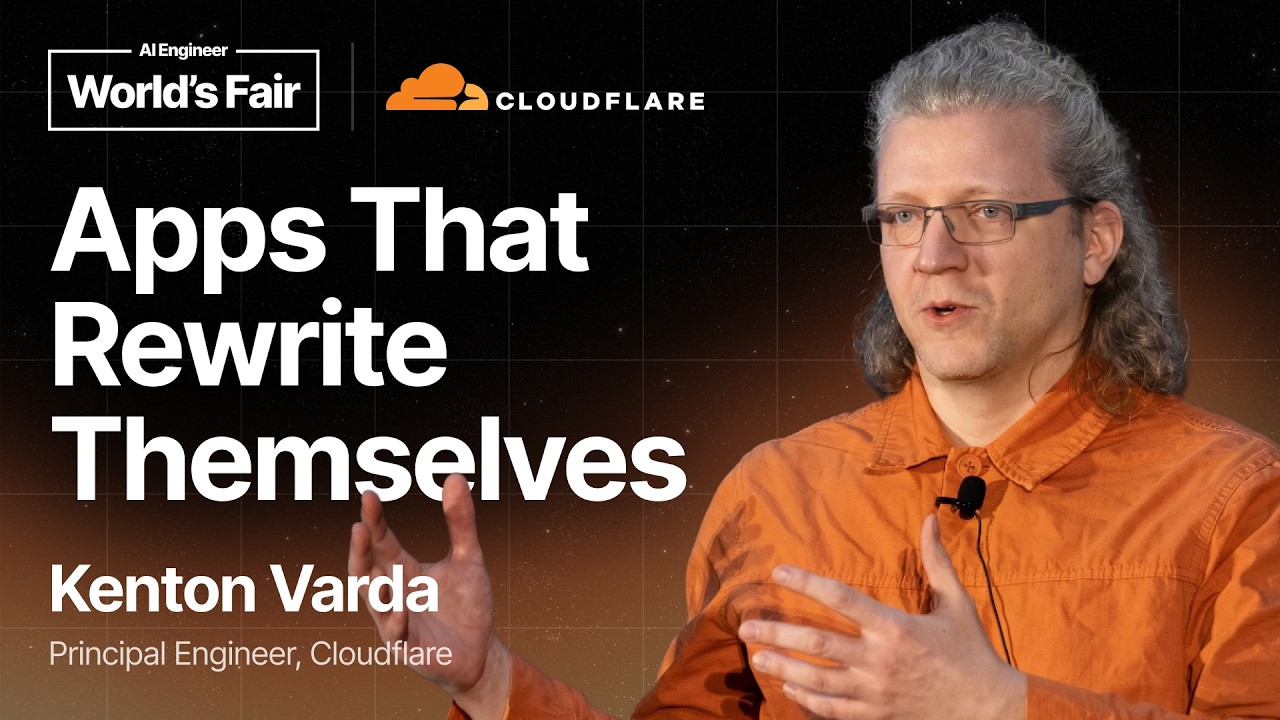
Gadgets: Personal app vibe coding that is actually safe — Kenton Varda, Cloudflare thumbnail

· 18:54

Gadgets: Personal app vibe coding that is actually safe — Kenton Varda, Cloudflare

The talk argues that modern personal AI code generation capabilities fundamentally break traditional cloud infrastructure models designed for single-version applications. Kenton Varda introduces 'Gadgets,' a new application paradigm built on Cloudflare Workers. Gadgets allow users' agents to add custom features directly to an app instance (like adding strikethrough formatting or generating complex SVGs) without requiring the core developer to rewrite the entire platform, thus bypassing the limitations of centralized cloud architecture and traditional feature request pipelines.

Key takeaways

  1. Personal AI Codegen Breaks Traditional Cloud Infrastructure

    The current model requires developers to handle all user-requested features (filed in Jira) through massive, multi-year plugin rewrites. This process is slow and often fails. Personal AI agents offer an alternative where users can have their own agent write and add features directly for their specific use case, keeping the core app clean.

  2. The Limitations of Current Web/Cloud Architecture 13:59

    Traditional web apps run on a developer's server, ensuring all users see one 'blessed version.' This centralization prevents user customization. The proposed Gadget model ensures that each gadget is an isolated instance, and sharing/access control is managed by the platform, not the app itself.

  3. Gadgets Security Model 17:05

    The security architecture isolates components: The UI runs in a null origin iframe sandbox with Content Security Policy. Communication is restricted via `postMessage` to the parent frame, which establishes a Cap'n Web RPC session to server code running in a dynamic worker sandbox (durable objects). This prevents XSS bugs from leaking data outside the isolated environment.

Watch on YouTube Full article

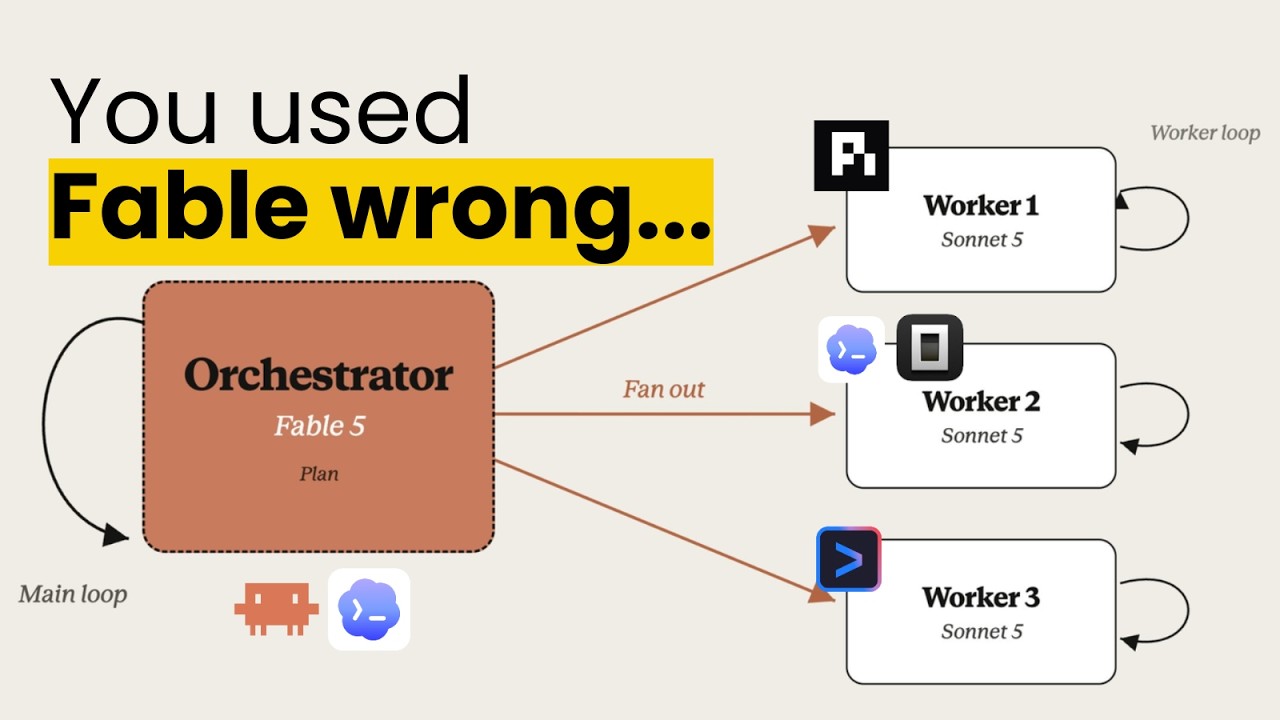
How Forward Deployed Engineering is done at Kepler — Vinoo Ganesh thumbnail

· 22:20

How Forward Deployed Engineering is done at Kepler — Vinoo Ganesh

Forward Deployed Engineering (FDE) should be viewed not as a go-to-market function, but fundamentally as a product strategy. FDE engineers act as extensions of the core product team, solving concrete, small-scale customer problems in their live environment to identify generalized product opportunities. The process involves observing user workflows, defining the underlying domain language (ontology), and ensuring that temporary fixes are built with production readiness in mind.

Key takeaways

  1. FDE is a Product Strategy, Not a Role 3:35

    The core insight of FDE is that it must function as an extension of the product team to identify areas for generalization. The goal is to define and solve the underlying problem, not just implement the requested solution.

  2. Solve Small Problems First 8:11

    When a customer presents a massive requirement (e.g., a custom BI tool), focus on solving the most immediate, trivial problem first (like a Slack alert). This builds trust and allows the product team to gain ownership of the solution narrative.

  3. Observe User Pain Points 17:12

    The most valuable intelligence is found by observing user behavior (e.g., repetitive tasks, copying/pasting between tools, or using a phone during workflow). These actions indicate missing features or bugs that documentation will never reveal.

  4. Define the Ontology and Language 20:33

    FDE must define the domain's terminology (the ontology) to standardize ambiguous terms. By canonicalizing nouns (entities, e.g., 'clients') and verbs (operations), the engineer controls the language that the entire system is built upon.

Watch on YouTube Full article

Logs Are All You Need: Rethinking Observability with AI Agents thumbnail

· 46:40

Logs Are All You Need: Rethinking Observability with AI Agents

Sherwood Callaway introduces Sazabi, an AI-native observability platform designed to disrupt traditional tools like Datadog by focusing on logs as the primary source of truth. The core philosophy is that in the age of coding agents, engineers should interact with production data via natural language chat rather than complex dashboards. Key technical innovations include using Git for persistent agent memory across multiple threads and implementing a read-only sandbox environment to safely execute investigative tasks.

Key takeaways

  1. Logs are Sufficient: Rethinking Observability 22:20

    The traditional 'three pillars' (metrics, logs, traces) are considered overkill for modern agentic workflows. By focusing solely on logs, instrumentation becomes significantly simpler, requiring only basic logging statements, as the platform can reconstruct metrics and traces from log data.

  2. AI Agents Generate Alerts, They Don't Evaluate Them 28:00

    Instead of using AI to triage noisy alerts (alert fatigue), Sazabi autonomously generates actionable alerts directly from logs and codebase analysis. The agent determines what is meaningful to the user at runtime.

  3. Agent Memory via Git for Shared State 34:05

    Sazabi maintains persistent, shared memory across multiple parallel sub-agents and threads by committing findings (e.g., issue lists, facts) to a dedicated Git branch within the sandbox environment. This allows agents to benefit from collective findings.

  4. Sandbox Isolation and Read-Only Access 30:30

    The platform operates in a read-only system with no public internet access, ensuring security. All actions are routed through an isolated sandbox environment (e.g., using `bash` tools) to prevent data exfiltration or unauthorized changes.

Watch on YouTube Full article