Tmux + Fable = Cut 35% less token
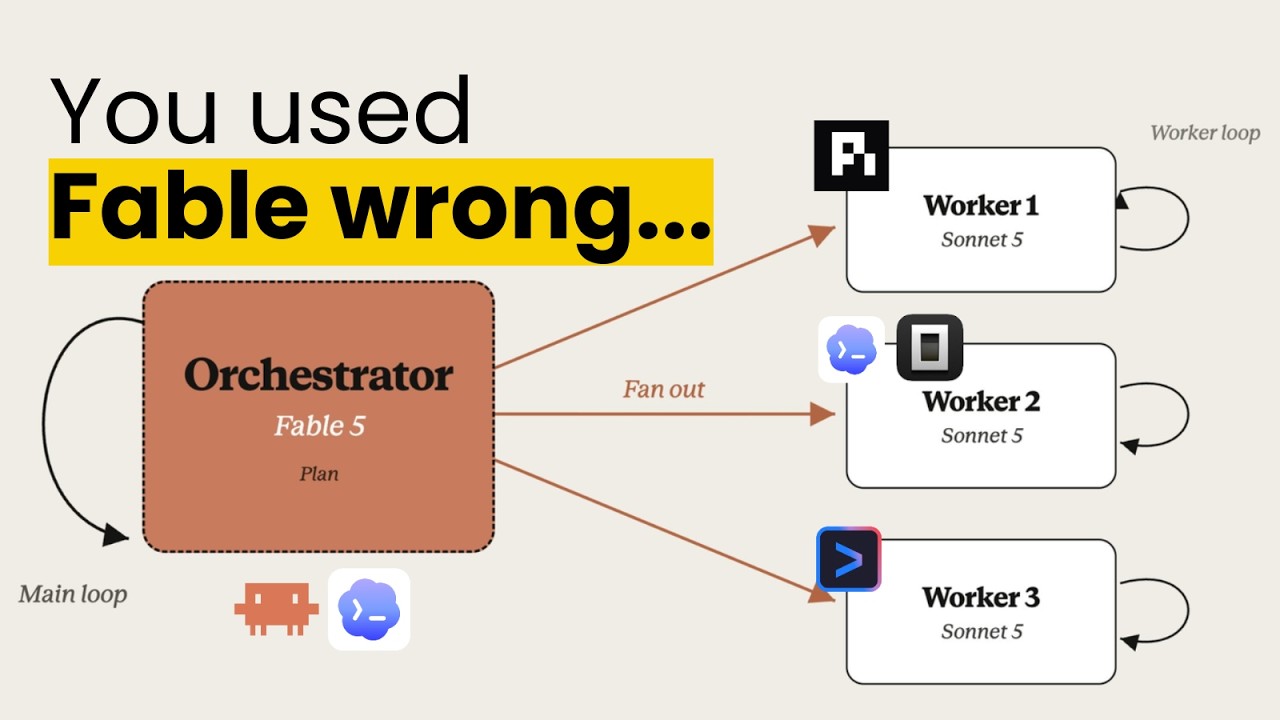
The video details advanced strategies for optimizing AI coding agent workflows, focusing primarily on reducing token consumption and maintaining context persistence. The core recommendation is shifting from using powerful but expensive frontier models (like Fable 5) as the primary executor to utilizing them only as advisors or planners, while delegating hands-on work to smaller, cost-effective models (like Sonnet 5). Techniques covered include implementing persistent 'sidekick' sessions via Cloud Code Agent Teams and leveraging terminal multiplexers like Tmux for universal agent orchestration.
Key takeaways
-
Optimize Model Roles for Cost Efficiency
2:01
It is recommended to use a powerful model (e.g., Fable 5) as the advisor/planner, but delegate execution to smaller models (e.g., Sonnet 5). This approach is more cost-efficient than using the expensive model as the main executor because the advisor role benefits from cached context rather than reading full conversation history.
-
Leverage Persistent Agent Sessions (Sidekicks)
5:20
Traditional sub-agents lose context upon completion, leading to wasted tokens when making edits. Using persistent sessions (like Cloud Code's Agent Teams) ensures the main agent can send follow-up messages that inherit all past context cheaply via cached tokens.
-
Universal Agent Orchestration with Tmux
12:26
Tmux, a terminal multiplexer, allows users to run and manage multiple independent coding agents (e.g., Grok, Pi Agent) in parallel sessions within a single terminal. This provides a low-level way to achieve agent team functionality across different AI tools.
-
Advanced Orchestration Tools
While Cloud Code offers built-in delegation rules via `cloud.md`, dedicated platforms like Orca provide an integrated, packaged experience with out-of-the-box orchestration skills and better visibility into multiple running sessions.