Topic

Semantic Search

All digests tagged Semantic Search

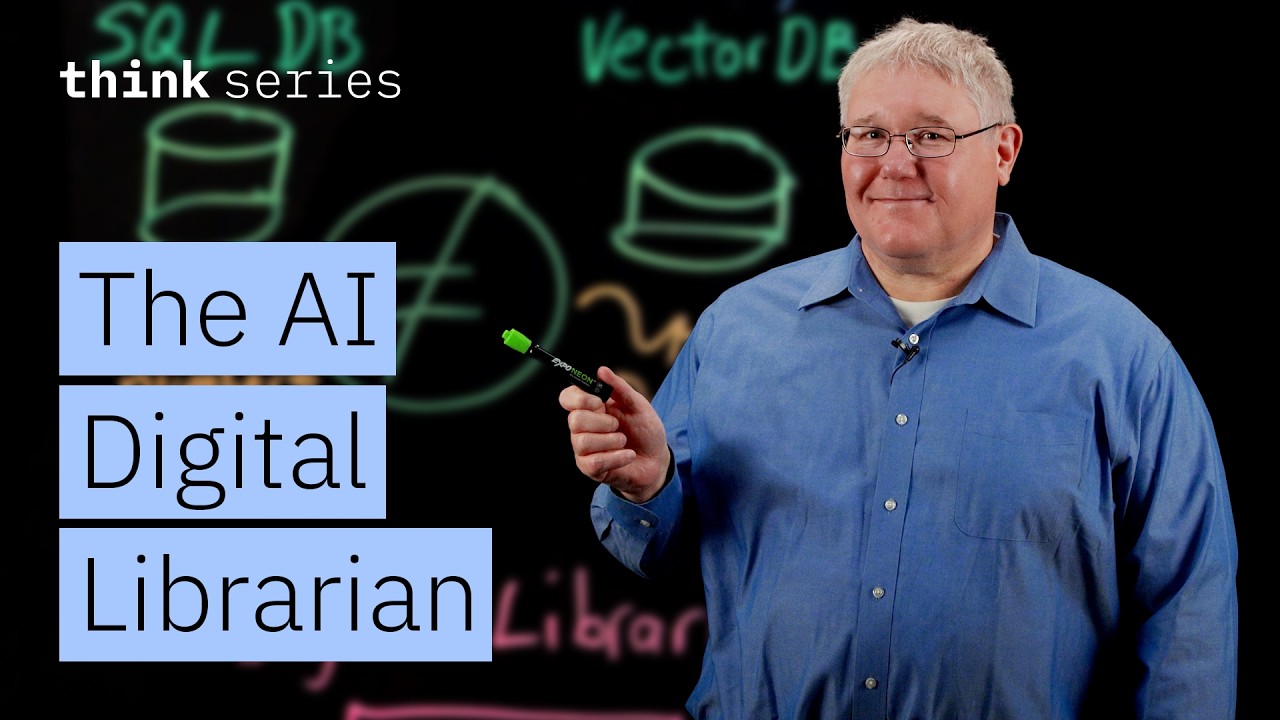
What Is a Digital Librarian AI Agent? Connecting SQL & Vector Database thumbnail

· 5:21

What Is a Digital Librarian AI Agent? Connecting SQL & Vector Database

The video introduces the concept of a Digital Librarian AI Agent designed to solve the 'what versus why' data problem common in enterprise systems. This agent is an advanced workflow that connects structured data (SQL databases) with unstructured context (vector databases/PDFs). Instead of simply retrieving siloed data, the agent uses LLMs and multi-step reasoning to synthesize information, transforming a repository into a functional reasoning engine capable of delivering grounded answers.

Key takeaways

  1. The 'What vs. Why' Data Problem

    Structured data (the 'what,' e.g., denial status) resides in SQL tables, while the contextual rules and fine print (the 'why,' e.g., policy details) are buried in unstructured documents like PDFs or manuals, leading to fragmented insights.

  2. The Agentic Workflow 2:00

    A Digital Librarian AI Agent performs a six-step process: (1) Read the question; (2) Determine if the answer requires SQL or vector search; (3) Build necessary queries; (4) Execute queries against both databases; (5) Compile results; and (6) Answer the original question with a single, grounded insight.

  3. Advanced Data Retrieval 4:30

    By moving from simple data queries to agentic workflows, systems transition from merely retrieving data points to delivering reasoned answers, turning siloed repositories into reasoning engines that operate at business speed.

Watch on YouTube Full article

Robert Overweg - One Brain, No Filtering - AI Native DevCon June 2026 thumbnail

· 31:25

Robert Overweg - One Brain, No Filtering - AI Native DevCon June 2026

The presentation details a 'One Brain' concept—a centralized, AI-native knowledge management layer designed to eliminate information silos and improve decision-making by weaving together research, client context, and operational data. The system uses an orchestrator (OpenClaw) and structured vaults to allow agents to access and synthesize organizational knowledge in real time, shifting focus from manual file retrieval to idea generation and proactive insights.

Key takeaways

  1. Shift from File Search to Idea Synthesis 5:40

    The core value lies in moving beyond searching for specific files; the system allows users to search for 'ideas' or 'contacts.' Agents can interpret natural language queries (e.g., asking about CI/CD steps) and provide contextually accurate answers based on stored knowledge.

  2. Structured Knowledge Flow 7:10

    Knowledge is categorized into 'company knowledge' (new developments, research wikis) and the 'creation pipeline.' Information must be promoted to a central vault from various sources (e.g., Obsidian notes, meeting transcripts) to gain grounding in reality before being shared widely.

  3. Scaling and Security Challenges 17:32

    While the system is powerful, scaling remains a challenge, particularly regarding data segregation (permissions) across different client or team buckets. The local setup on one person's laptop was initially used for testing, but enterprise rollout requires careful consideration of security boundaries.

Watch on YouTube Full article