What Is a Digital Librarian AI Agent? Connecting SQL & Vector Database
Summary
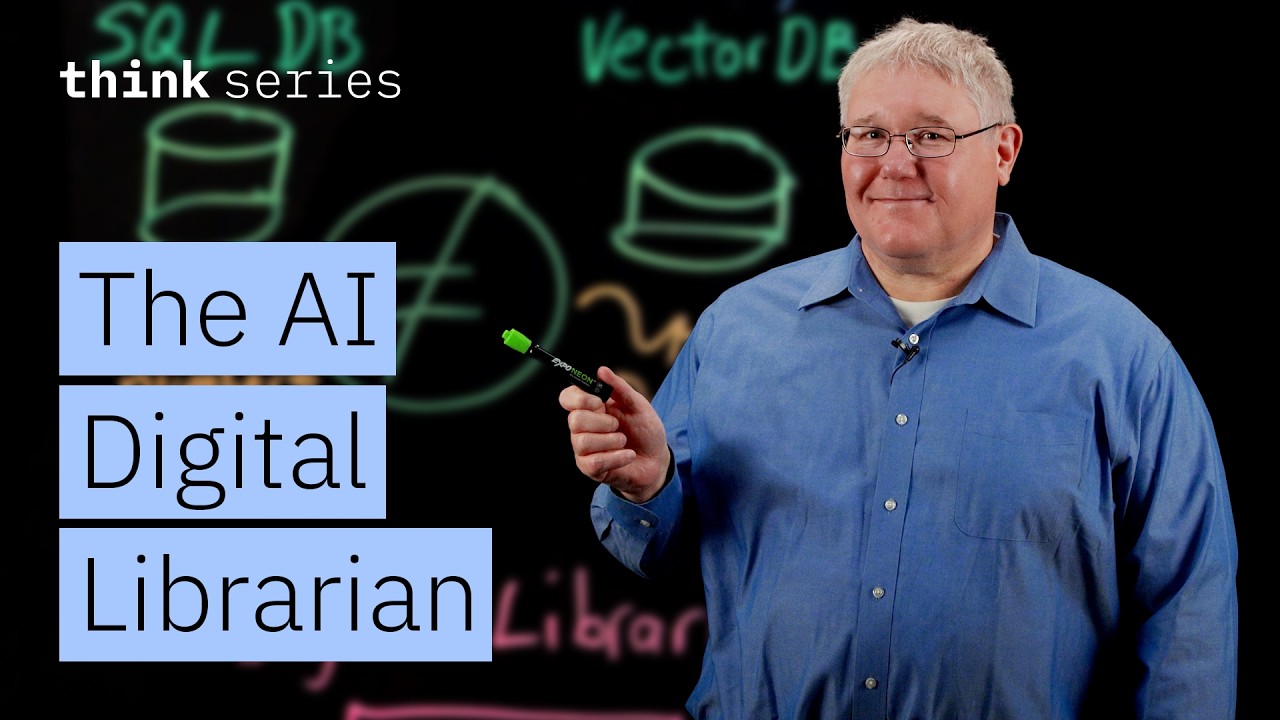
The video introduces the concept of a Digital Librarian AI Agent designed to solve the 'what versus why' data problem common in enterprise systems. This agent is an advanced workflow that connects structured data (SQL databases) with unstructured context (vector databases/PDFs). Instead of simply retrieving siloed data, the agent uses LLMs and multi-step reasoning to synthesize information, transforming a repository into a functional reasoning engine capable of delivering grounded answers.
Key takeaways
-
The 'What vs. Why' Data Problem
Structured data (the 'what,' e.g., denial status) resides in SQL tables, while the contextual rules and fine print (the 'why,' e.g., policy details) are buried in unstructured documents like PDFs or manuals, leading to fragmented insights.
-
The Agentic Workflow
2:00
A Digital Librarian AI Agent performs a six-step process: (1) Read the question; (2) Determine if the answer requires SQL or vector search; (3) Build necessary queries; (4) Execute queries against both databases; (5) Compile results; and (6) Answer the original question with a single, grounded insight.
-
Advanced Data Retrieval
4:30
By moving from simple data queries to agentic workflows, systems transition from merely retrieving data points to delivering reasoned answers, turning siloed repositories into reasoning engines that operate at business speed.
Technical details
-
Agent Components and Tools
180s
The agent's execution relies on multiple tools: Large Language Models (LLMs) for understanding the question and constructing queries; database connectors for running SQL queries against structured data; and specialized code (e.g., Python) for reformatting information retrieved from various sources.
-
Data Integration Architecture
200s
The core mechanism involves formulating a plan to query both the SQL database (for precise, hard numbers/status) and performing semantic search on the vector database (for contextual paragraphs and rules), then synthesizing these two streams of information.
Mentioned resources
Channel & topics
Watch on YouTube · Back to latest
This independent, AI-assisted summary is provided for commentary and informational purposes. It may contain errors or omit important context. Please watch the original video for the creator's complete presentation. Video, thumbnail, and related copyrights belong to their respective owners.