Topic

Data Modeling

All digests tagged Data Modeling

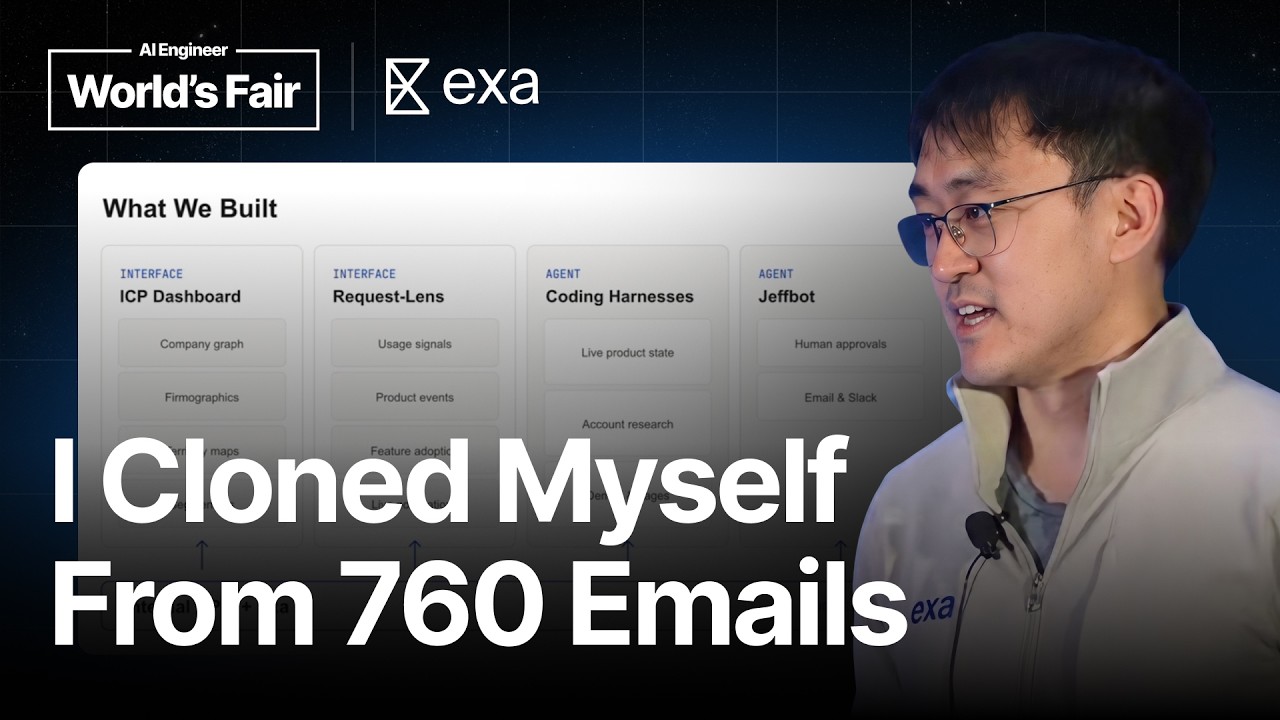
Knowledge Systems: The New GTM Stack — Jeffrey Wang, Exa thumbnail

· 18:49

Knowledge Systems: The New GTM Stack — Jeffrey Wang, Exa

Jeffrey Wang argues that Go-To-Market (GTM) strategy must be treated as an AI engineering problem. The core thesis is that GTM is fundamentally a data problem, requiring the creation of a 'live model of your world' that autonomous agents can act upon. He details systems like Exa (a search engine for agents), the ICP dashboard for classifying the Total Addressable Market (TAM), and Request Lens for real-time customer signal detection. Key architectural principles include making the system API-first, recognizing that consistent UIs still complement flexible chatbots, and prioritizing arbitrary customizability over rigid build vs. buy decisions.

Key takeaways

  1. GTM as a Data Problem 4:56

    The goal is to build a live model of the world—combining internal data (customer usage) with external data (web activity, company information)—that agents can programmatically act on. This shifts GTM from a purely sales function to an engineering challenge.

  2. Agent-First Requires API-First 16:59

    For any agent system (whether it's a GUI or a chatbot) to access data, the underlying systems must expose robust programmatic interfaces (APIs). This is critical for enabling agents to function.

  3. System Components: ICP Dashboard & Request Lens 8:38

    The ICP dashboard uses Exa's embeddings over the internet to classify every company in the TAM and estimate anticipated spend. Request Lens provides real-time alerts when significant customer signals occur (e.g., signups, search surges).

  4. The Value of AI Cloning (Jeffbot) 13:42

    An agent can be trained on historical data to mimic a user's professional style and decision-making. Jeffbot was built by analyzing 760 emails and hundreds of past decisions, creating 'evals' to calibrate its judgment against the founder’s own behavior.
Watch on YouTube Full article

From Systems of Record to Systems of Context — Omri Bruchim, monday.com thumbnail

· 15:58

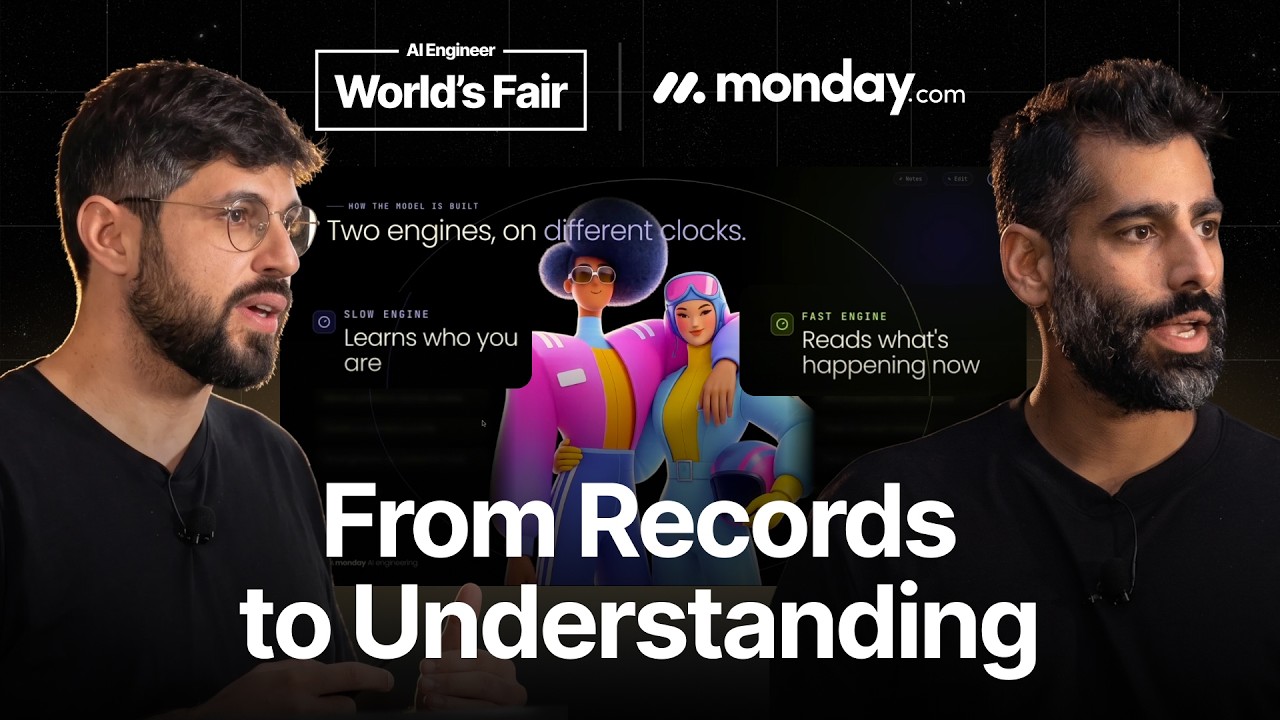
From Systems of Record to Systems of Context — Omri Bruchim, monday.com

The talk outlines a fundamental shift in enterprise software from 'Systems of Record'—which merely log what happened—to 'Systems of Context,' which actively understand the meaning and connections between data points. monday.com addresses this challenge by building a 'Monday world model' using two distinct, precomputed engines: a slow engine for durable, long-term user profiling (who you are) and a fast engine for real-time signals (what is urgent today). This architecture mirrors both the brain's hippocampus/neocortex function and the Lambda data architecture, ensuring that AI agents can reason on deep context rather than just retrieving disconnected data.

Key takeaways

  1. The Problem: Data vs. Understanding

    Current AI assistants have access to vast amounts of data (boards, emails, Slack messages) but often fail because the core problem is not retrieval (data availability), but 'understanding'—the ability to connect disparate pieces of information and determine true user priority.

  2. The Solution: System of Context

    Instead of just logging events, the system must build a context layer ahead of time. This 'Monday world model' allows AI agents (like Sidekick/Psyche) to understand not only *what* happened but *why* it matters and *who* is affected.

  3. Architectural Design: Two Engines 13:35

    The context layer is built using two engines running on different time windows. The slow engine mines weeks of activity to build a durable profile of user patterns and goals, while the fast engine processes recent data for live signals and immediate urgency.

  4. Resilience and Intelligence

    This dual-engine approach provides resilience; if one source fails, the system degrades gracefully. Furthermore, it allows the AI to understand when to be proactive (notify) and when to remain silent.

Watch on YouTube Full article