Topic

Game Development

All digests tagged Game Development

What is Gemini 3.7 Flash? thumbnail

· 0:47

What is Gemini 3.7 Flash?

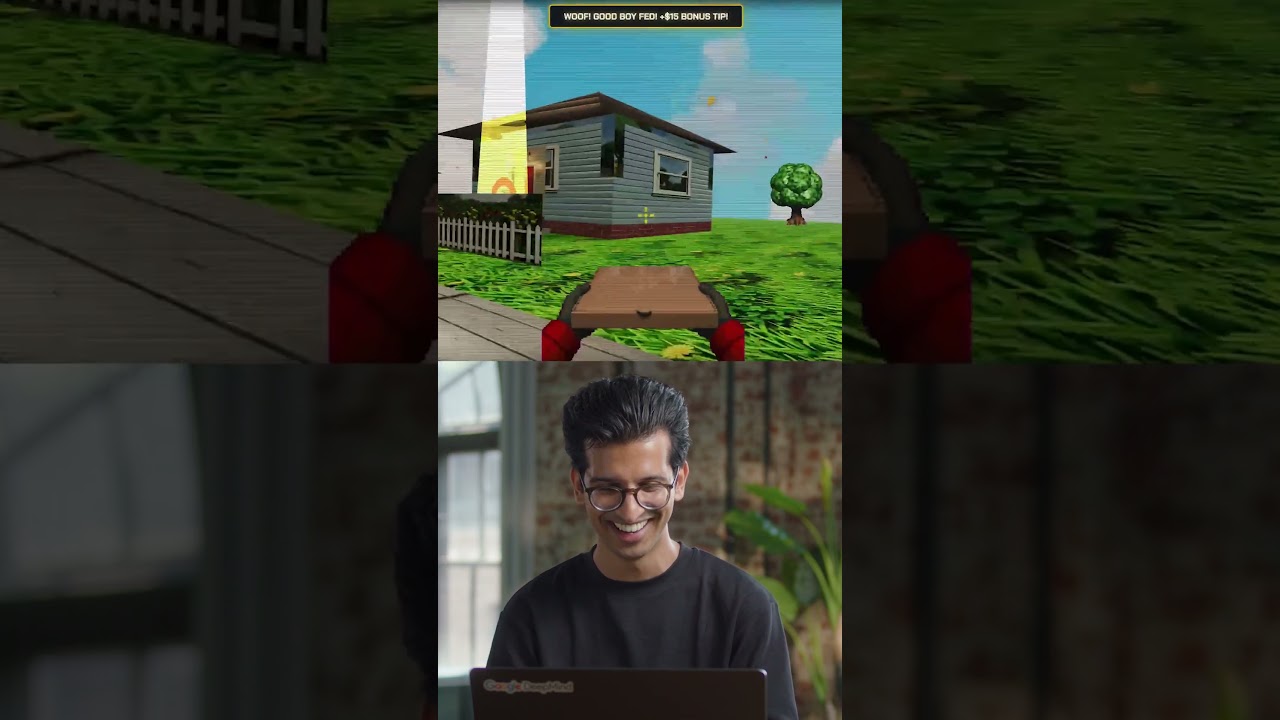
The video demonstrates the use of Gemini 3.7 Flash, described as an intelligent 'workhorse model,' for rapid game prototyping and development within Google Antigravity. The speaker showcases generating a detailed, playable animated sprite-based game (a 'pizza rush' concept) from a single prompt, highlighting the model's ability to generate complex initial codebases that can be extended for features like multiplayer functionality.

Key takeaways

  1. Gemini 3.7 Flash Capabilities

    The model is positioned as an intelligent 'workhorse' for coding and agents, capable of generating detailed, playable games from initial prompts (e.g., a pizza rush game).

  2. Code Quality Improvements 0:15

    Beyond gaming, the model shows improvements in shipping quality code across debugging, web development, and overall design adherence.

Watch on YouTube Full article

Introducing Gemini 3.7 Flash thumbnail

· 2:33

Introducing Gemini 3.7 Flash

Gemini 3.7 Flash is introduced as a highly capable 'workhorse model' optimized for coding and agent-first workflows. The video demonstrates its power by building complex, animated sprite-based games within Google Antigravity, showcasing the ability to generate assets (using Nano Banana Pro) from single prompts. A key feature highlighted is the model's capacity for radical concept remixing—adapting an entire game world (e.g., from 'sorcerers' to a 'pizza delivery driver') with minimal prompt changes.

Key takeaways

  1. Agent-Driven Game Prototyping 0:15

    The model successfully generates assets and builds an entire game level (e.g., 90s animated sprite game) from a single prompt within Google Antigravity, demonstrating high design adherence.

  2. Concept Remixing Capability 1:05

    The model can adapt an entire game's look and feel to a completely different concept (e.g., changing the theme from sorcerers to a suburban pizza delivery driver) by modifying only a few words in the prompt.

  3. Model Improvement Areas 1:45

    Gemini 3.7 Flash shows improvements across debugging, web development, and overall design adherence, resulting in higher fidelity builds with less back-and-forth iteration.

Watch on YouTube Full article

Local Agentic Theory For Mobile Games — Shafik Quoraishee & Joanne Song, The New York Times thumbnail

· 18:04

Local Agentic Theory For Mobile Games — Shafik Quoraishee & Joanne Song, The New York Times

The presentation outlines 'Local Agentic Theory' for mobile games, arguing that the future of AI gaming lies in decentralized, on-device agents rather than centralized cloud models. These local agents use advanced techniques (like LLM reasoning over game state) to provide highly personalized experiences. Furthermore, this approach allows accessibility features to move beyond static toggles, enabling real-time, dynamic tuning of gameplay difficulty and interaction controls based on the user's live context (e.g., tracking eye gaze or shaky taps).

Key takeaways

  1. Local Computation is Essential for Mobile AI 4:09

    Running AI locally minimizes latency, avoids expensive cloud inference calls, and ensures privacy by keeping computation within the device's security zone. This allows advanced AI features to function reliably even without constant internet connectivity (e.g., in a subway tunnel).

  2. Agentic Systems vs. Reinforcement Learning (RL) 7:36

    While RL models train by changing weights through cycles, an agentic system uses language models and in-context learning to reason over the game's state space. This allows for a more dynamic loop that adapts to new situations using local device functionality.

  3. The Device Budget Constraint 13:39

    Local agents must operate within strict resource budgets: time (fitting planning into a single 16ms frame for 60Hz refresh rates), space (managing model weights and state history compression), and energy (optimizing processing to prevent rapid battery drain).

  4. Accessibility as a Graded Dial, Not Toggles

    Traditional fixed-state games are limited by static menus. The proposed model uses international standards like WCAG 2.2 to build dynamic player states. Agents can actively monitor user input (e.g., tracking eye gaze or analyzing shaky taps) and dynamically adjust controls—such as resizing targets or injecting exit routes from focus traps—to meet the player's real-time needs.

Watch on YouTube Full article