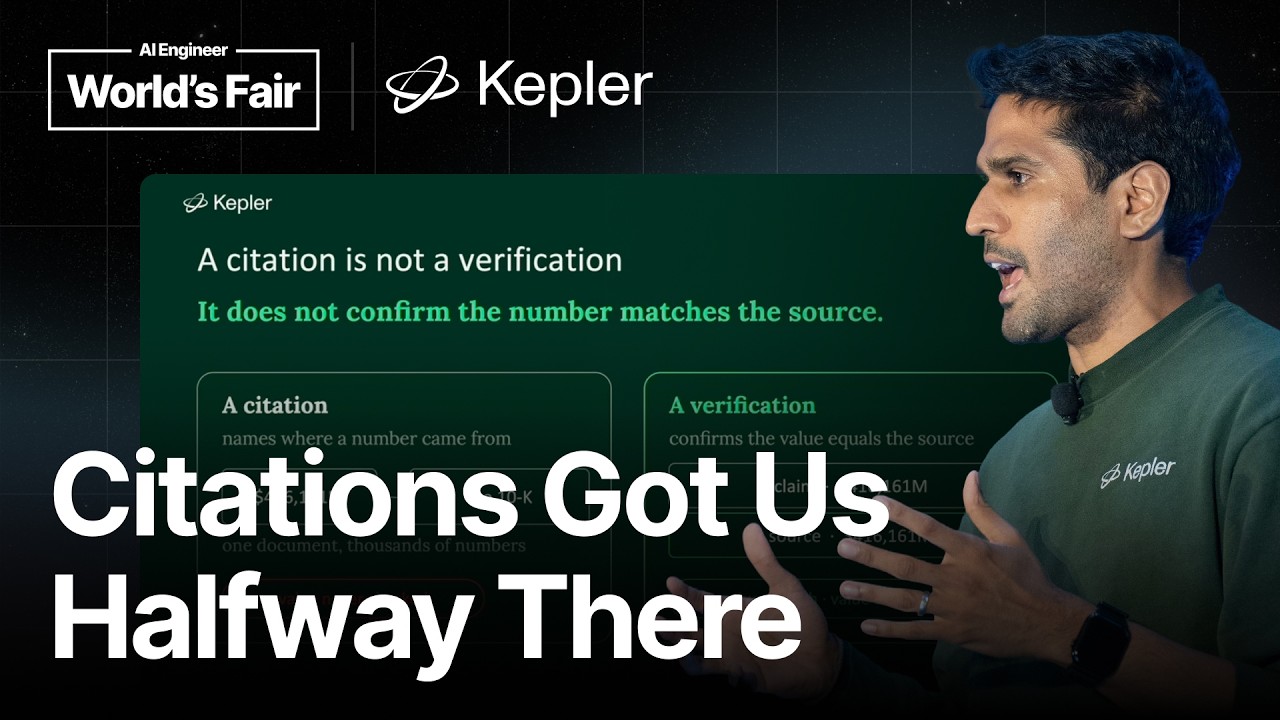
How Kepler Built Verifiable AI for Financial Services — Vinoo Ganesh
Kepler demonstrates how to build verifiable AI for finance by augmenting LLMs with deterministic substrates, ensuring every number is traceable and auditable.
Read articleChannel
Digests from AI Engineer
Kepler demonstrates how to build verifiable AI for finance by augmenting LLMs with deterministic substrates, ensuring every number is traceable and auditable.
Read article
Synthetic personas use LLMs to simulate human behavior, but they require careful validation. Learn how failure modes like latent confounders and distribution shape loss can mislead results, emphasizing that models are forecasts, not ground truth.
Read article
Off-the-shelf LLMs provide fluent but inaccurate advice—the 'fluent bluff.' The solution requires grounding models in verifiable State-Action-Outcome records, moving finance toward outcome-driven AI.
Read article
Nubank accelerated agent deployment by 20x using simulations. By generating grounded, multi-turn synthetic data instead of relying on slow production traces, teams can rapidly test and derisk AI agents.
Read article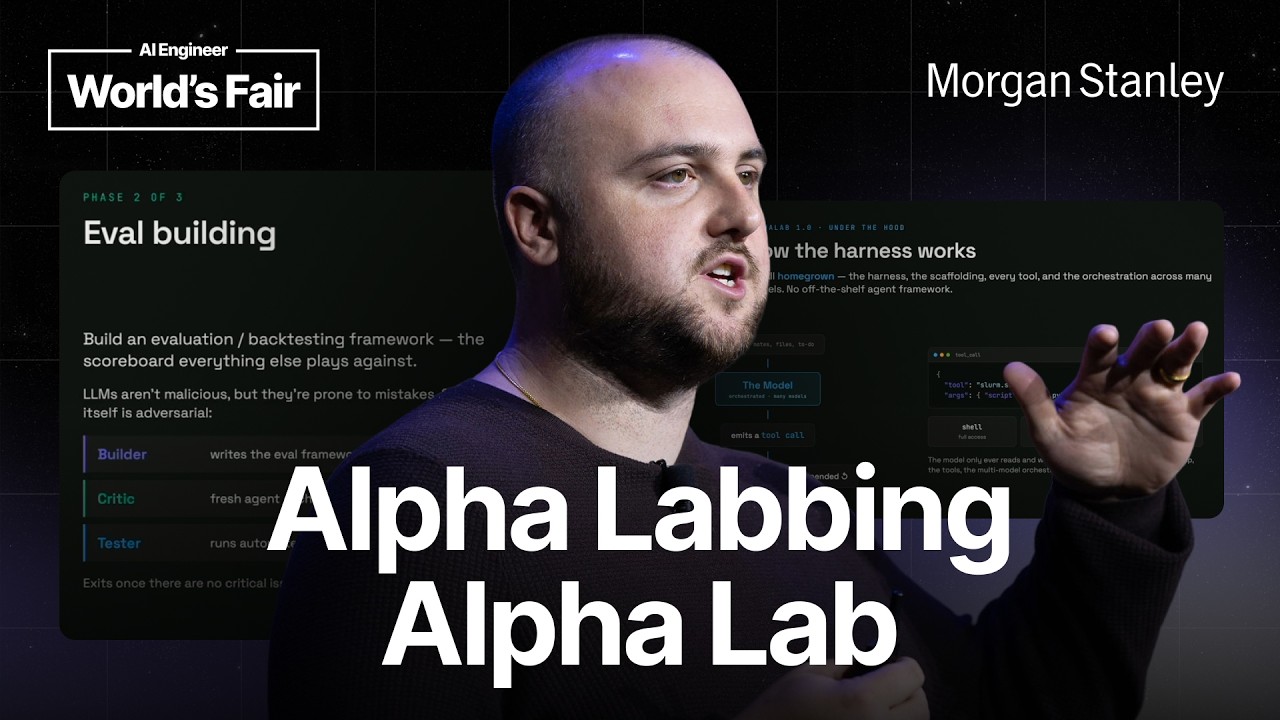
AlphaLab is a multi-agent system that automates quant research by managing the entire lifecycle: from natural language problem input to running cluster jobs and statistical tests. Its core value lies in building verifiable evaluation environments.
Read article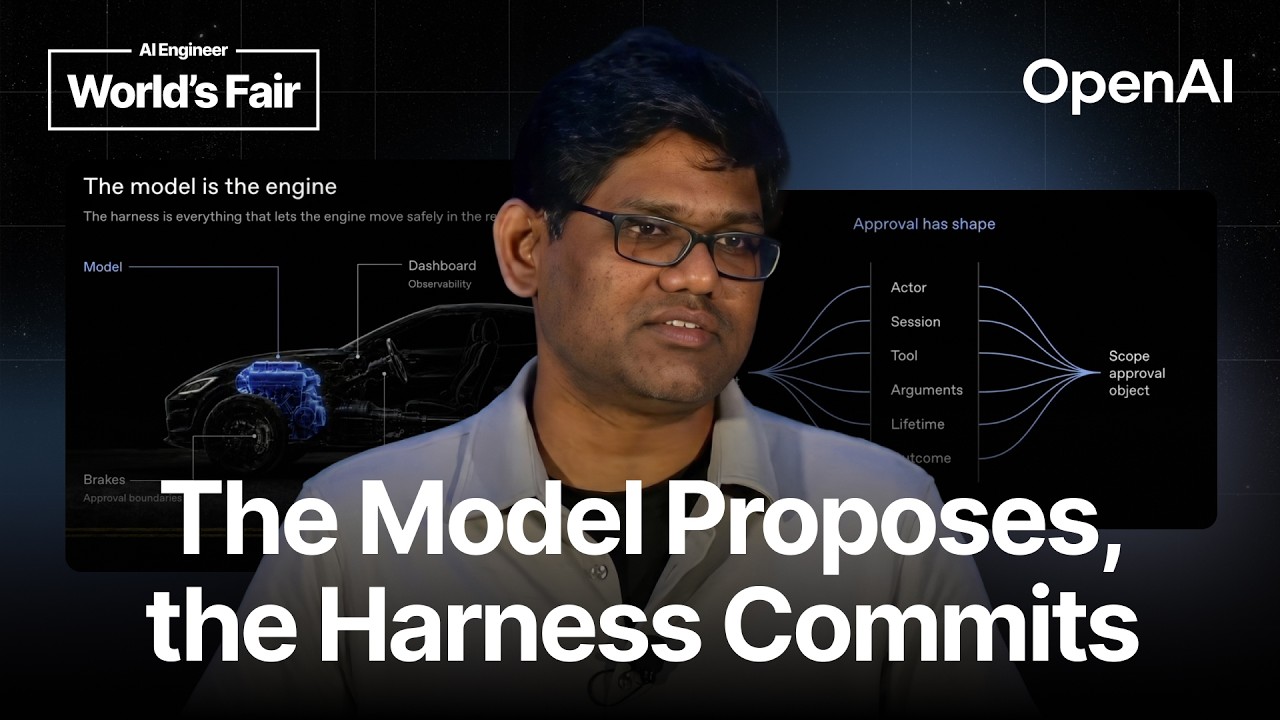
Most agent failures are harness failures, not model failures. The system must own state transitions, enforce ordered commits, and use a run receipt to prove actions were visible to the user.
Read article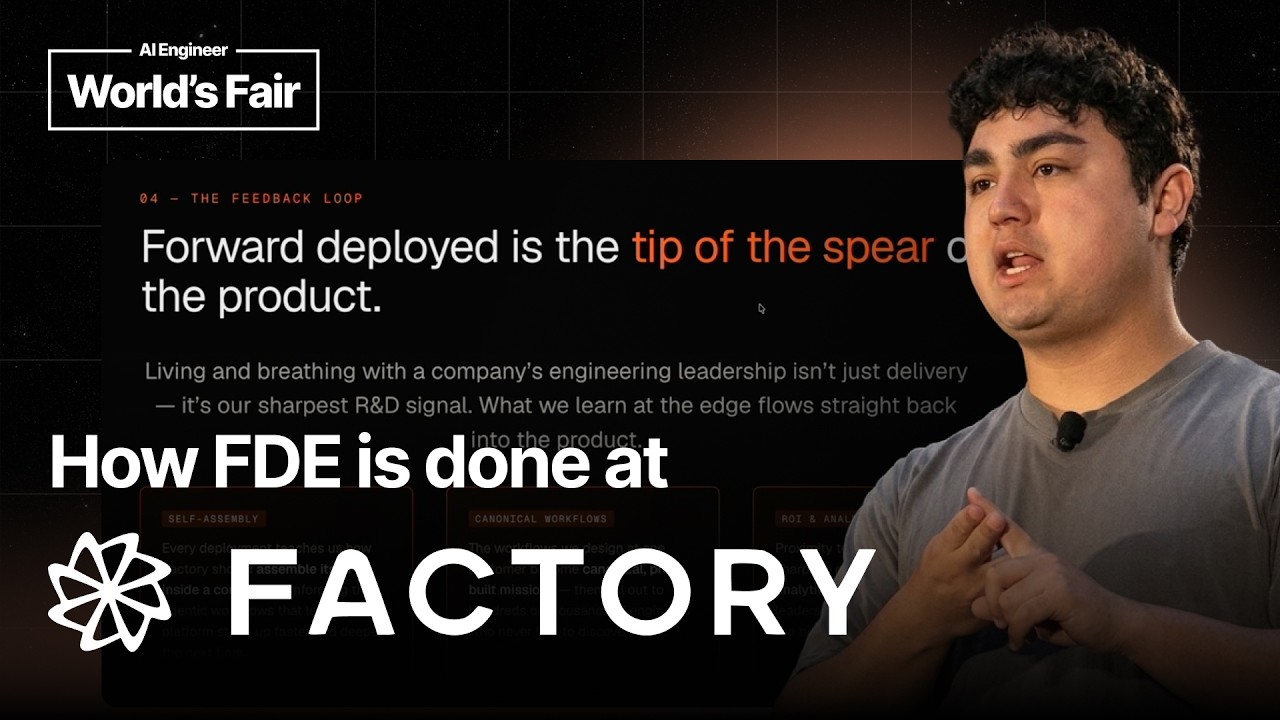
Forward Deployed Engineering is transforming into building autonomous 'Software Factories.' This process automates the entire signal-to-deploy pipeline using agent harnesses and measuring codebases for 'agent readiness' to achieve massive scale.
Read article
AI success hinges on Forward Deployed Engineers mapping complex human workflows onto existing enterprise systems. The solution involves building agents on top of legacy platforms, using dependency graphs, and post-training models for context extraction.
Read article
FDE at Cognition measures value by outcomes, not token usage. The goal is to maximize the overlap between product capabilities and customer problems across the entire SDLC.
Read article
FDE success requires two principles: always scoping requests rigorously before building, and scaling processes by automating every stage of the pipeline using AI agents.
Read article
Forward Deployed Engineering (FDE) has evolved from simple DevOps to an outcome-based discipline. As AI makes coding cheap, the value shifts to data integration and customer accountability.
Read article
Forward Deployed Engineering (FDE) at Decagon is identical to product engineering. The goal is ensuring custom work compounds into a self-serve platform, scaling from bespoke deployments to generalized products.
Read article
FDE must be viewed as a product strategy, not a go-to-market function. By solving small problems and defining the domain's ontology, engineers can extract core product leverage.
Read article
Forward Deployed Engineering (FDE) shifts sales from selling products or services to selling outcomes. This model requires building bespoke solutions on a reusable platform, which is crucial when targeting non-technical enterprise buyers.
Read article
Learn how Netflix built an AI agent to automate performance engineering. Discover how LLMs can read profiling data, find quadratic-time anti-patterns, and propose fixes validated by real production traffic.
Read article
DeepSWE is a contamination-resistant benchmark featuring 113 original software engineering tasks. It tests LLMs on long-horizon problems by focusing on observable behavior rather than PR-derived implementations, revealing critical gaps in model capabilities.
Read article
Data's value lies in the trajectory and reasoning trace, not just the final output. The speaker argues that successful companies must pivot from being mere 'data businesses' to becoming infrastructure providers (neo-labs).
Read article
Scaling LLMs requires sophisticated synthetic data pipelines, rigorous weight hashing checks, and fixing numerical precision bugs (BF16/FP32) to build models like Laguna S (118B parameters).
Read article
Building a safe AI coach for mental health requires more than just LLMs; it demands an eval-driven playbook. SonderMind details its modular, clinically grounded architecture and how they integrate human expert judgment directly into their CI pipeline.
Read article
Instead of massive 40,000 line PRs, adopting control theory loops (Sensor $\rightarrow$ Controller $\rightarrow$ Actuator) is key for building robust, verifiable code in complex systems.
Read article