Topic

Build Process

All digests tagged Build Process

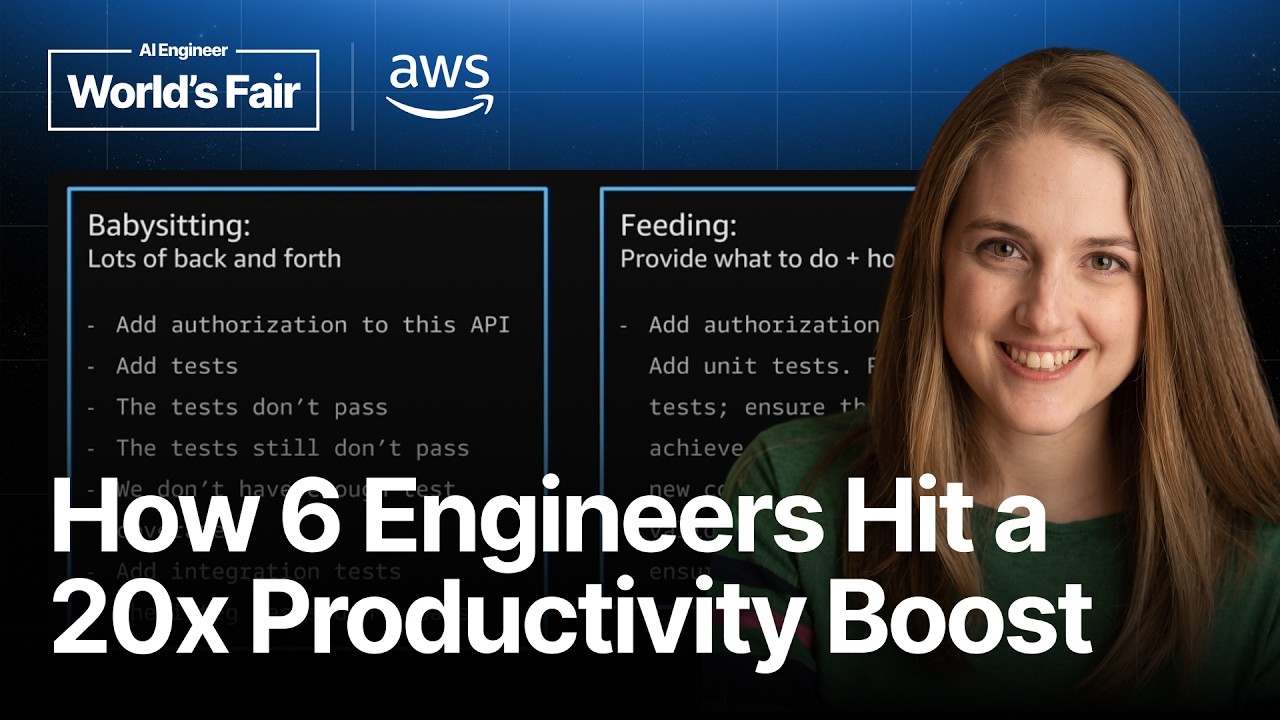
From AI-Assisted to AI-Native: Building a Frontier Development Team — Clare Liguori, AWS thumbnail

· 20:57

From AI-Assisted to AI-Native: Building a Frontier Development Team — Clare Liguori, AWS

Frontier development represents a step-function improvement in productivity using AI agents, moving beyond simple coding assistance. The core finding is that success is not dependent on the tools themselves, but rather on intentionally changing engineering workflows and building new habits. Key practices include investing heavily in agent context, slowing down to refactor codebases (e.g., migrating from untyped languages like Python/JavaScript to TypeScript or Rust), implementing parallel agent execution, making intent explicit via documentation, and shifting testing left using local deterministic mocks.

Key takeaways

  1. Frontier Development Definition

    Productivity gains are characterized by engineers writing only 1-2% of the code; agents running for hours without interruption; and multiple agents operating in parallel. This represents a median productivity improvement of 4.5x to over 10x compared to previous AI phases (0:00, 7:04).

  2. The Importance of Process Over Tools 11:44

    A pilot study involving 50 teams on existing codebases found that the difference between <3x and >4.5x productivity gains was determined by how the team worked, not the AI tools used (9:21).

  3. New Bottleneck Identification 18:58

    As coding speed increases dramatically, the bottleneck shifts from writing code to decision-making speed and organizational review processes. Fast decisions, especially reversible ones, are critical for scaling (11:38).

Watch on YouTube Full article

Harness Engineering is not Enough: Why Software Factories Fail — Dex Horthy, HumanLayer thumbnail

· 19:18

Harness Engineering is not Enough: Why Software Factories Fail — Dex Horthy, HumanLayer

The video argues that current efforts in 'harness engineering' and increasing tokens are insufficient for building reliable AI software factories because they fail to address fundamental model training shortcomings. The core problem is maintaining codebase quality over time (maintainability), which current reward functions do not penalize. To move forward safely, the speaker advocates returning to rigorous human-led upfront planning: Product Review $\rightarrow$ System Architecture $\rightarrow$ Program Design (down to types and call graphs) $\rightarrow$ Vertical Slices.

Key takeaways

  1. The Failure of 'Lights Off' Factories 12:10

    Attempting to run a software factory with no human code review ('lights off') leads to failures, even for advanced agents. The issue is not scale or prompting, but a fundamental model training limitation.

  2. Model Training Flaw (The Maintainability Gap) 17:12

    Current coding models are primarily trained on passing tests and solving one-off problems. Their reward signal does not penalize poor program design or the erosion of codebase maintainability, meaning they get better at passing tests but worse at keeping large systems stable.

  3. The Path Forward: Structured Planning

    To move faster safely, engineers must re-emphasize upfront planning steps: Product Review (desired behavior/mockups), System Architecture (component contracts/data models), Program Design (types and call graphs), and Vertical Slices (implementation order).

Watch on YouTube Full article