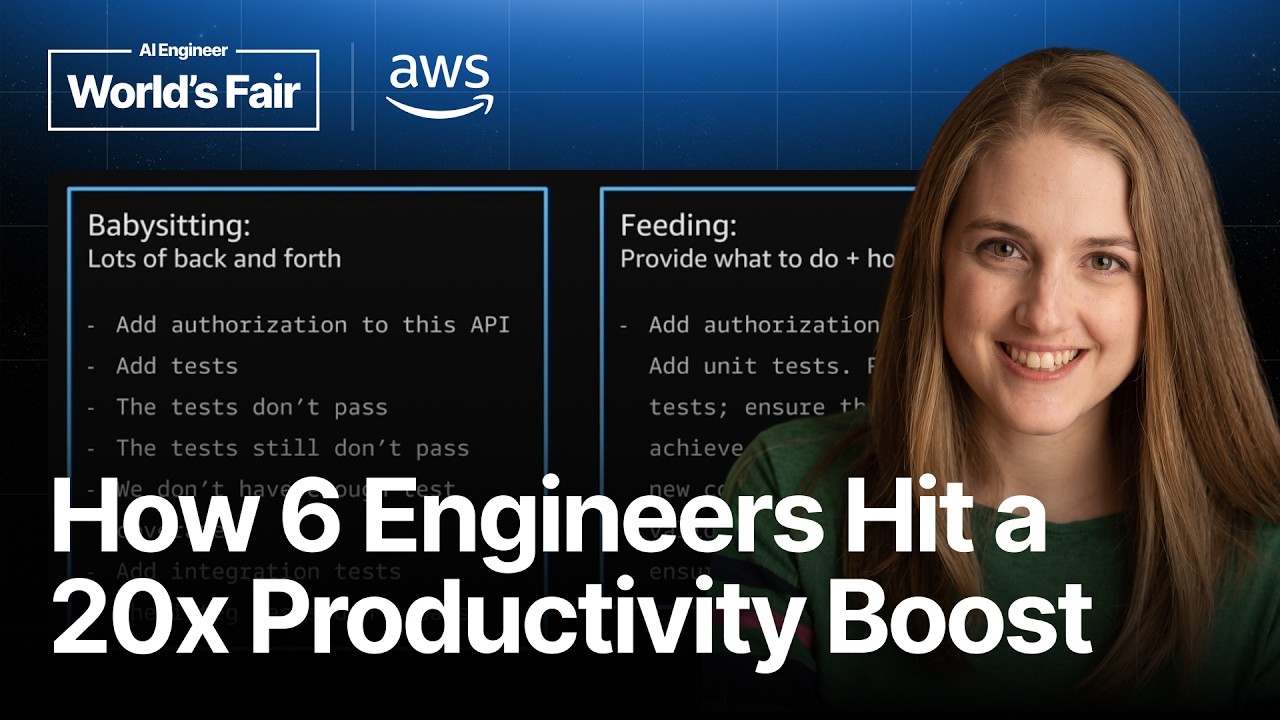
From AI-Assisted to AI-Native: Building a Frontier Development Team — Clare Liguori, AWS
Frontier development represents a step-function improvement in productivity using AI agents, moving beyond simple coding assistance. The core finding is that success is not dependent on the tools themselves, but rather on intentionally changing engineering workflows and building new habits. Key practices include investing heavily in agent context, slowing down to refactor codebases (e.g., migrating from untyped languages like Python/JavaScript to TypeScript or Rust), implementing parallel agent execution, making intent explicit via documentation, and shifting testing left using local deterministic mocks.
Key takeaways
-
Frontier Development Definition
Productivity gains are characterized by engineers writing only 1-2% of the code; agents running for hours without interruption; and multiple agents operating in parallel. This represents a median productivity improvement of 4.5x to over 10x compared to previous AI phases (0:00, 7:04).
-
The Importance of Process Over Tools
11:44
A pilot study involving 50 teams on existing codebases found that the difference between <3x and >4.5x productivity gains was determined by how the team worked, not the AI tools used (9:21).
-
New Bottleneck Identification
18:58
As coding speed increases dramatically, the bottleneck shifts from writing code to decision-making speed and organizational review processes. Fast decisions, especially reversible ones, are critical for scaling (11:38).