Topic

NIST

All digests tagged NIST

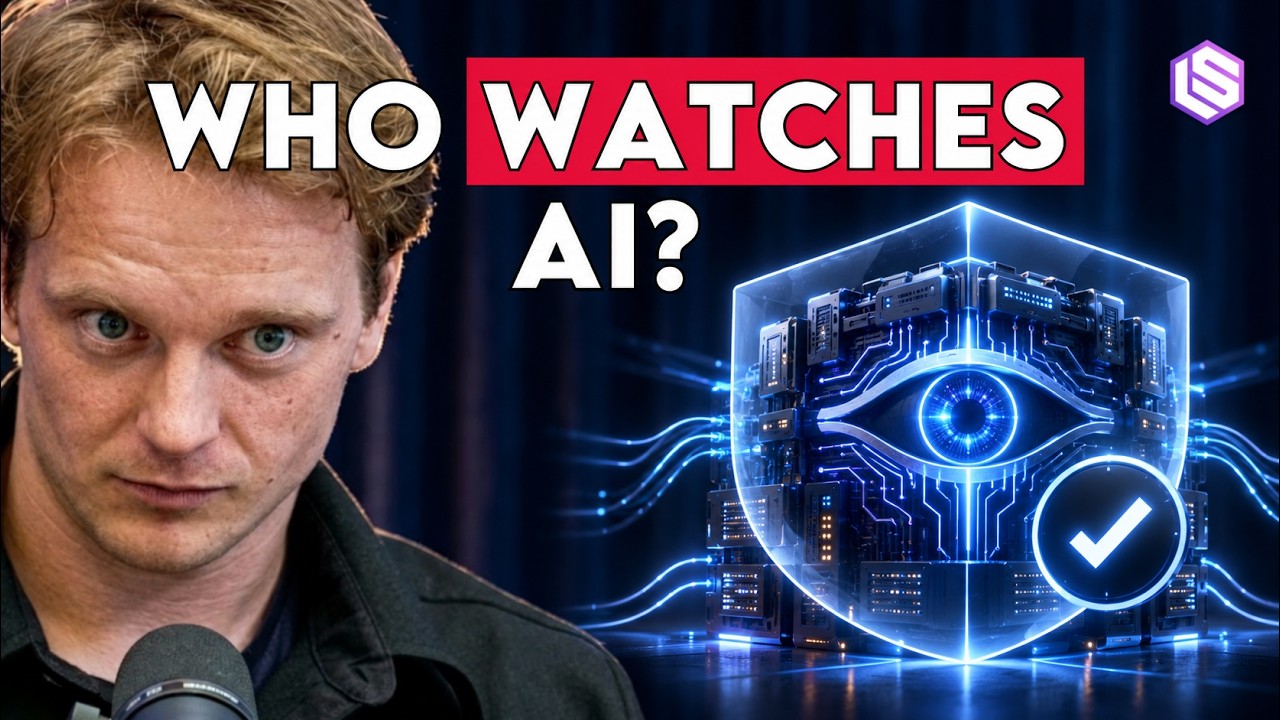
The Watchdogs of AGI — Rune Kvist of AI Underwriting Company thumbnail

· 1:26:58

The Watchdogs of AGI — Rune Kvist of AI Underwriting Company

The adoption of frontier AI is increasingly constrained not by capability, but by liability, risk, and trust. AI Underwriting Company (AIUC) proposes that the solution is a 'confidence infrastructure' built on rigorous standards and insurance. AIUC-1 is an emerging standard for agent security, safety, and reliability, requiring comprehensive testing against failures like jailbreaks, hallucinations, and data leaks. The model suggests that standards must precede insurance, and that a third-party body is needed to bridge the trust gap between frontier AI labs and conservative institutions like banks and governments.

Key takeaways

  1. The Binding Constraint on AI Adoption 1:55

    The primary hurdle for AI is not technical capability, but the lack of trust and clarity regarding liability. As AI agents become more autonomous and capable, the risk surface grows, necessitating external validation and risk quantification.

  2. AIUC-1: The Standard for Agent Reliability 5:30

    AIUC-1 is a comprehensive framework for agent security, safety, and reliability. It mandates technical controls, test controls, and policy controls, requiring quarterly updates to keep pace with the rapidly evolving AI landscape.

  3. The Role of Confidence Infrastructure 7:30

    The market requires a combination of standards (defining the rules) and insurance (quantifying and accepting the risk). Insurers are critical because they are financially incentivized to quantify risk truthfully, thereby creating a 'promise' that enables enterprise adoption.

  4. Future Scope: Agents to Models to Robotics 8:20

    The risk challenge will escalate across AI domains: from agents (AIUC-1) to models, and eventually to physical AI/robotics. The core challenge remains establishing a common, auditable standard across all modalities.

Watch on YouTube Full article

Locknote: Reasons to be Cheerful: 0, 1, 2 - Emmz Rendle - NDC Copenhagen 2026 thumbnail

· 57:04

Locknote: Reasons to be Cheerful: 0, 1, 2 - Emmz Rendle - NDC Copenhagen 2026

The talk presents a highly optimistic overview of technological progress across multiple domains, arguing that advancements in AI, quantum computing, and biotechnology are solving complex global problems. While addressing concerns about job displacement and climate change, the speaker emphasizes that these technologies—such as specialized LLMs (Gemma 4, Qwen 3.6) for code generation or CRISPR for personalized medicine—are tools that enhance human capability rather than replace it entirely. The presentation also touches on hardware advancements like shared memory architectures and post-quantum cryptography standards.

Key takeaways

  1. AI in Diagnostics and Genomics 5:20

    AI models are revolutionizing medicine by analyzing complex data sets, such as MRI scans (sub-millimeter slice images) to flag issues for radiologists. Furthermore, DNA/RNA analysis can detect hereditary disease risks and enable custom per-patient cancer treatments.

  2. Quantum Computing Threat and Solution 12:30

    The advent of powerful quantum computers (e.g., those capable of running Shor's algorithm) will render current classical cryptography (RSA, Diffie-Hellman, EDCSA) obsolete. The industry is responding by adopting post-quantum cryptography standards approved by NIST, specifically mentioning Dilithium and Kyber.

  3. AI for Software Productivity 17:30

    LLMs are not replacing programmers but acting as a new programming paradigm. They can generate functional code that is safe to put into production, allowing developers to focus on engineering the system's logic rather than manual typing.

  4. Advancements in Robotics and Automation 23:20

    Robotics are advancing through LLM-driven operating systems (like Gemini Robotics 1.5) that allow robots to reason through steps necessary for tasks, enabling scalable deployment across multiple units.

  5. Sustainable Energy and Climate Solutions 31:40

    New technologies include solar windows (generating electricity while visible) and 'solar canals,' which use floating panels over irrigation channels to prevent water evaporation and generate power.

Watch on YouTube Full article