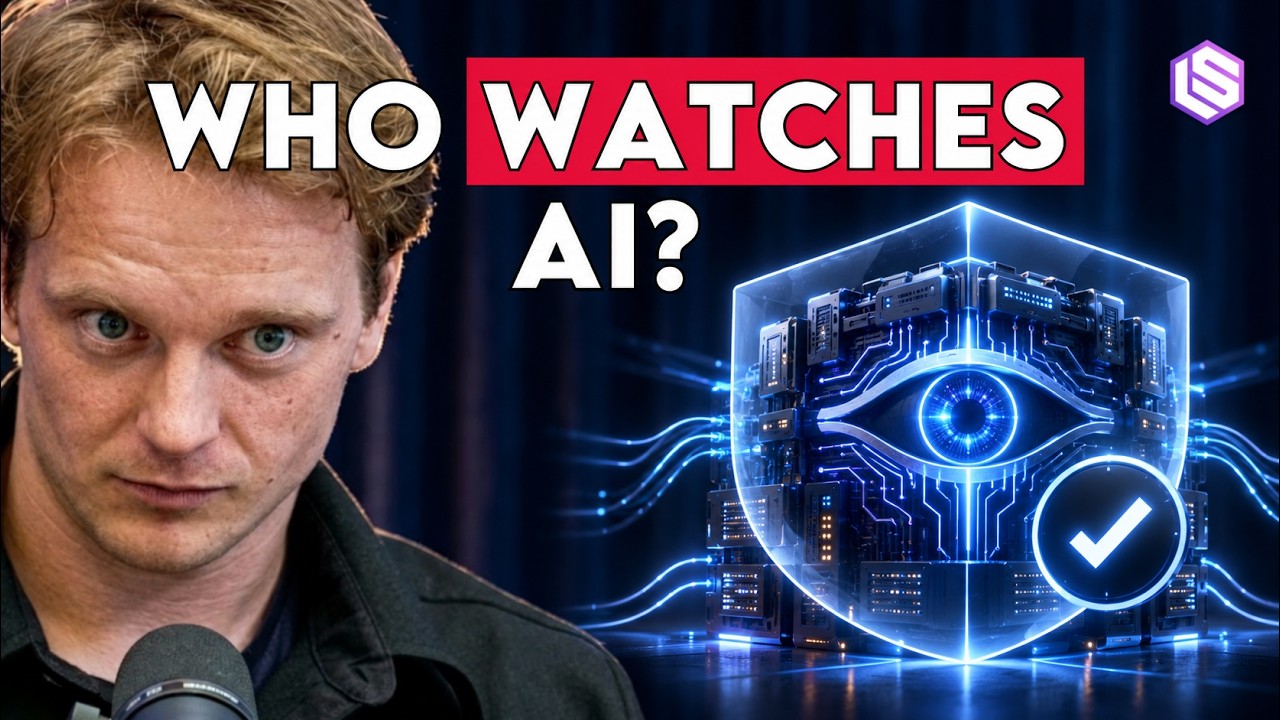
The Watchdogs of AGI — Rune Kvist of AI Underwriting Company
Summary
The adoption of frontier AI is increasingly constrained not by capability, but by liability, risk, and trust. AI Underwriting Company (AIUC) proposes that the solution is a 'confidence infrastructure' built on rigorous standards and insurance. AIUC-1 is an emerging standard for agent security, safety, and reliability, requiring comprehensive testing against failures like jailbreaks, hallucinations, and data leaks. The model suggests that standards must precede insurance, and that a third-party body is needed to bridge the trust gap between frontier AI labs and conservative institutions like banks and governments.
Key takeaways
-
The Binding Constraint on AI Adoption
1:55
The primary hurdle for AI is not technical capability, but the lack of trust and clarity regarding liability. As AI agents become more autonomous and capable, the risk surface grows, necessitating external validation and risk quantification.
-
AIUC-1: The Standard for Agent Reliability
5:30
AIUC-1 is a comprehensive framework for agent security, safety, and reliability. It mandates technical controls, test controls, and policy controls, requiring quarterly updates to keep pace with the rapidly evolving AI landscape.
-
The Role of Confidence Infrastructure
7:30
The market requires a combination of standards (defining the rules) and insurance (quantifying and accepting the risk). Insurers are critical because they are financially incentivized to quantify risk truthfully, thereby creating a 'promise' that enables enterprise adoption.
-
Future Scope: Agents to Models to Robotics
8:20
The risk challenge will escalate across AI domains: from agents (AIUC-1) to models, and eventually to physical AI/robotics. The core challenge remains establishing a common, auditable standard across all modalities.
Technical details
-
AIUC-1 Certification Process
330s
The standard requires passing technical audits, including running thousands of simulations to test for jailbreaks, hallucinations, and data leaks. The process is designed to be dynamic, requiring quarterly updates to address the fast pace of AI development.
-
Agent Failure Modes and Testing
350s
Key failure modes include hallucinations, data leakage, and jailbreaks. The standard moves beyond simple guardrails (like a groundedness filter) to require independent third-party testing to validate the effectiveness of controls.
-
Agent Architecture and Scope
400s
The standard is designed to be universal, accommodating different agent types (e.g., code agents like Cursor, customer support agents, and automation agents) to ensure a single framework can govern diverse use cases.
-
Model and Agent Interaction Risks
480s
New risks include agent-to-agent interactions (e.g., open-claw/MCP) and the potential for models to be used to produce biological weapons, requiring a shift in risk assessment from the enterprise level to the national security level.
Mentioned resources
- AIUC-1
- Cursor
- Harvey
- Lovable
- ElevenLabs
- Lloyds of London
- NIST
- Anthropic
Channel & topics
Watch on YouTube · Back to latest
This independent, AI-assisted summary is provided for commentary and informational purposes. It may contain errors or omit important context. Please watch the original video for the creator's complete presentation. Video, thumbnail, and related copyrights belong to their respective owners.