Topic

Local AI

All digests tagged Local AI

· 53:22

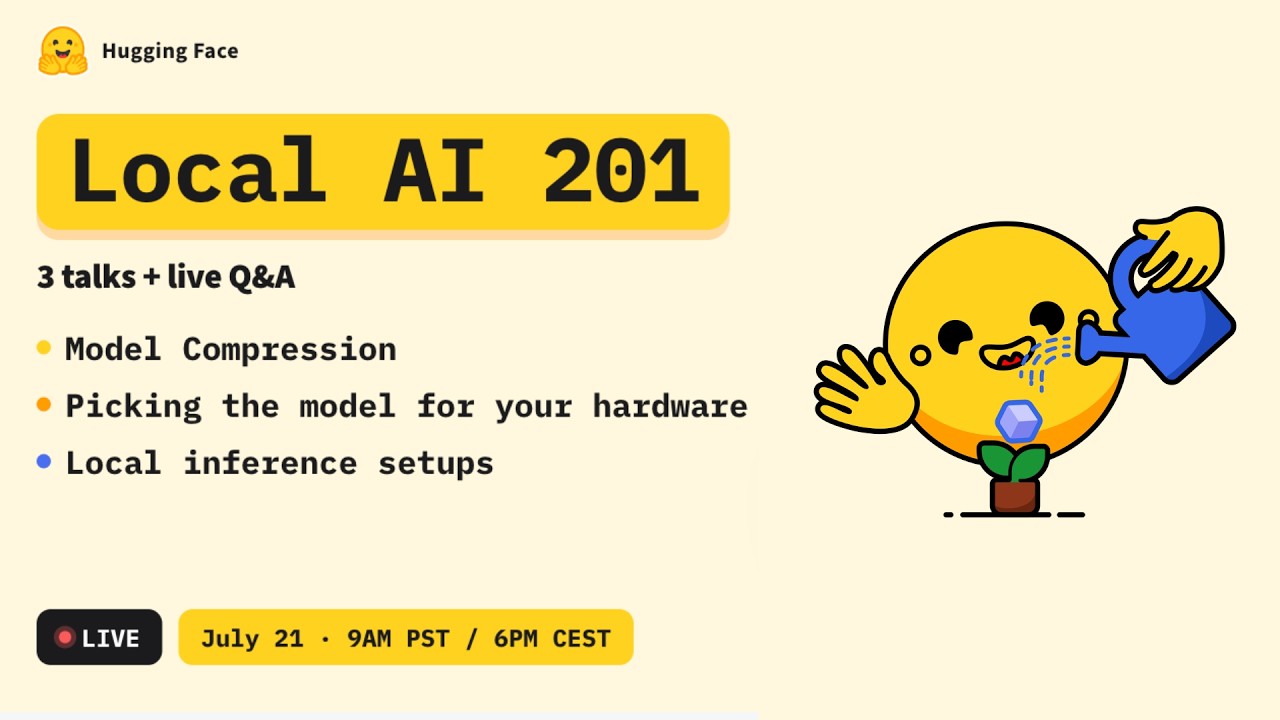
Local AI 201

The session provides an advanced deep dive into local AI deployment, emphasizing that successful LLM inference is not determined by hardware capacity alone. Instead, it requires selecting a balanced stack comprising the right model, quantization level, and specialized inference engine (e.g., VLLM, llama.cpp) for the specific use case—whether single-user chat or high-concurrency agentic workflows. Key performance metrics like memory bandwidth are shown to be more critical than raw memory capacity when scaling up requests.

Key takeaways

  1. Start with the Use Case, Not the Hardware 2:09

    When designing a local AI solution, always begin by defining the required use case (e.g., single-user chatbot vs. 50-person agentic workflow). The hardware, model, and engine stack must then be selected to support that specific requirement.

  2. Memory Bandwidth is Critical for Throughput 4:08

    For serving multiple requests (high throughput), memory bandwidth is often a more critical bottleneck than total memory capacity. For example, the RTX 5090 was shown to achieve significantly higher performance due to its high bandwidth compared to other devices.

  3. Engine Selection Dictates Performance Under Load 5:41

    The choice of inference engine (e.g., VLLM vs. llama.cpp) and kernel optimization is paramount. Improperly selecting an engine can severely limit performance, causing a high-bandwidth device to perform worse than a lower-bandwidth machine under load.

  4. Local AI Offers Superior Privacy and Control 7:30

    Running LLMs locally provides massive advantages in security, privacy, and control compared to relying on third-party cloud APIs. This allows users to fully tune the stack for long-term stability.
Watch on YouTube Full article

· 2:53:57

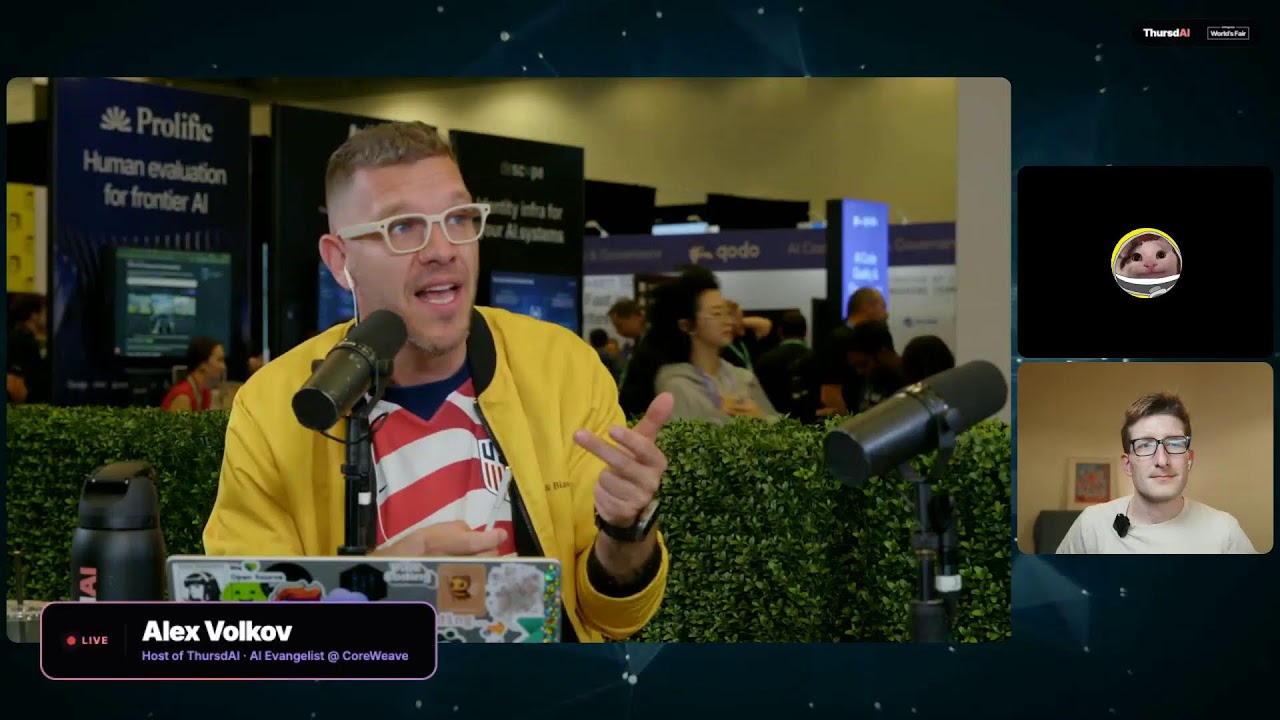
📅 ThursdAI - LIVE from AI Engineer Worlds Fair - OpenAI, DeepMind, EXO, Sakana & more friends

This live panel discussion from the AI Engineer World's Fair focuses on the critical shift toward local and open-source AI models. Speakers debated the current state of frontier models (like OpenAI's GPT-5.6) versus decentralized, sovereign AI solutions running on consumer hardware. Key technical topics included model routing (Fugu), agentic workflows using tools like Weights & Biases' Coreweave Ara, and the necessity of local inference to ensure data sovereignty and prevent vendor lock-in.

Key takeaways

  1. The resurgence of Fable 22:40

    Fable is back, marking a significant moment for open models. The discussion highlighted that this trend emphasizes the need for decentralized AI solutions over reliance on single cloud providers.

  2. Local AI and Sovereignty 35:50

    Running large language models (LLMs) locally is presented as crucial for guaranteeing data sovereignty, preventing vendor lock-in, and ensuring continuous operation regardless of cloud provider restrictions.

  3. Model Routing and Orchestration 45:00

    The concept of model routers (like Fugu) was presented as a superior method for achieving high performance, allowing users to dynamically select the best model for specific tasks rather than relying on a single monolithic LLM.

  4. The Agentic Era and Tooling 1:03:20

    Tools like Weights & Biases' Coreweave Ara are emerging to automate the entire AI research loop (auto-research), moving beyond simple chatbots into full agentic co-pilots for ML engineers.

Watch on YouTube Full article