Topic

Autonomous Agents

All digests tagged Autonomous Agents

· 22:25

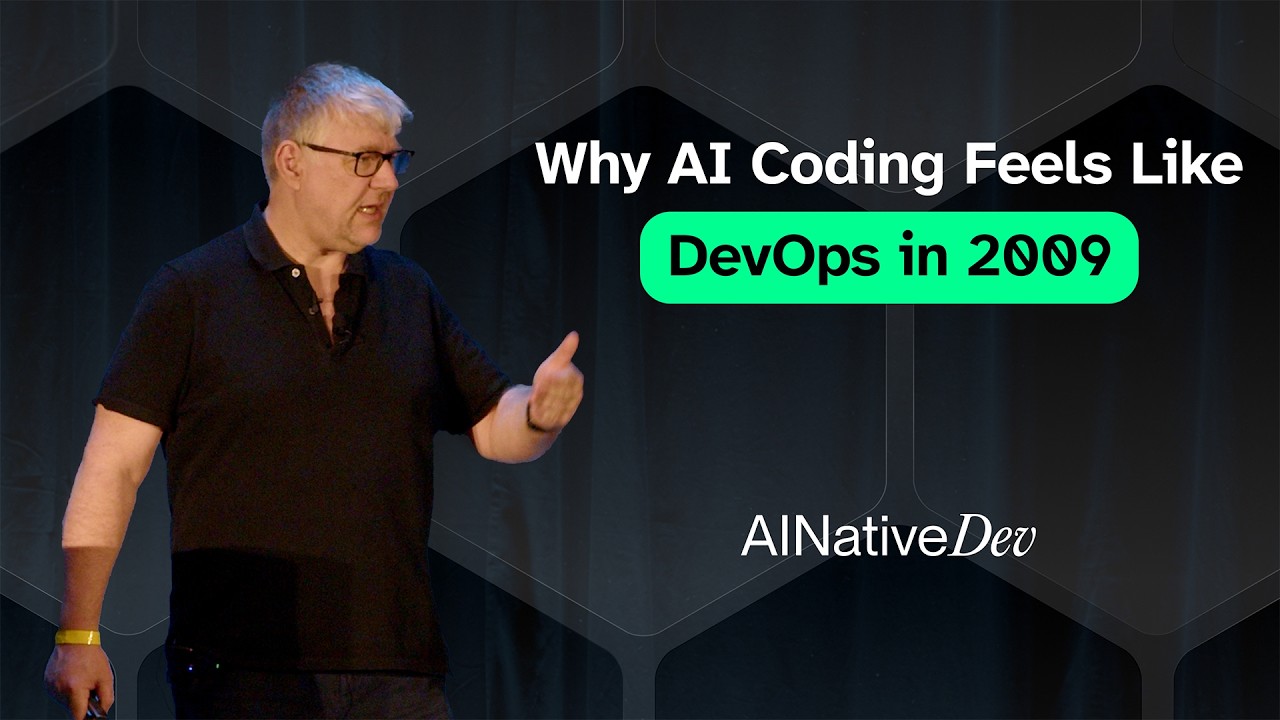
The DevOps Godfather on AI's "Dark Factory" Problem

Patrick Debois argues that the industry is approaching a 'dark factory' model of autonomous coding agents, mirroring historical skepticism around Continuous Delivery [0:02:51]. He emphasizes that success hinges not on better prompts or larger models, but on fundamentally restructuring teams and platforms. The developer role shifts from solo coder to agent orchestrator, requiring improvements in system-level engineering practices (e.g., building tooling for the agents) rather than just fixing the code produced by the agent [0:09:49]. Scaling this requires platform teams to centralize reusable components like skill registries and guardrails, moving organizations from a 'solo developer' model to a 'multiplayer system' [0:10:53].

Key takeaways

  1. Shift from Coder to Orchestrator 5:21

    The modern developer role evolves into that of an agent conductor or orchestrator, managing and guiding autonomous agents rather than writing all the code themselves. This requires a focus on system improvement over individual code fixes [0:02:51].

  2. Focus on Systemic Improvement 9:49

    The key mentality shift is to stop fixing the agent's output code and instead improve the underlying system, context, and tooling (harnesses/loops) that guide the agents [0:09:49].

  3. Platform Team Centralization 20:53

    To scale autonomous development, platform teams must own centralized components—such as skill registries, guardrails, and reusable harnesses—to prevent organizational sprawl and ensure consistency across teams [0:10:53].

  4. New Productivity Metrics

    Instead of measuring token spend, focus on two metrics: the number of human touches required for the agent to succeed, and the multiplier effect gained when a single system improvement benefits all users/teams [0:14:50].
Watch on YouTube Full article

· 23:15

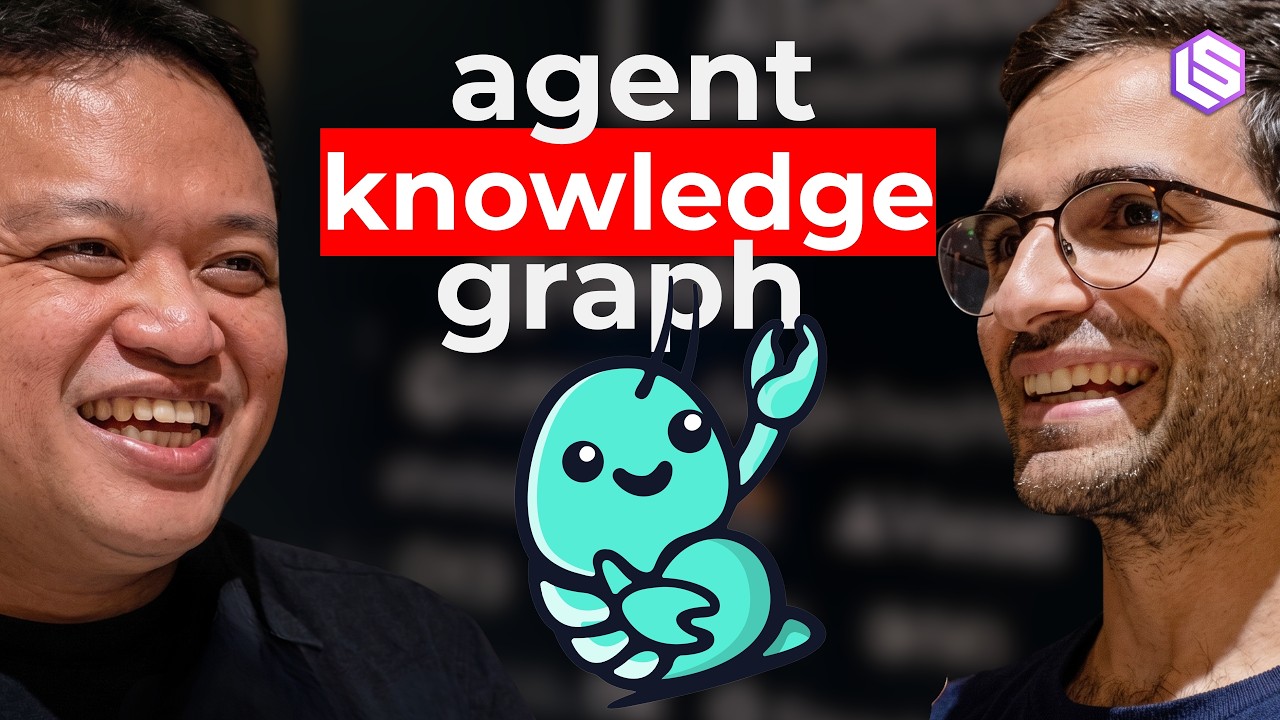
The Blueprint for Autonomous Work Agents | Gavriel Cohen, NanoClaw

This discussion explores the architecture and deployment of autonomous work agents, focusing on how they can function as 'second brain' knowledge management systems. The speaker details a shift in agent adoption strategy—from centralized 'agent factories' to personalized assistants for individual employees. Architecturally, secure deployment requires robust isolation models (e.g., running each agent in its own container) and strict credential handling via proxy vaults to mitigate risks like prompt injection.

Key takeaways

  1. Agent Adoption Strategy Shift 12:48

    The most effective way for businesses to introduce agents is by providing each person with their own personal assistant, as this manages the learning curve associated with prompting and utilizing complex AI tools. (10:58)

  2. The Killer Use Case: Second Brain 14:30

    For autonomous agents today, the most valuable use case is the 'second brain' model—where the agent collects and builds an internal knowledge graph or wiki (e.g., LLM Wiki) from unstructured data rather than just providing ready-made output. (12:30)

  3. Agent Architecture Security Principles 16:10

    Secure deployment requires three key elements: running each agent in its own isolated container; ensuring agents have no credentials in their environment to prevent leakage from prompt injection; and proxying all outgoing requests through a vault for credential management. (14:50)

Watch on YouTube Full article

· 42:20

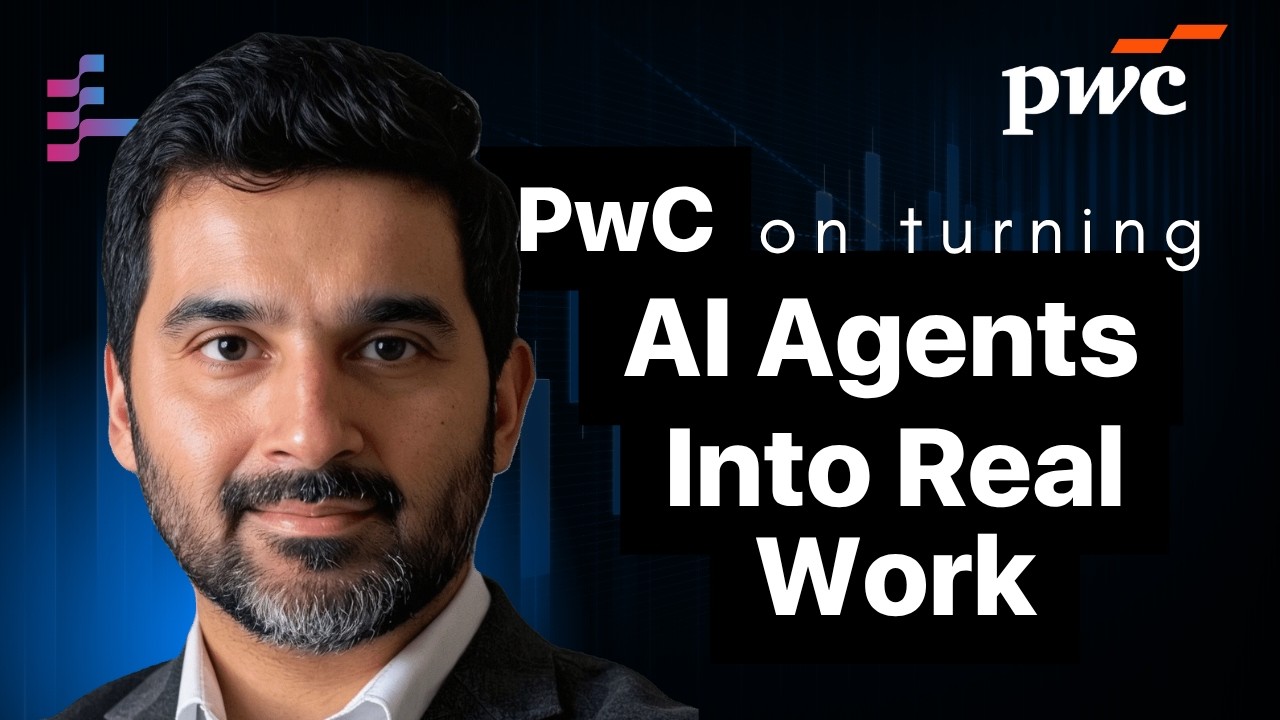
Autonomous Agents at Work: From OpenClaw Hype to Enterprise Reality

Autonomous agents represent a significant shift from simple chat interfaces to systems that actively perform actions. To transition these agents from experimental hype (like the OpenClaw movement) to reliable enterprise production models, organizations must implement rigorous governance and control frameworks. PwC outlines a comprehensive approach focusing on risk classification, establishing a minimum control stack (Identity, Input/Output Controls, Auditability), and implementing multi-faceted evaluation processes across Quality, Performance, Safety, Cost, and Business Impact.

Key takeaways

  1. 3-Tier Work Classification for Risk Management 1:45

    Agents must be classified based on the potential blast radius: 1) Reversible work (e.g., ticket enrichment); 2) Sensitive work (affecting system stability, requiring tighter controls); and 3) Consequential work (touching legal or customer policy documents, highest risk).

  2. The Minimum Control Stack for Production Agents 4:00

    Before deployment, four non-negotiable controls must be in place: Agent Identity (credentials treated as first-class data with strict expiration/authorization); Input Controls (guardrails against prompt injection and ensuring tool allow-listing); Output Controls (limiting tool calls, retries, and preventing toxic output); and Auditability.

  3. Five Pillars of Agent Auditability 5:10

    Auditing must go beyond simple logging. A comprehensive framework requires monitoring Quality (using LLM-as-judge), Performance (focusing on P99 latency), Safety (PII redaction/filters), Cost (tracking expenditure at the run level), and Business Impact (logging the agent's chain of thought decision process).

  4. Ownership and Architecture are Paramount 8:00

    Engineers must maintain ownership over the system architecture, even if AI generates the code. The core logic and blueprints must be human-owned to ensure accountability and proper review processes.

Watch on YouTube Full article