Autonomous Agents at Work: From OpenClaw Hype to Enterprise Reality
Summary
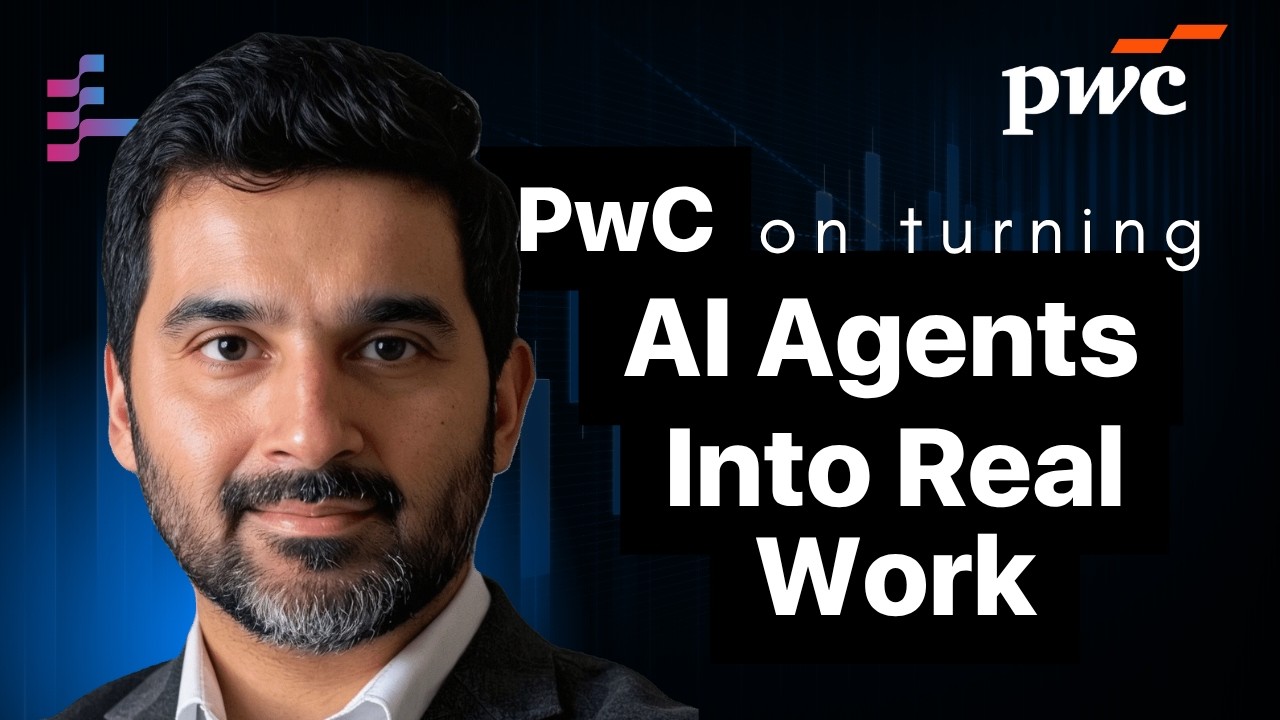
Autonomous agents represent a significant shift from simple chat interfaces to systems that actively perform actions. To transition these agents from experimental hype (like the OpenClaw movement) to reliable enterprise production models, organizations must implement rigorous governance and control frameworks. PwC outlines a comprehensive approach focusing on risk classification, establishing a minimum control stack (Identity, Input/Output Controls, Auditability), and implementing multi-faceted evaluation processes across Quality, Performance, Safety, Cost, and Business Impact.
Key takeaways
-
3-Tier Work Classification for Risk Management
1:45
Agents must be classified based on the potential blast radius: 1) Reversible work (e.g., ticket enrichment); 2) Sensitive work (affecting system stability, requiring tighter controls); and 3) Consequential work (touching legal or customer policy documents, highest risk).
-
The Minimum Control Stack for Production Agents
4:00
Before deployment, four non-negotiable controls must be in place: Agent Identity (credentials treated as first-class data with strict expiration/authorization); Input Controls (guardrails against prompt injection and ensuring tool allow-listing); Output Controls (limiting tool calls, retries, and preventing toxic output); and Auditability.
-
Five Pillars of Agent Auditability
5:10
Auditing must go beyond simple logging. A comprehensive framework requires monitoring Quality (using LLM-as-judge), Performance (focusing on P99 latency), Safety (PII redaction/filters), Cost (tracking expenditure at the run level), and Business Impact (logging the agent's chain of thought decision process).
-
Ownership and Architecture are Paramount
8:00
Engineers must maintain ownership over the system architecture, even if AI generates the code. The core logic and blueprints must be human-owned to ensure accountability and proper review processes.
Technical details
-
Agent Autonomy Spectrum
140s
Autonomy should be implemented incrementally: starting in 'Assistant Mode' (answering questions with tools), progressing to 'Recommend Mode' (proactively suggesting actions), and finally reaching 'Gated Action' (requiring explicit approval at every stage).
-
Security Vulnerabilities in Agents
380s
The primary security risks include credential leakage, API key harvesting attacks, and prompt injection. Defense requires separating content from action and treating all tools/skills as executable dependencies requiring rigorous scanning and egress controls.
-
FinOps for Agent Workflows
430s
Since agents are non-linear workflows, budgeting must be set at the run or agent level. Controls should include throttling behavior (e.g., limiting recursion depth) and selecting the right model complexity for the task to prevent cost overruns.
Mentioned resources
- OpenClaw
- LangFuse / OpenTelemetry
Channel & topics
Watch on YouTube · Back to latest
This independent, AI-assisted summary is provided for commentary and informational purposes. It may contain errors or omit important context. Please watch the original video for the creator's complete presentation. Video, thumbnail, and related copyrights belong to their respective owners.