Rebuilding the web for agents — Liad Yosef, MCP Apps
The talk outlines the transition to the 'agentic web,' arguing that traditional websites and browser tabs are becoming obsolete as primary interfaces. The core shift involves breaking down complex UIs into atomic components that can be composed by personal AI assistants. The speaker, a co-creator of the MCP Apps specification, details how MCP Apps allows servers to hand real UI interfaces back into a chat context, solving the 'last mile of interaction.' Furthermore, the talk introduces the need for a standardized discovery layer, proposing the use of `AI catalog.json` to make websites 'agent ready' and accessible to autonomous agents.
Key takeaways
-
MCP Apps Solves Last-Mile Interaction
1:42
MCP Apps allows providers to send UI chunks into chats, ensuring that services retain their brand identity and functionality rather than being reduced to text or databases. This solves the 'last mile' problem for agents, enabling complex interactions like booking hotels or viewing 3D models within a unified chat context.
-
The Agentic Web Paradigm Shift
5:40
The web is shifting from being a collection of siloed websites (requiring multiple tabs and different UIs for the same intent) to being composed by personal assistants. Assistants become the primary entry point, making websites themselves less critical for task completion.
-
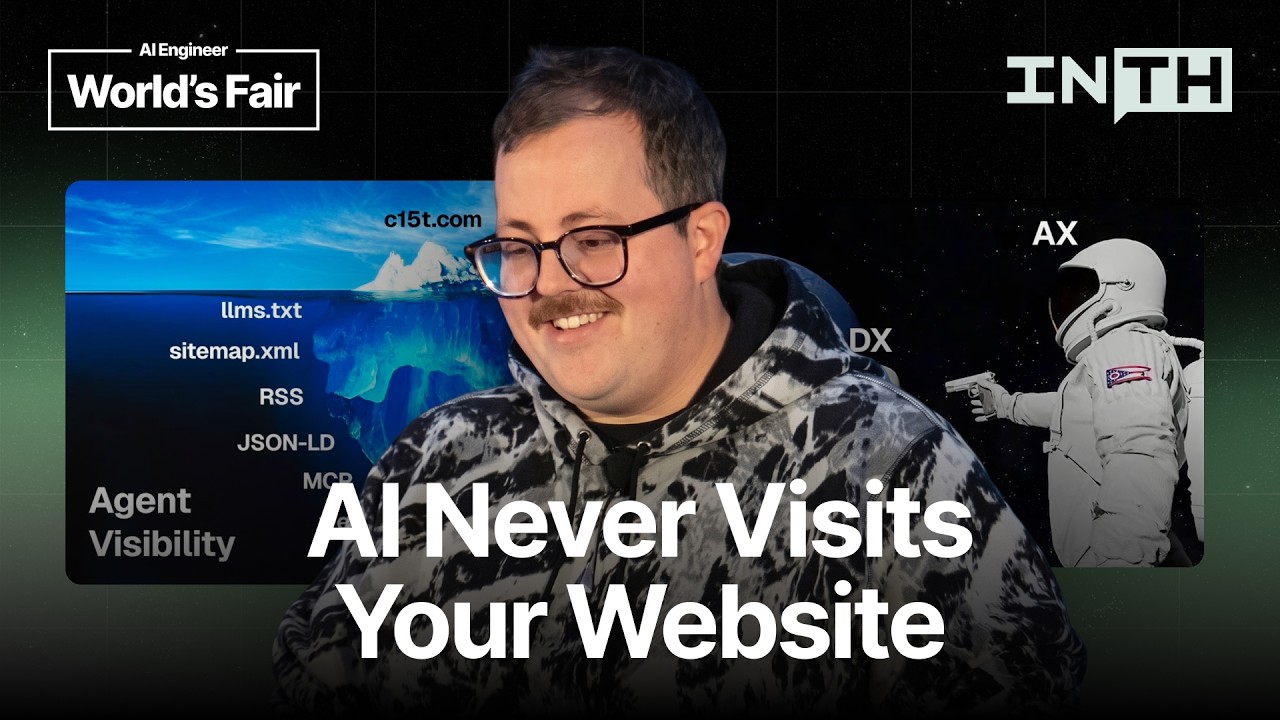
Need for Agent-Specific Discovery
19:16
Traditional standards like `llms.txt` are insufficient because agents often ignore them, preferring to navigate to docs or homepages. The solution requires a standardized, machine-readable directory, such as the proposed `AI catalog.json`, to expose a website's MCP and API servers directly to agents.