Topic

Agentic Coding

All digests tagged Agentic Coding

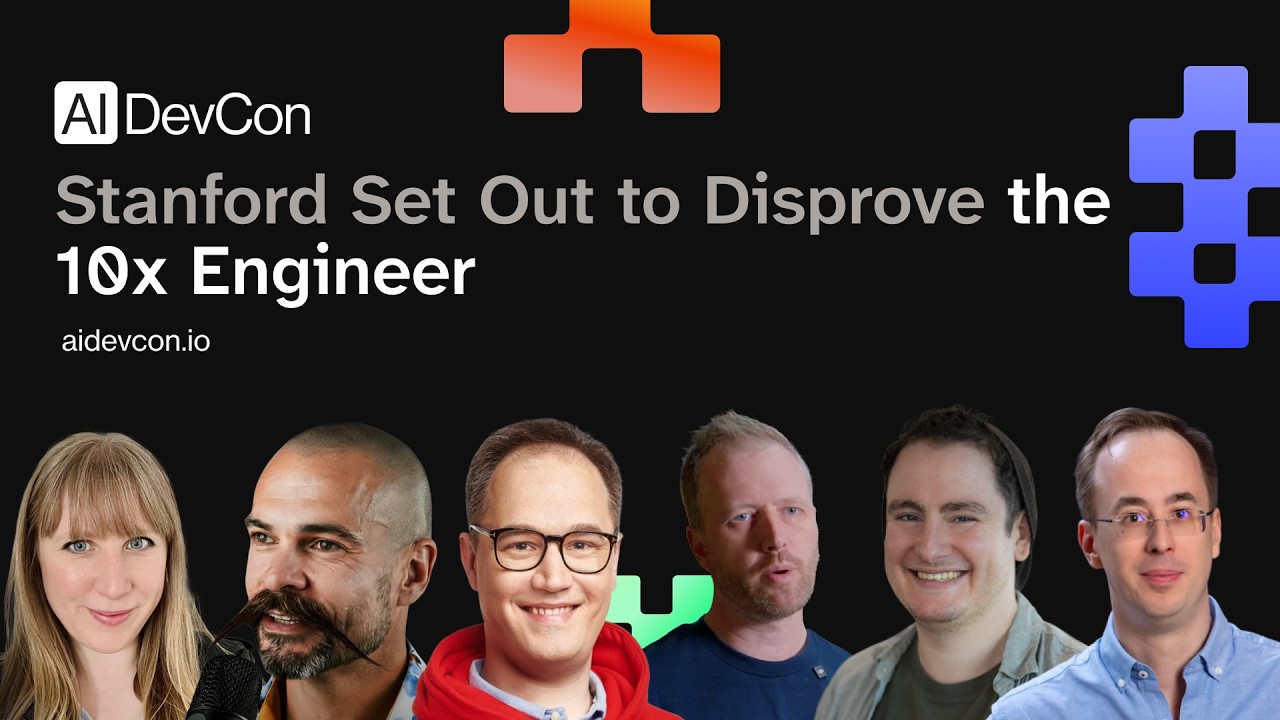
Meta, Stanford & Odevo on Agentic Coding at Scale thumbnail

· 10:10

Meta, Stanford & Odevo on Agentic Coding at Scale

The session explores scaling agentic coding adoption from a single team to hundreds of engineers. Key findings highlight that while AI tooling can drive massive organic community growth (e.g., Meta reaching 80%+ weekly usage), success is highly dependent on organizational maturity. Speakers warn that deploying agents into an organization with weak software delivery practices will worsen outcomes, emphasizing that foundational improvements—such as robust CI/CD pipelines, dedicated platforms, comprehensive testing, and established coding standards—must precede advanced AI adoption.

Key takeaways

  1. Meta's Adoption Strategy 1:19

    Meta grew an organic community from ad hoc usage to over 40 times its original size. Weekly tool usage increased from under half to above 80%, demonstrating that sustained adoption can be achieved without mandatory enforcement. (00:01:39)

  2. Performance Spread and the 10x Engineer 2:47

    Studies across 150,000 engineers show the widest performance spread ever measured. Contrary to initial hypotheses, top performance is now being achieved by individuals skilled in creating and utilizing agents. (00:02:47)

  3. Prerequisites for Agentic Coding 5:11

    The 2025 DORA report warns that pointing agents at an organization already struggling with software delivery will make things worse. Successful adoption requires fixing fundamentals first: CI/CD, a platform, tests, and coding standards. (00:05:1)

Watch on YouTube Full article

The fundamentals of Agentic Coding (AKA Vibe Coding) - Theodor René Carlsen - NDC Copenhagen 2026 thumbnail

· 15:42

The fundamentals of Agentic Coding (AKA Vibe Coding) - Theodor René Carlsen - NDC Copenhagen 2026

The talk demystifies 'agentic coding' by establishing a fundamental baseline for understanding AI-assisted development tools. The core concept is that these systems rely on three components: the models (the brain), the harnesses (the ability to act), and the tools (specific functions). Speakers emphasize that while the ecosystem moves rapidly, understanding this architecture—especially the feedback loop where the harness executes actions based on model intentions—is crucial for practitioners. A key recommendation is maintaining control by favoring open-source, customizable systems over locked-down, proprietary solutions.

Key takeaways

  1. The Three Pillars of AI Coding Tools 4:00

    AI coding tools fundamentally consist of three parts: the models (e.g., GPTs from OpenAI, Claude from Anthropic), the harnesses, and the tools. The model is the 'brain,' but the harness allows it to perform actions beyond text generation.

  2. Understanding Agent Functionality 5:10

    Agents operate using a combination of a configurable system prompt (initial instructions) and defined tools. The model generates an *intention* (text), which the harness executes (e.g., reading files, running terminal commands). The output is then fed back into the model, creating a critical feedback loop.

  3. The Importance of Openness and Control 11:10

    While proprietary tools (like Cloud Code) are powerful, speakers caution against losing control. The ability to customize the harness is vital for a healthy ecosystem; open-source solutions allow introspection and customization.

Watch on YouTube Full article