60% Faster Time-to-Interview: Transforming Hiring with AI Agents with LangChain
LinkedIn details the architecture of a hiring agent built with LangChain and LangGraph that successfully cut time-to-interview by 60% for small businesses. The system evolved from static workflows to an advanced agentic control model utilizing a central planner within a plan-execute-replan loop. Key architectural components include specialized memory types (conversational and experiential), middleware hooks for PII detection, and rigorous 'harness engineering' techniques—such as state flag chaining and one-shot tool guards—to ensure the probabilistic nature of LLMs results in a dependable product.
Key takeaways
-
Hiring is an Agent Problem
The hiring process is inherently iterative (plan, act, observe, adapt), requiring continuous adaptation rather than being a one-shot task. This necessitates an agentic approach.
-
Architectural Evolution to LangGraph
0:03
The system progressed from hard-coded static workflows (if/then) to sequential LangChain chains, culminating in LangGraph for its true agentic control model featuring a central planner and plan-execute-replan loop.
-
Choosing LangGraph
0:05
LinkedIn selected LangGraph over 89 evaluated frameworks because it complements existing infrastructure, builds upon core LangChain primitives (runnables, tools), and allowed for zero rewrite adoption.
-
Achieving Determinism via Harness Engineering
0:10
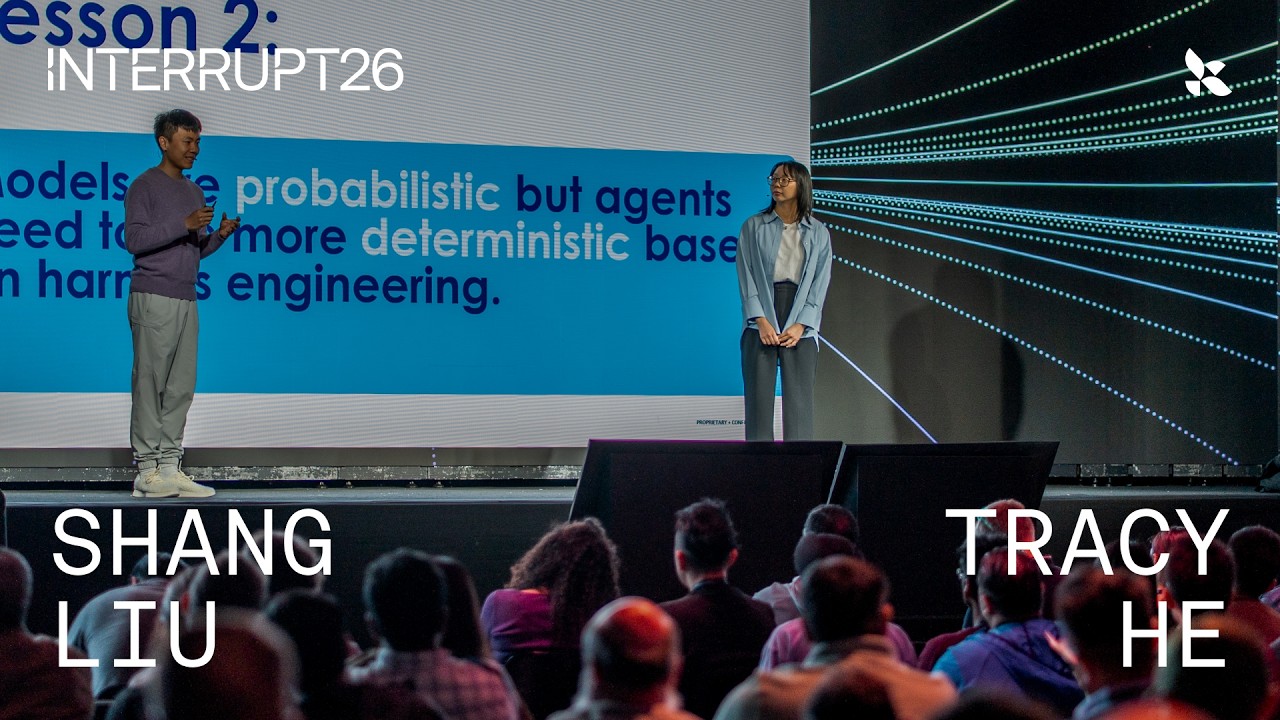
To make the agent dependable, LinkedIn implemented advanced 'harness engineering' techniques, including context management (checkpoint trimming), output format determinism (template confirmation/fallbacks), and node-change determinism (state flag chaining and one-shot tool guards).