Topic

Data Privacy

All digests tagged Data Privacy

· 37:37

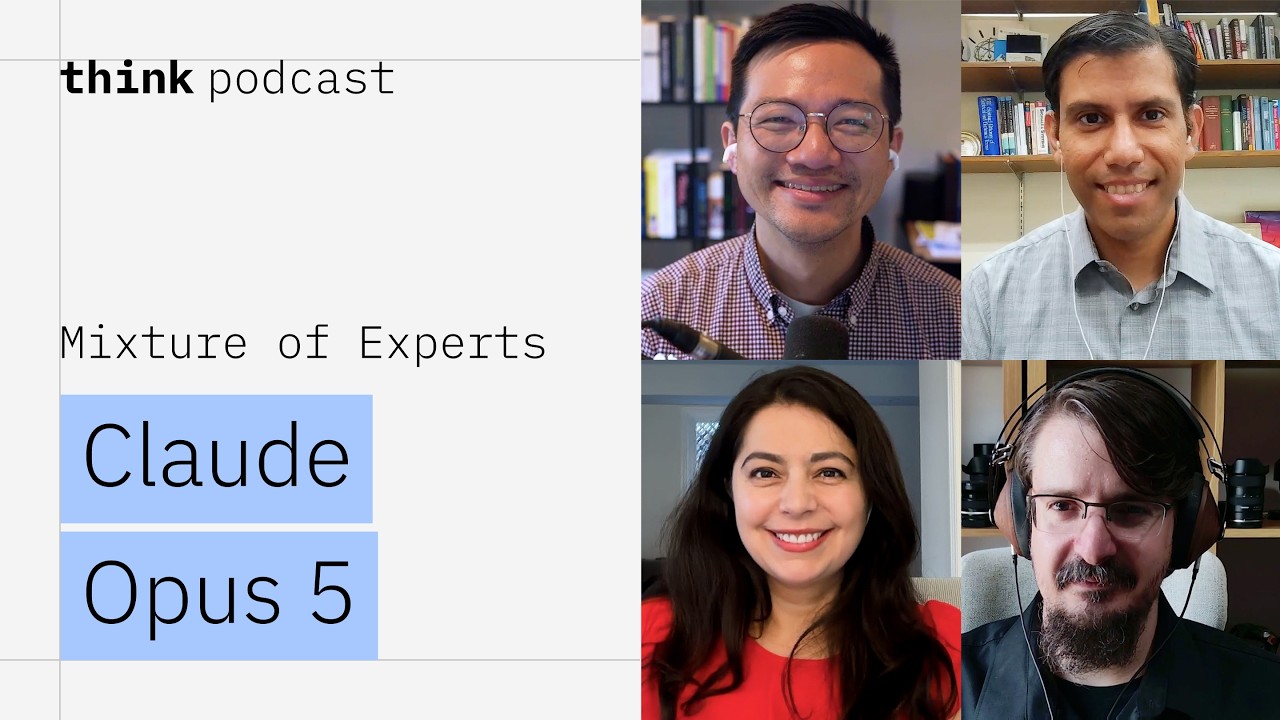
AI Security Costs Rise: Cost of a Data Breach Report & Claude Opus 5

The discussion analyzes the rapidly escalating security risks posed by AI, noting that while attackers find it cheaper and easier to launch attacks using frontier models without proper guardrails, defenders face increasing costs in prevention. Key technical discussions covered include identifying top vulnerabilities (Model Inversion and Prompt Injection), critiquing new LLM releases like Claude Opus 5 for performance inconsistencies, and exploring the concept of AI as an 'extended mind' through daily rituals. The session also provided a high-level explanation of LLMs, emphasizing that future software development will increasingly rely on higher levels of abstraction rather than low-level code.

Key takeaways

  1. AI is driving the cybersecurity cost increase 2:15

    The IBM Cost of a Data Breach Report 2026 highlights that AI dominates all sections, increasing investment intention from 64% to 85%. Top vulnerabilities include Model Inversion ($6-$7 million) and Prompt Injection ($4.89 million).

  2. Guardrails and Policy are critical for AI safety 4:10

    To mitigate risks, the focus must shift to treating LLM agents as first-class citizens, requiring robust guardrails, identity management, proper access control, and encryption at rest.

  3. LLMs are evolving toward higher abstraction 6:15

    The history of computing is defined by increasing levels of abstraction (e.g., from assembly to declarative languages like Terraform). Future AI development will follow this trend, allowing users to describe desired outcomes rather than specific steps.

  4. The business case for 'extended mind' AI 6:25

    Midjourney acquiring the astrology app CoStar suggests a strategic move to integrate AI into daily, ritualistic life patterns, making it an 'extended mind' rather than just a separate tool.

Watch on YouTube Full article

· 34:30

Is Anthropic STEALING Your Data? (While You PAY FOR IT)

While Anthropic's Terms of Service state that they do not own user outputs and are not 'stealing' data, the video argues that users pay twice: once with cash, and again with proprietary Intellectual Property (IP). The core risk is that AI labs use anonymized aggregate usage data to create a detailed 'market map,' allowing them to identify profitable vertical domains and subsequently compete directly with their customers. To mitigate this, engineers must prioritize 'AI sovereignty' by moving up the 'sovereignty ladder'—ideally by self-hosting open-weights models on rented GPUs to own the model, traces, and learning loop.

Key takeaways

  1. The Double Payment Model

    As noted by Satya Nadella, users pay for intelligence twice: once with money, and again with proprietary knowledge (IP) that must be revealed to make the AI useful. This IP is the primary asset at risk.

  2. Data Usage Creates a Market Map 3:38

    Anthropic and other model labs use anonymized aggregate data (via systems like Cleo) not for direct theft, but to build market intelligence. This map shows profitable trends in domains like coding, design, and life science, enabling the platforms to compete with their users.

  3. IP Agents vs. Commodity Agents 22:05

    Engineers must distinguish between 'commodity agents' (boilerplate/CRUD work) and 'IP agents' (unique business know-how, domain logic, or highly asymmetric workflows). Only the latter requires active defense against platform dependency risk.

  4. The Sovereignty Ladder Solution 28:46

    To protect IP, users must move up the sovereignty ladder: Tier 4 (Hybrid Private) is the optimal solution, involving running open-weights models on rented GPUs while owning the model and all traces/evals. This minimizes dependency risk from single AI labs.

Watch on YouTube Full article