Why AI Makes the Humanities More Important Than Ever
Summary
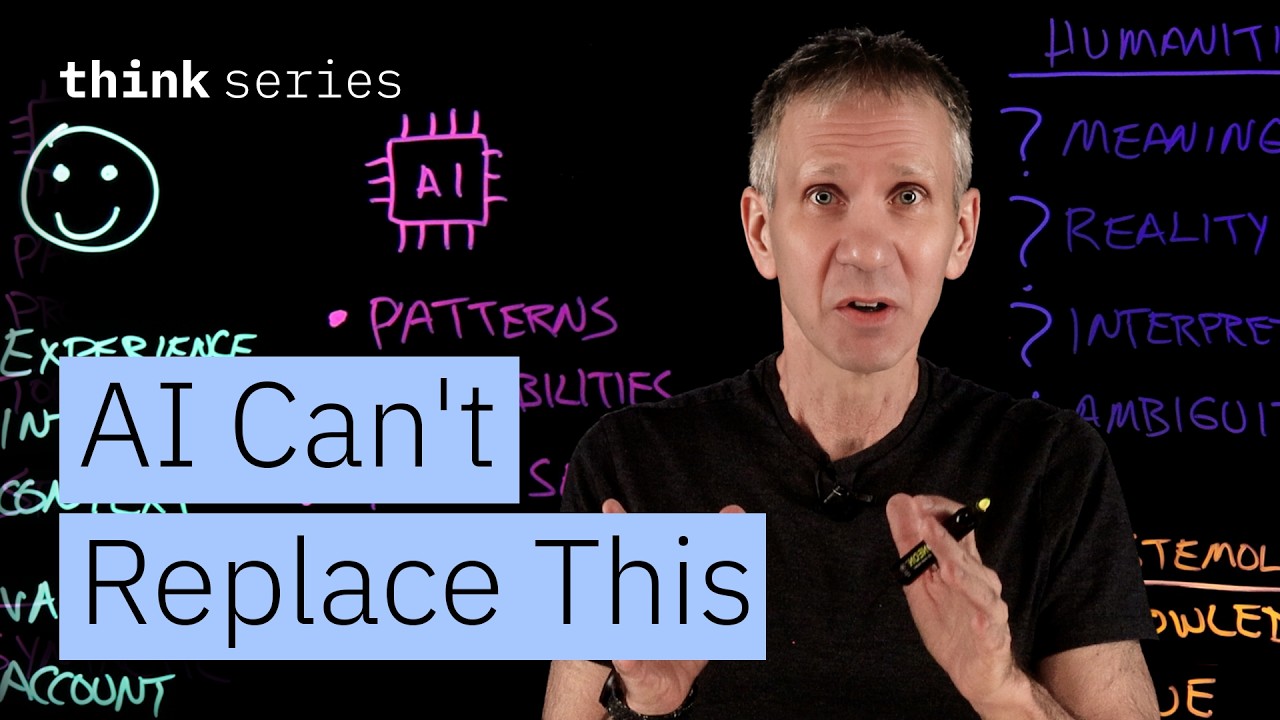
While advanced AI systems excel at generating fluent language by predicting statistical patterns (syntactic), they lack inherent understanding of human intent, ethics, or context (semantic). The video argues that fundamental humanistic disciplines—such as philosophy, history, and rhetoric—are crucial for providing the necessary judgment, ethical grounding, and critical interpretation required to use AI responsibly. In an AI-driven world, technical fluency is insufficient; the most valuable skill becomes critical thinking and interpretive judgment.
Key takeaways
-
AI operates on patterns, not understanding
7:40
Large Language Models (LLMs) function by predicting token sequences based on statistical correlations, meaning they are fundamentally syntactic. They do not inherently possess lived experience or semantic understanding of truth or value.
-
The user is the critical interpreter
11:55
AI systems shift the need for interpretation rather than eliminating it. The human must act as the active participant who interprets the AI's output, making decisions and taking action based on that interpretation.
-
Prompting is a form of system control
13:40
The quality of an AI output is highly dependent on the prompt (input). Structuring prompts, defining constraints, and clearly expressing intent are practical applications of rhetoric and discourse analysis, making this skill an operational competence in AI systems.
Technical details
-
LLM Mechanism
460s
AI models operate by statistical pattern prediction, learning correlations in language rather than lived experience or intention. They look for the next most likely token sequence.
-
Syntactic vs. Semantic Processing
520s
AI is described as fundamentally syntactic (manipulating symbols based on patterns), while human thought processes are more semantic, anchoring meaning in context and lived reality.
-
Data Bias and Assumptions
640s
Every training data set encodes error, every interface encodes design assumptions, and every application encodes incentives. These factors guide the AI's output and must be understood through ethical and sociological lenses.
Mentioned resources
Channel & topics
Watch on YouTube · Back to latest
This independent, AI-assisted summary is provided for commentary and informational purposes. It may contain errors or omit important context. Please watch the original video for the creator's complete presentation. Video, thumbnail, and related copyrights belong to their respective owners.