Topic

OpenFGA

All digests tagged OpenFGA

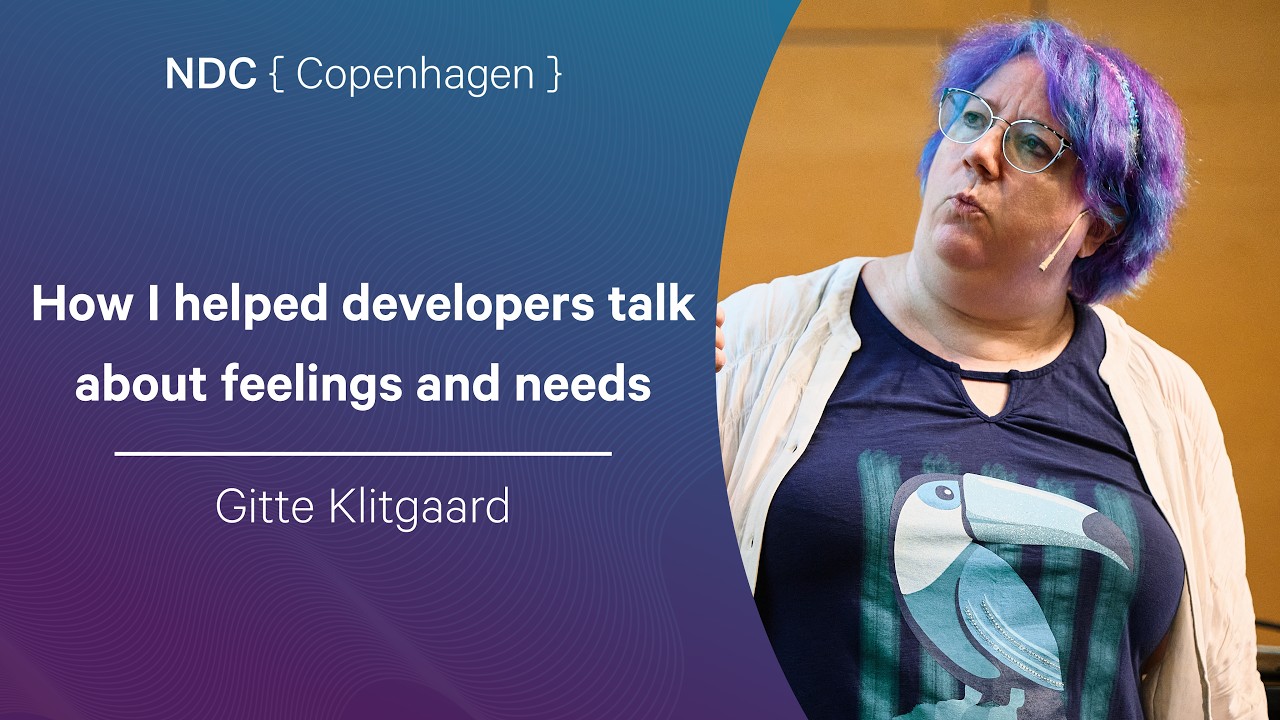
How I helped developers talk about feelings and needs - Gitte Klitgaard - NDC Copenhagen 2026 thumbnail

· 53:34

How I helped developers talk about feelings and needs - Gitte Klitgaard - NDC Copenhagen 2026

While the video metadata focuses on advanced AI security topics like Fine-Grained Authorization (FGA) for Retrieval-Augmented Generation (RAG), the talk itself addresses organizational communication and psychological safety. The speaker emphasizes that effective collaboration requires explicit tools, setting clear 'frames' (rules of engagement), and creating a safe space where developers feel comfortable discussing needs and emotions without fear of judgment or professional facade.

Key takeaways

  1. The Importance of Psychological Safety 17:05

    Psychological safety is defined as feeling secure enough to be oneself, disagree, and bring all of your thoughts to work without fear of ridicule or punishment. This requires active effort, especially in remote settings.

  2. Communication Requires Tools 21:45

    Effective communication is not innate; it requires specific skills and tools (like structured workshops or 'rules of engagement'). Simply working together does not guarantee successful collaboration.

  3. The Power of Framing 34:10

    Setting a clear frame—or set of rules—for a project or meeting is crucial for creativity and open discussion. Constraints, like those used in Lego design, can actually stimulate better ideas.

  4. Addressing AI Misunderstandings 38:20

    When discussing complex topics like Generative AI, teams must ensure they are all talking about the same thing (e.g., distinguishing between different types of 'spam' or AI implementation) to avoid major misunderstandings.

Watch on YouTube Full article

Fine-Grained Authorization: The Missing Piece in Agentic AI Security - Shivay Lamba - NDC Sydney thumbnail

· 56:53

Fine-Grained Authorization: The Missing Piece in Agentic AI Security - Shivay Lamba - NDC Sydney

As Generative AI and agentic systems become more integrated into enterprise workflows, securing data access is paramount due to increased attack vectors. This talk emphasizes that traditional Role-Based Access Control (RBAC) is insufficient for modern AI applications. The solution proposed is Fine-Grained Authorization (FGA), specifically utilizing Relationship-Based Access Control (ReBAC). OpenFGA is presented as a robust, scalable tool that allows developers to enforce document-level permissions at runtime, ensuring that LLMs and agents can only access data explicitly authorized by the user's role and context. This approach is critical for securing Retrieval-Augmented Generation (RAG) pipelines against sensitive information disclosure.

Key takeaways

  1. AI Agents Require Guardrails 1:47

    Agentic systems, while powerful, must be constrained by proper security guardrails. Analogies like the Harbor Bridge and designated swimming areas illustrate that actions must be limited to authorized boundaries.

  2. FGA is Necessary for GenAI Security 20:40

    The most critical security risk in LLM applications, from an application developer's perspective, is Sensitive Information Disclosure. FGA ensures the AI respects user roles and permissions when accessing private data.

  3. ReBAC Scales Beyond RBAC 35:30

    Authorization evolved from Access Control Lists (ACL) to Role-Based Access Control (RBAC), which is coarse-grained. Relationship-Based Access Control (ReBAC) is the natural successor, allowing complex access decisions by defining relationships between subjects (users/groups) and objects (documents/folders).

  4. Pre-filtering Secures RAG Pipelines

    When implementing RAG, pre-filtering is the superior security approach. Instead of post-filtering results (where unauthorized documents might still be retrieved), a pre-filter check limits the vector search to only those documents viewable by the user's permissions.

Watch on YouTube Full article