Topic

IBM Technology Newsletter

All digests tagged IBM Technology Newsletter

5 Best Practices for Building AI Agent Skills thumbnail

· 13:22

5 Best Practices for Building AI Agent Skills

This guide outlines five best practices for building reliable, secure, and effective AI agent skills. Skills are defined as procedural knowledge packaged in a `skill.md` file that teaches an AI agent specific job functions. Best practices emphasize improving skill triggering via detailed descriptions, grounding content in real domain expertise, managing context window size by using progressive disclosure, enforcing deterministic logic through scripts for critical steps, and rigorously vetting all skills for security vulnerabilities.

Key takeaways

  1. Best Practice 1: Optimize the Skill Description (Triggering) 2:19

    The agent uses the skill's name and description to decide if it should run. The description must be highly informative, stating what the skill does and when it should be used. It is recommended to 'oversell' the description slightly rather than underselling it, as models tend to under-trigger.

  2. Best Practice 2: Build from Real Expertise 5:58

    Skills must contain domain expertise that the model cannot generate on its own. This content should be synthesized from existing artifacts (e.g., old reports, run books, PR feedback). The highest value section in the skill body is often 'gotchas'—environment-specific facts or corrections made during manual execution.

  3. Best Practice 3: Spend Context Wisely 11:15

    The goal is to keep the skill body lean. Since the entire skill body contributes to the context window, only include information the agent wouldn't know otherwise. For large bodies of text, use a dedicated `references` sub-folder and implement 'progressive disclosure,' allowing the agent to open files only when needed.

  4. Best Practice 4: Use Deterministic Scripts for Fragile Steps

    For steps that must be exactly correct (fragile steps), do not rely on the model's probabilistic improvisation. Instead, write deterministic code and place it in a dedicated `scripts` directory within the skills folder. This ensures consistent, reliable execution.

  5. Best Practice 5: Vet Skills Before Running Them

    Treat agent skills like any external dependency package. Because skills can run code and access local file systems or APIs, they must be audited for security flaws (e.g., prompt injection or malware) before deployment.

Watch on YouTube Full article

2026 Cost of a Data Breach Report: AI Is Changing Cybersecurity thumbnail

· 17:31

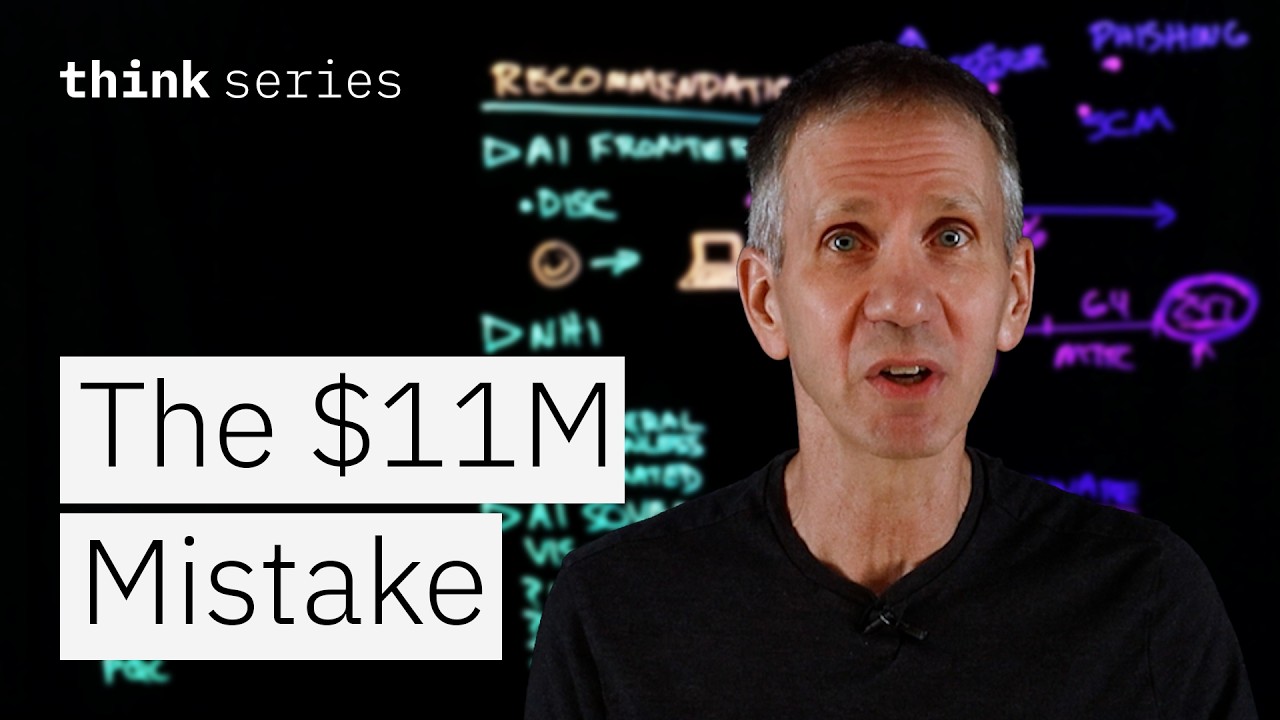
2026 Cost of a Data Breach Report: AI Is Changing Cybersecurity

The 2026 Cost of a Data Breach Report highlights that AI is accelerating both cyberattacks and defensive capabilities. Key findings point to persistent threats like phishing and supply chain issues, while also revealing systemic weaknesses such as poor access controls for AI (92% lack proper controls) and inadequate encryption (only 37% encrypt sensitive data upon breach). The average global cost of a breach reached $5 million per incident, with US costs averaging $11.5 million. Organizations must adopt AI agents, implement robust non-human identity management, and prepare for post-quantum cryptography to mitigate escalating risks.

Key takeaways

  1. AI's Impact on Attacks

    Powerful frontier models (e.g., Anthropic Mythos) are accelerating vulnerability discovery, compressing attack timelines. AI-driven attacks alone added an additional $1 million in cost per breach.

  2. Persistent Attack Vectors 4:05

    Phishing remains the number one cause of data breaches in both cost and frequency. Supply chain issues were identified as the second most frequent cause.

  3. Cost Escalation 10:30

    The worldwide average cost of a data breach reached $5 million per incident, representing a 12% increase from the previous year. The US average was significantly higher at $11.5 million.

Watch on YouTube Full article