Topic

Deterministic Logic

All digests tagged Deterministic Logic

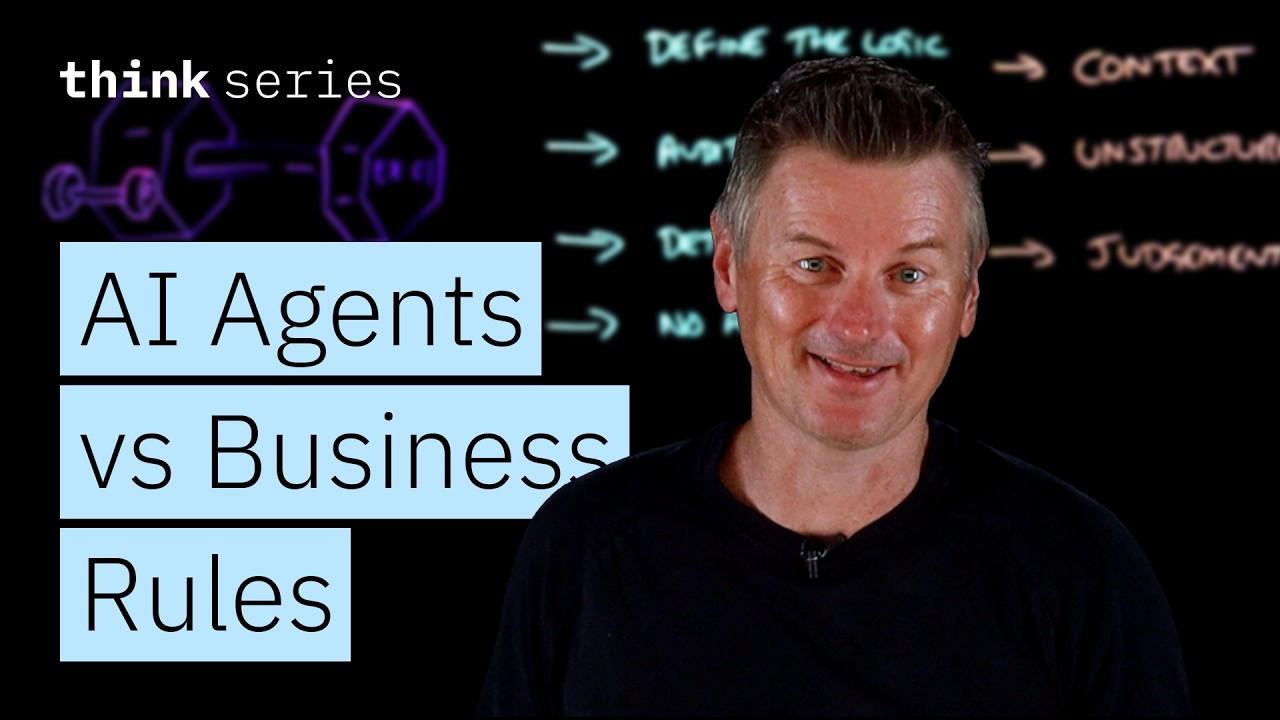
AI Agents vs Business Rules: Which Should Make Decisions? thumbnail

· 10:25

AI Agents vs Business Rules: Which Should Make Decisions?

The video compares Business Rules Engines (BREs) and AI Agents for automating decisions. BREs use explicit, deterministic logic (e.g., 'if X and Y then Z') and are ideal for structured data where the outcome is predictable. Conversely, AI agents utilize Large Language Models (LLMs) to process context and unstructured data, operating probabilistically by predicting next tokens. The optimal approach is often a hybrid model: using BREs first for quick, clear-cut decisions, and escalating complex or messy requests to an agent, which then passes its recommendation through deterministic guardrails and potentially human oversight.

Key takeaways

  1. Business Rules are Deterministic 2:05

    BREs operate on fixed conditions (e.g., 'order < 30 days' AND 'not final sale'), providing a consistent, predictable answer based on simple boolean logic. The output is a fixed function of the input.

  2. AI Agents are Probabilistic 2:50

    Agents use LLMs to work from goals and context, predicting responses from patterns learned during training. Because they operate over a probability distribution, running the same request twice can yield different outcomes.

  3. Hybrid Approach is Recommended 7:10

    The most effective decision-making systems combine both: BREs handle simple, structured requests first (due to speed and cost), while complex or ambiguous cases are escalated to an AI agent for judgment. The agent's output should then pass through deterministic guardrails.
Watch on YouTube Full article

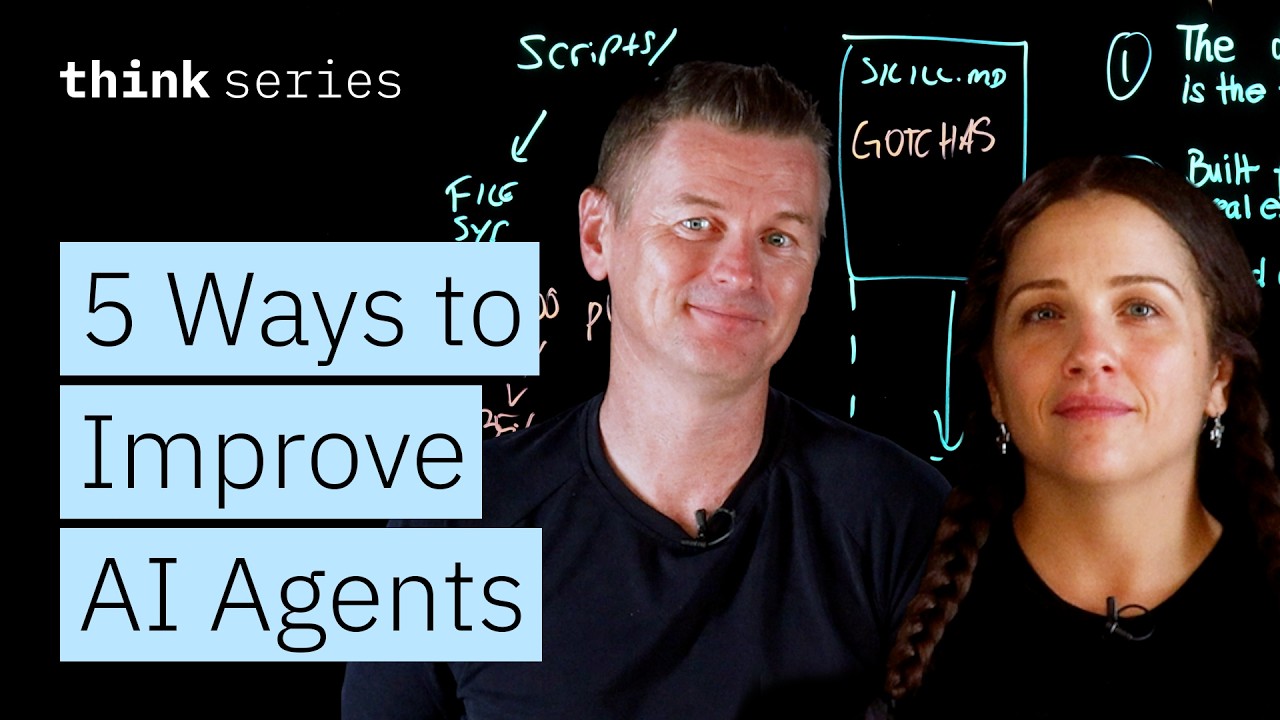
5 Best Practices for Building AI Agent Skills thumbnail

· 13:22

5 Best Practices for Building AI Agent Skills

This guide outlines five best practices for building reliable, secure, and effective AI agent skills. Skills are defined as procedural knowledge packaged in a `skill.md` file that teaches an AI agent specific job functions. Best practices emphasize improving skill triggering via detailed descriptions, grounding content in real domain expertise, managing context window size by using progressive disclosure, enforcing deterministic logic through scripts for critical steps, and rigorously vetting all skills for security vulnerabilities.

Key takeaways

  1. Best Practice 1: Optimize the Skill Description (Triggering) 2:19

    The agent uses the skill's name and description to decide if it should run. The description must be highly informative, stating what the skill does and when it should be used. It is recommended to 'oversell' the description slightly rather than underselling it, as models tend to under-trigger.

  2. Best Practice 2: Build from Real Expertise 5:58

    Skills must contain domain expertise that the model cannot generate on its own. This content should be synthesized from existing artifacts (e.g., old reports, run books, PR feedback). The highest value section in the skill body is often 'gotchas'—environment-specific facts or corrections made during manual execution.

  3. Best Practice 3: Spend Context Wisely 11:15

    The goal is to keep the skill body lean. Since the entire skill body contributes to the context window, only include information the agent wouldn't know otherwise. For large bodies of text, use a dedicated `references` sub-folder and implement 'progressive disclosure,' allowing the agent to open files only when needed.

  4. Best Practice 4: Use Deterministic Scripts for Fragile Steps

    For steps that must be exactly correct (fragile steps), do not rely on the model's probabilistic improvisation. Instead, write deterministic code and place it in a dedicated `scripts` directory within the skills folder. This ensures consistent, reliable execution.

  5. Best Practice 5: Vet Skills Before Running Them

    Treat agent skills like any external dependency package. Because skills can run code and access local file systems or APIs, they must be audited for security flaws (e.g., prompt injection or malware) before deployment.

Watch on YouTube Full article