Topic

Dynamic Workflow

All digests tagged Dynamic Workflow

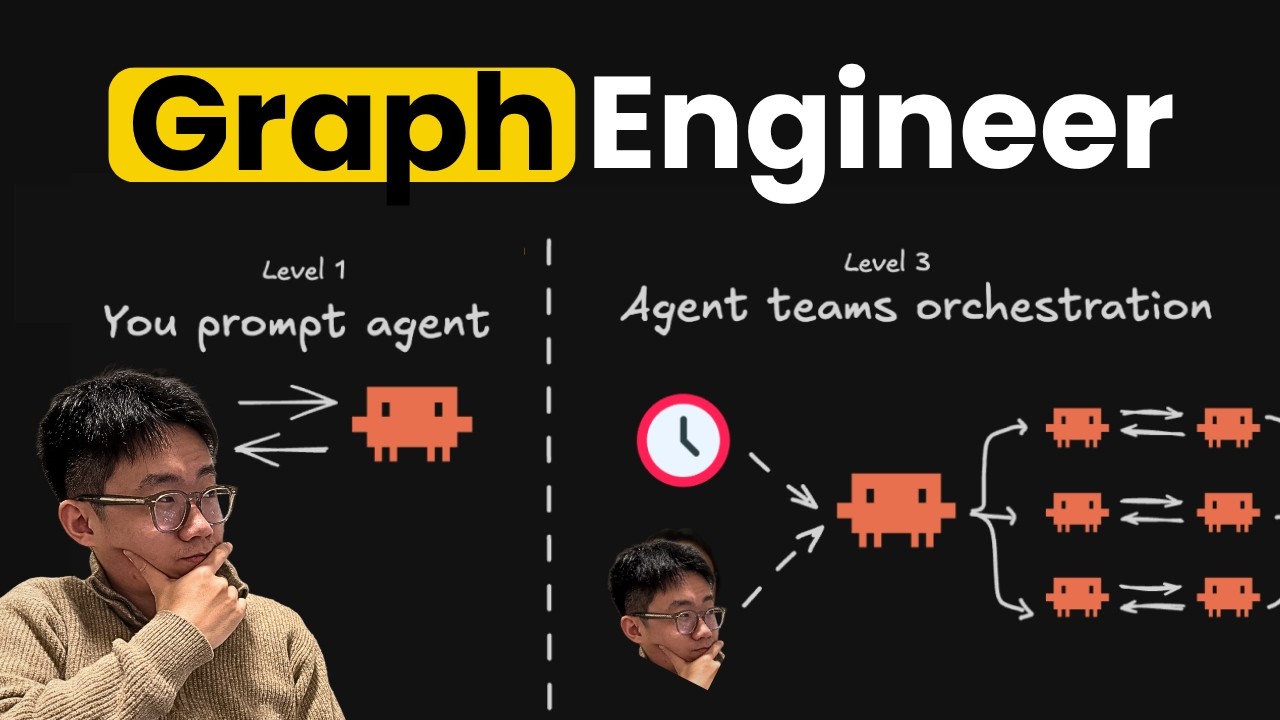
I don't prompt agents anymore... thumbnail

· 22:22

I don't prompt agents anymore...

The video clarifies that 'graph engineering' primarily refers to building **Control Graphs**, which are structured workflows or SOPs designed to make AI agents reliable and predictable. The speaker details three primary methods for implementing these graphs: using dedicated code frameworks (like `LangGraph` or Dynamic Workflow), leveraging the LLM itself as the orchestrator, or employing agent-to-agent communication patterns. Implementing robust graphs requires defining clear nodes/edges, managing state artifacts, and crucially, integrating deterministic tools like verifiers and scripts to ensure reliability.

Key takeaways

  1. Focus on Control Graphs

    The term 'graph' is often misused; the practical focus should be on **Control Graphs**—workflows that enforce SOPs for reliable agent execution. This is distinct from Knowledge Graphs or Graph of Loops (though the latter is a new, complex area).

  2. Implement Reliability Layers 20:57

    For any automated process, setting up a dedicated 'verifier' skill/agent node is critical to building confidence and ensuring the agent's output meets expected standards.

  3. Choose Your Graph Implementation Method

    Graphs can be enforced via: 1) **Code-as-Graph** (using tools like Dynamic Workflow or `LangGraph`), 2) **Large Model as Graph** (defining SOPs in text/JSON for the LLM to follow), or 3) **Agent Teams** (an orchestrator agent managing a team of specialized agents).

  4. Best Practices for Workflow Design

    To maximize reliability, always define clear inputs and outputs for each node. Use dedicated scripts/code for complex data fetching or deterministic steps rather than relying solely on the LLM.

Watch on YouTube Full article