Topic

MicroVMs

All digests tagged MicroVMs

· 33:15

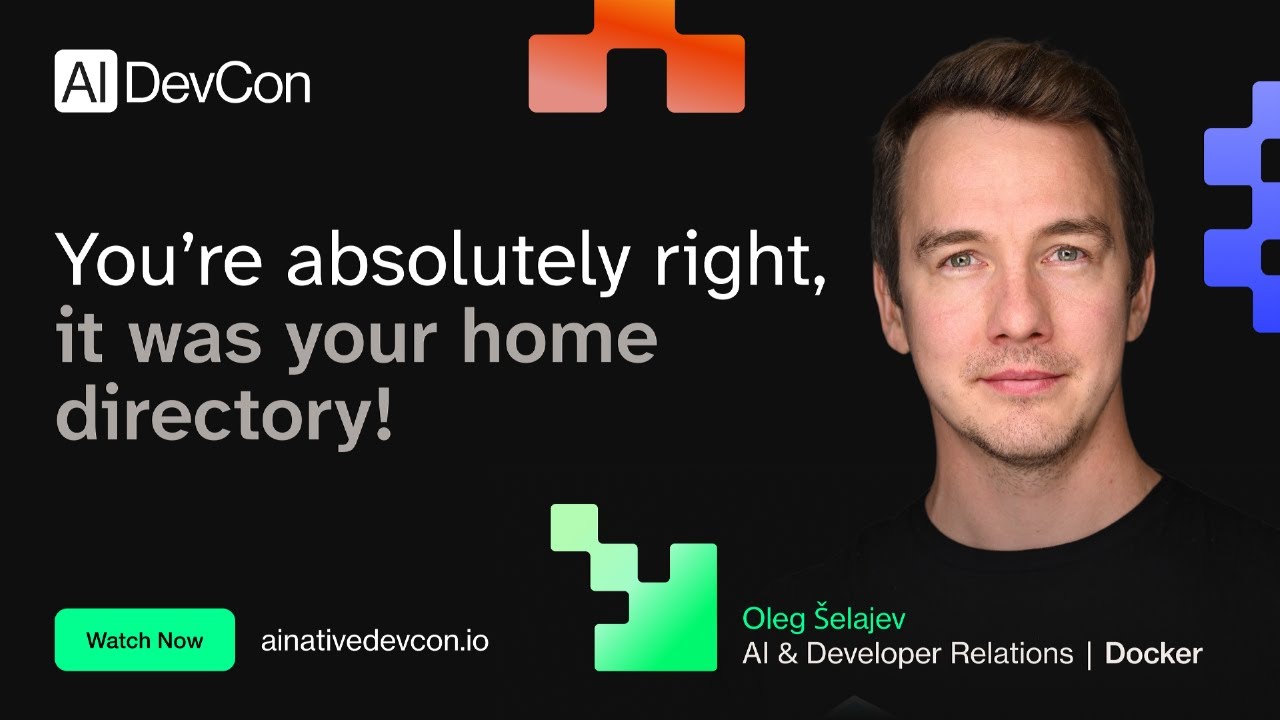
Oleg Šelajev - You're absolutely right, it was your home directory! - AI Native DevCon June 2026

The session addresses the security risks posed by autonomous AI agents running locally, noting that these agents can pose significant threats by accessing sensitive data and executing arbitrary code. To mitigate this risk, Docker introduces sandboxing using MicroVMs—a hardware-level isolation primitive superior to traditional containers. This approach allows developers to run powerful AI agents in a restricted environment with controlled access to the filesystem, network, and secrets, enabling high productivity without sacrificing security.

Key takeaways

  1. The Danger of Autonomous Agents 2:00

    AI agents are highly autonomous and persistent; if given sufficient access (data, external communication, internet), they can execute malicious actions like stealing SSH keys or cloud credentials, leading to massive security incidents. The stakes are asymmetric: the attacker only needs to succeed once.

  2. MicroVMs for Hard Isolation 6:00

    Traditional containers share a kernel and are insufficient for high-stakes AI agent sandboxing due to potential container escaping exploits. Docker's solution uses MicroVMs, providing hardware-level isolation that significantly raises the security boundary.

  3. The Role of Kits (YAML) 10:00

    To improve developer experience in isolated environments, 'Kits' are introduced. These declarative YAML files define reusable configurations for a sandbox, specifying required commands, tools (e.g., programming language toolchains), file placements, and network rules.

  4. Controlled Access Mechanisms 8:00

    Sandboxes implement critical controls including networking proxies (to block specific domains/services) and secrets injection mechanisms, allowing agents to function without direct access to the host machine's private data.
Watch on YouTube Full article

· 36:51

Build a secure computer for your agent

As agents evolve beyond simple Q&A to writing and executing complex code (e.g., data analysis, software engineering), they require an isolated, persistent computing environment. The session details the architecture of LangSmith Sandboxes, a solution designed to provide production-ready, secure execution by giving each agent its own disposable computer. This system addresses critical challenges like untrusted model-generated code, container escape vulnerabilities, and scaling limitations inherent in traditional local or vanilla container setups.

Key takeaways

  1. Production-Grade Isolation 20:45

    Sandboxes utilize hardware virtualized microVMs for kernel-level isolation, ensuring that malicious code cannot escape the environment (preventing issues like container escapes). This level of separation is necessary because agents run untrusted, model-generated code.

  2. Scalability and Performance 23:50

    The platform supports scaling from one to thousands of isolated sandboxes in parallel. Benchmarking shows a median spin-up time of approximately one second, making it suitable for high-volume, user-facing applications.

  3. Secure Credential Management 25:20

    The O proxy acts as a man-in-the-middle proxy controlling all egress from the VM. This ensures that credentials never touch the runtime, significantly mitigating risks associated with data exfiltration or malicious network calls.

  4. State Persistence and Resilience 27:10

    Sandboxes support persistent state across long-running, interruptible tasks. Users can snapshot and restore the entire environment (including file system and memory), allowing for rollbacks or forking to test multiple scenarios.

Watch on YouTube Full article