Topic

Build Process Optimization

All digests tagged Build Process Optimization

· 21:32

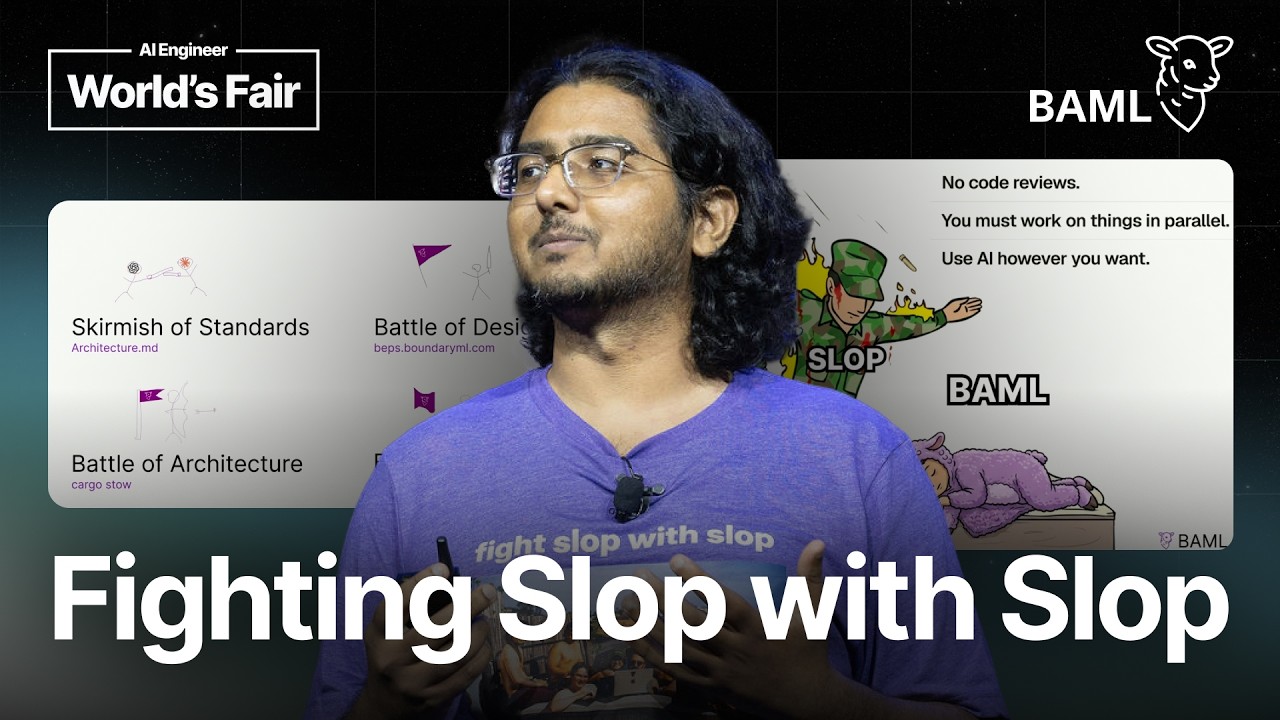
fighting slop with slop — Vaibhav Gupta, Boundary

The talk outlines a strategy for combating 'slop'—sloppy code and processes—by building sophisticated tooling layers on top of stable foundations. Vaibhav Gupta argues that while AI agents accelerate development, the core weakness lies in foundational systems (like JavaScript/TypeScript) lacking sufficient rigidity. The solution involves enforcing strict invariants through advanced type systems (like BAML), automated execution tracing, and specialized tools for design documentation and dependency visualization, allowing complex codebases to ship without requiring manual reading of every line.

Key takeaways

  1. Fighting Slop with Invariants 0:27

    Instead of relying on traditional methods like mandatory code reviews (which are difficult to enforce), the focus must be on building architectural invariants. This includes using dedicated tools for design documentation and CLI scripts that guarantee certain structural rules cannot be broken, even when integrating AI agents.

  2. The Foundational Layer Bet

    To achieve stability at scale, the focus must shift to foundational programming layers. The speaker advocates for systems that use strong type inference and guarantee error handling (e.g., making division by zero impossible) from first principles, rather than patching existing languages.

  3. Agent-Driven Verification 8:28

    Advanced tooling allows agents to constantly run over codebases, not just detecting incorrect language usage, but also identifying inefficiencies (e.g., when three tool calls were needed instead of one) and classifying issues as hallucinations or real bugs.
Watch on YouTube Full article

· 26:42

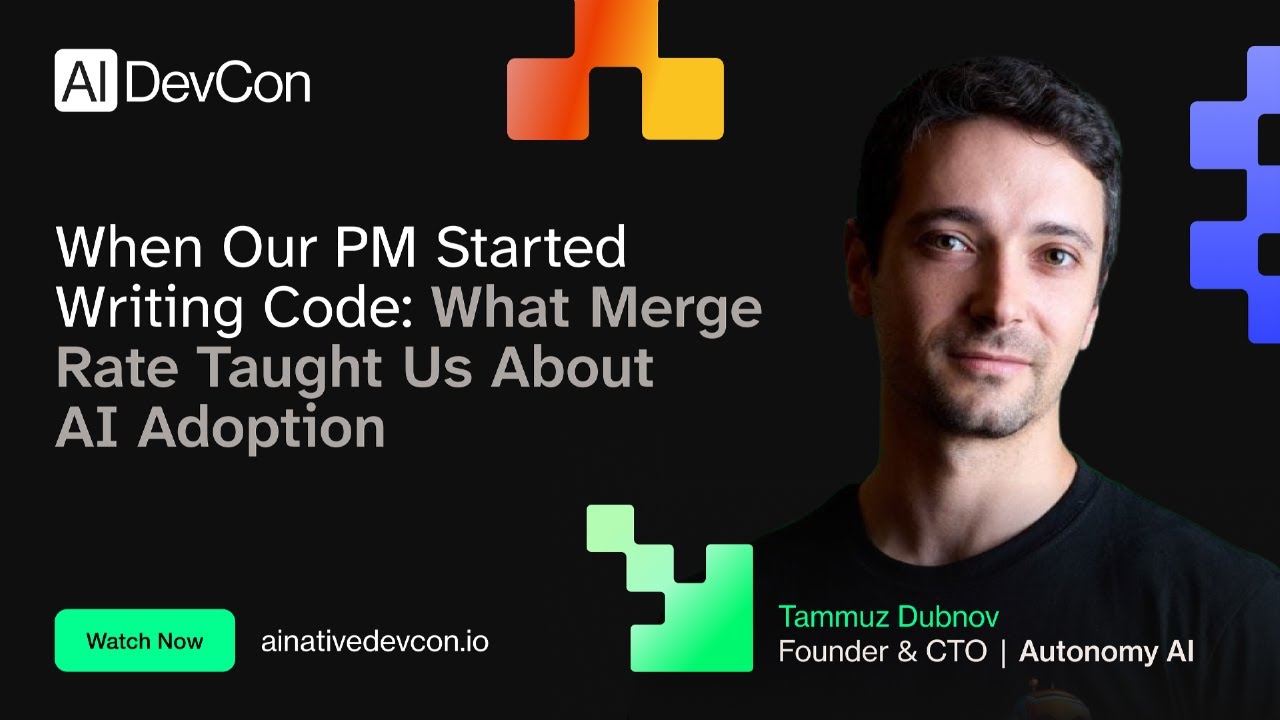
Tammuz Dubnov - When Our PM Started Writing Code: What Merge Rate Taught Us About AI Adoption - AI N

The shift toward 'AI native' organizations means that the primary bottleneck is no longer code generation speed but organizational alignment and handoff efficiency. The speaker argues that empowering non-technical decision-makers (PMs, Designers) with agentic tools allows them to execute work directly, collapsing gaps that previously required multiple sprints or lengthy coordination. Success in this transition is measured by the 'merge rate'—the percentage of Pull Requests (PRs) opened by non-technical users that successfully land in production.

Key takeaways

  1. Redefining AI Native 2:00

    AI native means that the person who cares about a feature has the authority and ability to execute the work, collapsing the traditional handover gap between PMs/Designers and Developers. The bottleneck shifts from coding speed to decision-making capacity.

  2. The Importance of Merge Rate 6:00

    Merge rate (the percentage of PRs that land in production) is the key metric for measuring if an organization is successfully adapting to AI-driven workflows. A high merge rate indicates trust and quality between non-technical contributions and the dev team.

  3. The Role of Guards and Architecture 11:20

    As organizations move fast, it is critical not to abandon engineering principles or 'guards' (like testing, architectural standards). The agent must be designed to learn the codebase deeply and maintain these constraints.

  4. Measuring Non-Technical Contributions 14:20

    To measure impact, track: 1) Count of PRs opened by non-technical individuals. 2) Merge rate (e.g., an average merge rate of 74% was cited). 3) Percentage of merged PRs that require zero developer intervention.

Watch on YouTube Full article