You’re Not Thinking Big Enough: Rebuilding Food Systems with AI Agents — Cody Menefee, Firecrawl
Summary
The speaker proposes using AI agents and Large Language Models (LLMs) to automate and optimize rotational grazing for grass-fed livestock. Currently, pasture management is limited by human labor and intuition. The proposed system requires integrating multiple data inputs—including GPS location, drought conditions, and grass height—to allow an LLM to suggest the optimal next paddock for the herd. Key technical blockers include building a comprehensive knowledge base (using tools like Firecrawl), developing a visualization layer for biomass and biodiversity, and achieving open, software-agnostic hardware (open collars).
Key takeaways
-
The Problem: Labor Bottleneck in Grazing
7:21
Currently, only 3% of cattle are raised on pasture, primarily because rotational grazing—which requires daily movement of animals, fences, and water—is extremely labor-intensive. Proper grazing requires constantly moving the herd to allow specific areas to rest and recover.
-
The Solution: AI-Driven Grazing
10:28
The goal is to replace the farmer's intuitive judgment by feeding an LLM multiple data inputs (GPS location, drought conditions, grass height) to suggest the next best paddock for the herd. This requires a multi-varied analysis, not a deterministic decision.
-
System Components and Blockers
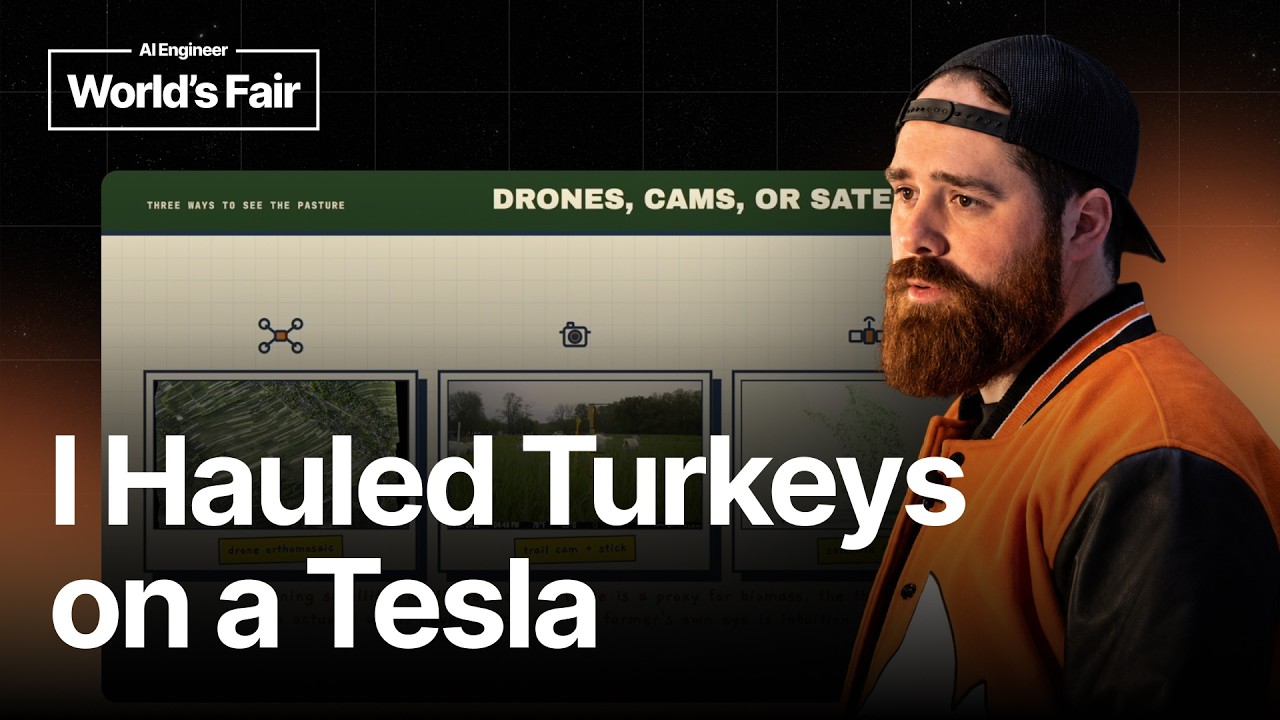
Three main blockers must be solved: 1) Building a knowledge base (using Firecrawl to scrape YouTube and research papers into Open Pasture); 2) Creating a visualization layer to measure biomass and biodiversity; and 3) Developing open, non-proprietary GPS collars/APIs for software innovation.
Technical details
-
AI Architecture
628s
The proposed system uses an LLM to perform a multi-varied analysis, suggesting the optimal next location for the herd based on inputs like GPS location, drought conditions, and grass height, allowing a human to confirm the decision.
-
Data Acquisition & Context Layer
The speaker is building a knowledge base using Firecrawl to scrape data from sources like farmer YouTube channels and research papers, compiling this information into the Open Pasture project.
-
Hardware/IoT Integration
The system requires GPS collars (e.g., Halter, No Fence) to provide animal location data. A critical requirement is an open collar standard with open APIs to allow software innovation outside of proprietary vendor ecosystems.
-
Data Inputs
628s
Required data inputs for the LLM include: animal GPS location, previous location, predicted future location, local drought conditions, and grass height/biomass.
Mentioned resources
- Firecrawl
- Open Pasture
- Halter
- Planet
Channel & topics
Watch on YouTube · Back to latest
This independent, AI-assisted summary is provided for commentary and informational purposes. It may contain errors or omit important context. Please watch the original video for the creator's complete presentation. Video, thumbnail, and related copyrights belong to their respective owners.