Why Does AI Need Access to the Web?
Summary
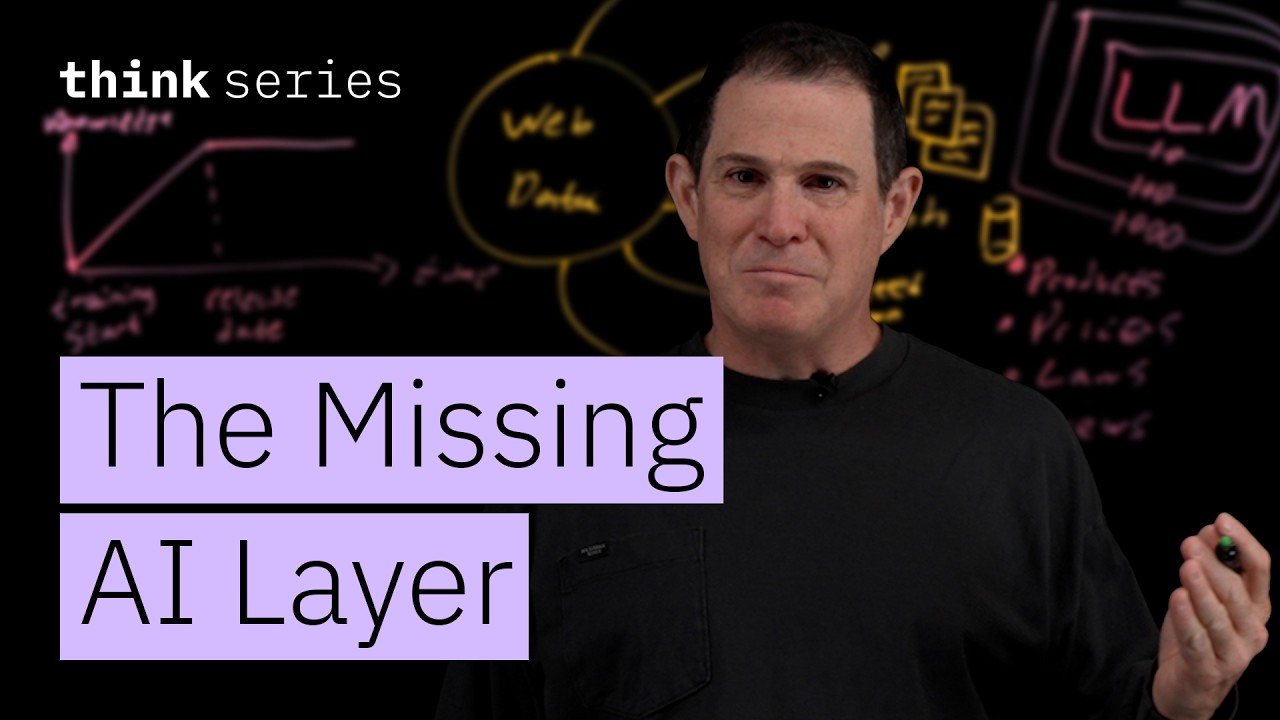
Large Language Models (LLMs) are inherently limited because they operate as pre-trained snapshots, meaning their knowledge freezes after training and cannot account for real-time changes in the world. To build reliable AI agents that function in dynamic environments, the system must incorporate a robust Knowledge Layer fed by a specialized Web Data Infrastructure Layer. This infrastructure is necessary to provide fresh, structured, and trustworthy web data at inference time, thereby eliminating 'Garbage In, Garbage Out' (GIGO) errors.
Key takeaways
-
LLMs are Static Snapshots
0:25
Pre-trained LLMs only contain knowledge up to their training cutoff date. When released, they cannot account for new products, laws, or daily news events, leading to potential hallucinations [0:25].
-
AI Agents Require Real-Time Context
1:30
Unlike humans who can recognize and ignore incorrect information, AI agents act on all received data. If they receive outdated or fabricated information, the consequences can be costly and happen at scale [1:30].
-
The Solution: Knowledge Layer & Web Data Infrastructure
2:20
The most impactful leap in AI functionality is connecting models to a live context via a robust knowledge layer. This layer must receive fresh, reliable data from the web through a specialized web data infrastructure [3:25].
Technical details
-
Knowledge Layer Functionality
210s
The Knowledge Layer provides real-time context by feeding the LLM web data during inference. This process requires the Web Data Infrastructure to scrape, process, and deliver information quickly [3:50].
-
Five Elements of Trustworthy Web Data
380s
To maintain reliability, web data must be: 1) Grounded (every claim needs a clickable citation); 2) Deep (full documents/datasets, not just snippets); 3) Fresh (real-time updates are critical, e.g., minutes for pricing); 4) Formatted (converted from raw HTML into token-efficient formats like JSON or Markdown); and 5) Timely (delivered with low latency, sometimes milliseconds [4:20].
-
Web Data Infrastructure Role
280s
This layer is crucial because direct web access is unreliable due to anti-bot measures, CAPTCHAs, and the messy nature of raw HTML. The infrastructure handles bot detection and structures data optimally for LLMs [4:50].
Mentioned resources
Channel & topics
Watch on YouTube · Back to latest
This independent, AI-assisted summary is provided for commentary and informational purposes. It may contain errors or omit important context. Please watch the original video for the creator's complete presentation. Video, thumbnail, and related copyrights belong to their respective owners.