Ransomware Detection: Why Storage Finds the Attack First
Summary
Ransomware is fundamentally a data integrity problem. This video outlines how modern storage systems can serve as the earliest line of defense by actively monitoring data for anomalies, rather than waiting for visible damage. Detection relies on analyzing technical signals like entropy, compression collapse, and mass I/O operations. For effective defense, organizations must implement immutable backups and integrate storage alerts into SIEM/SOAR platforms for automated, coordinated response.
Key takeaways
-
Ransomware is a Data Problem
Protection requires a multi-layered approach: keeping software patched, training users against spoofed attachments, and running endpoint tools (anti-malware, EDR). Ultimately, data protection must start where the data resides: the storage device.
-
The Four Rs of Reliable Backups
Effective backup strategy requires the data to be Recent, Redundant, Recoverable, and, critically, Immutable (meaning it cannot be modified once written to the backup media).
-
Early Detection via Storage Monitoring
6:54
Instead of waiting for a ransom pop-up, storage systems can alert users to unexpected changes by establishing a baseline of normal data behavior and detecting anomalies.
Technical details
-
Entropy and Compression Analysis
455s
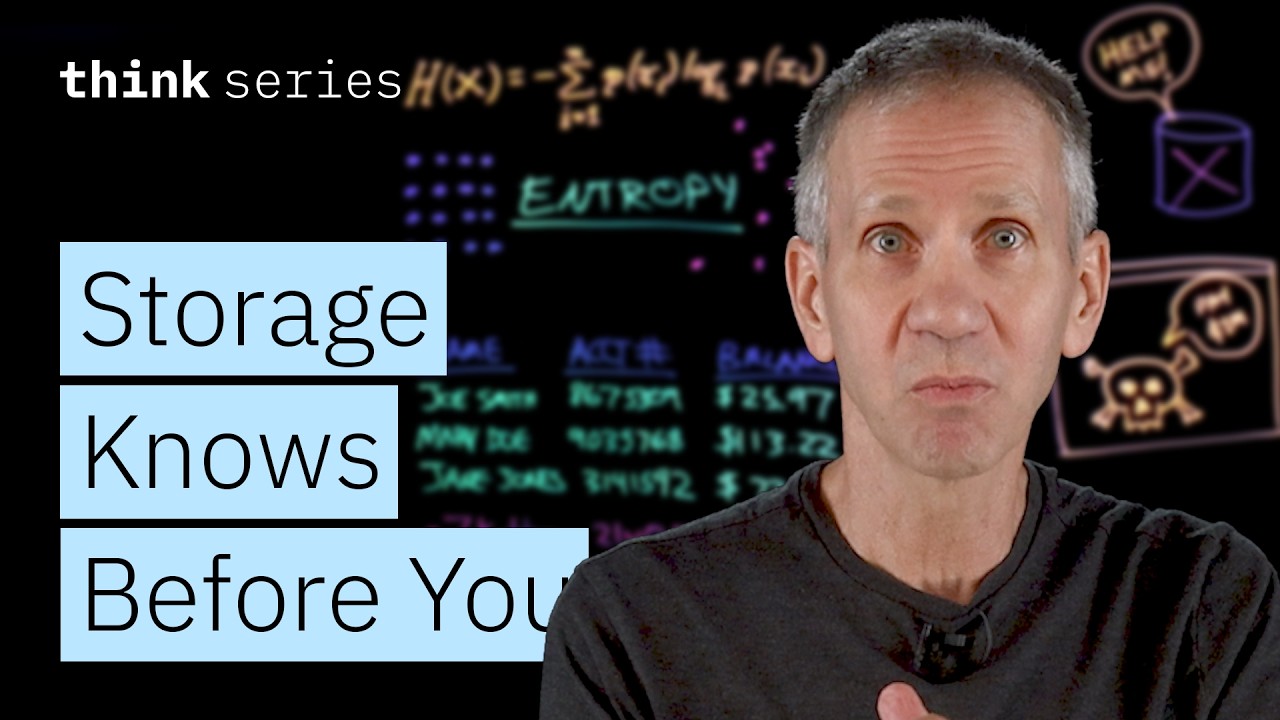
Encrypted data exhibits high entropy (randomness), which can be measured using formulas like Shannon entropy. Furthermore, ransomware often causes a collapse in data compressibility and deduplication functions, signaling potential corruption or encryption.
-
Anomaly Detection Signals
510s
Storage systems can monitor for specific attack patterns, including sudden increases in mass overwrite bursts, mass file renames, and partial encryption attempts. Combining these signals against a baseline allows machine learning models to reduce false positives.
-
Coordinated Incident Response
To automate mitigation, storage alerts should be integrated into a Security Information and Event Management (SIEM) system for contextualization, and further into a Security Orchestration, Automation, and Response (SOAR) tool to automate actions like system isolation and identifying clean recovery points.
Mentioned resources
Channel & topics
Watch on YouTube · Back to latest
This independent, AI-assisted summary is provided for commentary and informational purposes. It may contain errors or omit important context. Please watch the original video for the creator's complete presentation. Video, thumbnail, and related copyrights belong to their respective owners.