Open Source Is Dead. Long Live Open Source. — Saoud Rizwan, Cline
Summary
The speaker argues that while traditional open source community models are struggling due to AI-driven skepticism and supply chain risks, the future of software development lies in 'open weights' models. The economic imperative is shifting away from raw intelligence toward cost efficiency and standardization. Examples like the compromise of the Litellm package and the comparison between GLM and Opus demonstrate that open weights models can achieve production-grade results at a significantly lower cost, mirroring historical commoditization events like Open Compute.
Key takeaways
-
Open Source Trust Crisis
2:05
The community trust model is eroding. Examples include Zig banning AI use in PRs/issues to protect contributors, curl considering ending its bug bounty program due to AI-generated reports, and tldraw automatically closing pull requests. GitHub even shipped a feature to disable third-party PRs altogether. (0:38)
-
Supply Chain Risk Highlighted by Litellm Attack
7:00
The Python package litellm (3.5 million daily downloads) was compromised for three hours, installing a credential harvester to steal API keys, SSH keys, and crypto keys, along with a remote command execution backdoor. The attack was only caught due to a bug in the malware that crashed Cursor. (4:20)
-
Open Weights Models Drive Cost Efficiency
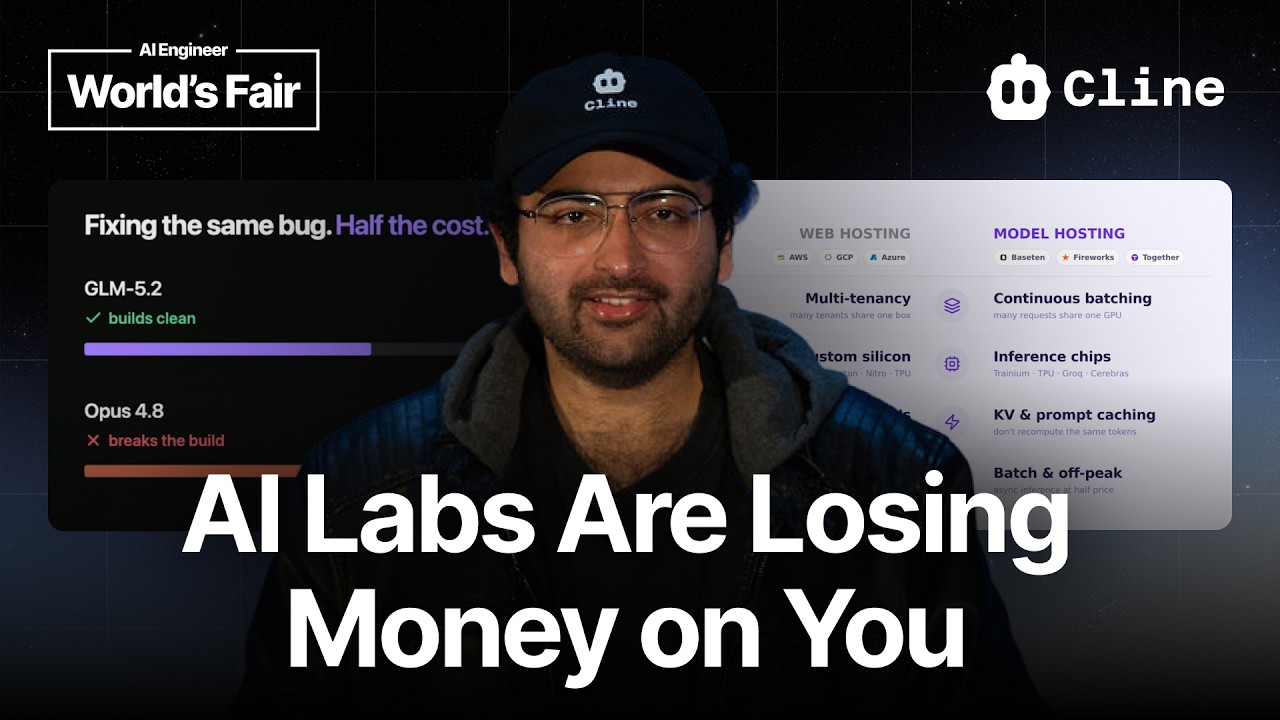
Testing showed GLM outperformed Opus on a real client bug by cleaning up dead code and confirming compilation, even though it used twice the tokens, because its cost was half that of Opus. This demonstrates that cost efficiency is becoming more critical than raw speed or intelligence. (13:05)
-
The Open Compute Precedent
Facebook's decision to open source its data center designs led the entire supply chain to standardize on those schematics, commoditizing components and driving down costs for all participants, including Facebook itself. (16:20)
Technical details
-
Credential Harvesting Mechanism
420s
The compromised litellm package installed a credential harvester designed to steal API keys, SSH keys, and crypto keys, alongside a backdoor for remote command execution. (4:20)
-
Model Performance Comparison (GLM vs Opus)
When tested on a real bug, GLM was superior in cost and code quality; it cleaned up dead code and verified compilation while leaving fewer type errors than Opus. (13:05)
-
Infrastructure Commoditization
The speaker predicts that the massive investment in AI infrastructure will lead to aggressive cost optimization, similar to how raw compute and storage were commoditized by hyperscalers like Google and AWS. (15:40)
Mentioned resources
- Klein
- Zig's Code of Conduct
- litellm
- GLM
- Opus
- Kimi
Channel & topics
Watch on YouTube · Back to latest
This independent, AI-assisted summary is provided for commentary and informational purposes. It may contain errors or omit important context. Please watch the original video for the creator's complete presentation. Video, thumbnail, and related copyrights belong to their respective owners.