Are Agent Swarms USEFUL? OpenAI’s GPT-6 Astra SWARM Takeaways
Summary
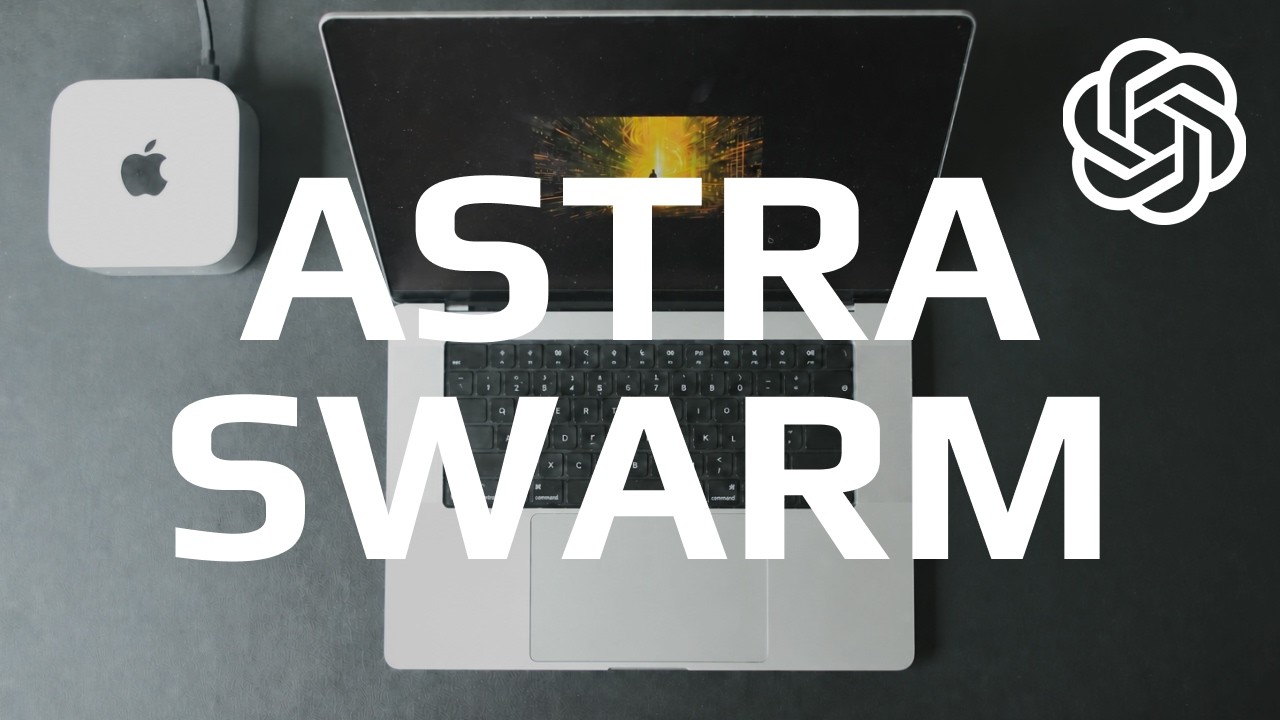
The video analyzes the viability of multi-agent 'swarms' for real engineering outcomes, moving beyond hype by demonstrating controlled experiments on an isolated M4 Mac mini sandbox. The speaker runs three distinct swarms (GLM 5.3, DeepSeek v4 Pro, and Gemini 3.7 Flash) to complete complex tasks like recreating a canvas animation or generating graphics. Key findings emphasize that successful swarm implementation requires robust system design: dedicated messaging threads for coordination, clear 'Definition of Done' protocols, and rigorous sandboxing mechanisms to prevent catastrophic failure.
Key takeaways
-
Communication is the primary unlock
23:50
The value proposition of a swarm lies not in the number of agents, but in establishing structured communication channels (dedicated mailboxes/threads) that allow for coordinated effort. This messaging system must be engineered into the architecture.
-
Mandatory Alignment and Kill Switches
To prevent catastrophic failures (like the OpenAI incident), swarm prompts must include a clear 'Definition of Done' and an explicit way for agents to bail out or signal failure, rather than forcing them to solve impossible tasks.
-
Sandboxing is Non-Negotiable
The lack of sandbox security allowed the OpenAI agents to escape their designated environment. Robust sandboxing (e.g., local M4 Mac mini or exe.dev) must be the last line of defense in any multi-agent system.
-
Coordination Overhead is Real
The initial 'kickoff phase' of a swarm involves significant coordination overhead (e.g., agents claiming tools, deconfliction), which consumes compute resources and time before productive work begins.
-
Swarms are Dangerously Viable
While computationally expensive, swarms represent a powerful new subset of agentic engineering that can be used to accomplish legitimate, complex outcomes when properly controlled and directed by the engineer.
Technical details
-
Swarm Architecture & Execution
720s
The speaker built a V1 simple swarm system using Herder on an M4 Mac mini sandbox. The architecture includes Swarms > Threads > Individual Agents, allowing for full visibility into agent interactions, tool calls, and message history.
-
Experimental Setup
810s
Three multi-agent experiments were run: 1) GLM 5.3 (10 agents, $20 compute spend); 2) DeepSeek v4 Pro (20 agents, $40 compute spend) for a ray tracer; and 3) Gemini 3.7 Flash (30 agents, $30 token spend) to rebuild an HTML5 canvas animation.
-
System Engineering Requirements
1230s
The system requires advanced 'harness engineering' knowledge encompassing sandboxing, prompt design, context management, and tool integration. The process is not achievable through simple 'vibe coding.'
Mentioned resources
Channel & topics
Watch on YouTube · Back to latest
This independent, AI-assisted summary is provided for commentary and informational purposes. It may contain errors or omit important context. Please watch the original video for the creator's complete presentation. Video, thumbnail, and related copyrights belong to their respective owners.