AI Agents Aren't the Revolution. They're the Catalyst!
Summary
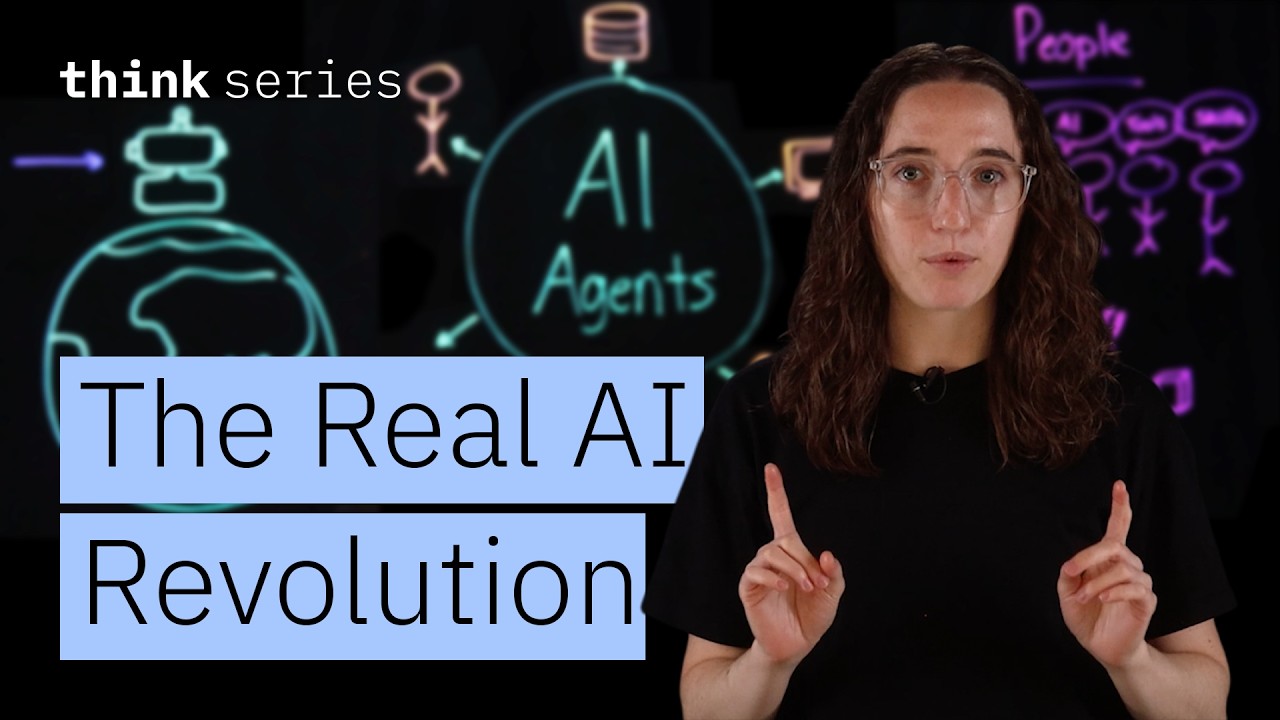
While AI agents are widely discussed, the speaker argues that they are not the revolution, but rather a powerful catalyst accelerating fundamental, long-lasting improvements across the technology ecosystem. The most significant shifts are occurring in data modernization, system interoperability, API standardization, and the democratization of technical expertise, which are foundational improvements that will persist regardless of the future of agents.
Key takeaways
-
AI Agents as Catalysts
The lasting impact of AI is not the agents themselves, but the systemic improvements they force, including data unification, system design modernization, and enhanced digital literacy.
-
Data Layer Modernization
AI adoption forces organizations to overhaul data foundations, making data more accessible, searchable, understandable, and reusable by breaking down silos.
-
System Interoperability and APIs
5:09
Agents expose system weaknesses, driving the need for APIs that are predictable, well-documented, and machine-readable. This accelerates the shift toward seamless, cross-system connectivity (e.g., MCP, A2A).
-
Outcome-Based Thinking
The rise of powerful agentic coding IDEs lowers the barrier to entry, shifting the focus from 'how' (implementation) to 'why' (defining goals and solving high-level problems).
Technical details
-
Data Architecture
0s
AI systems require data to be accessible and trustworthy. AI adoption is driving the need for data layers that are more searchable and reusable, moving beyond siloed files and databases.
-
API Design and Governance
226s
For agents to interact effectively, APIs must be predictable, well-documented, and understandable by both humans and machines. Agents also heighten focus on security, permission boundaries, and auditability.
-
System Connectivity
487s
The shift is toward cross-system connectivity by default, utilizing common patterns like MCP and A2A to enable end-to-end workflows spanning multiple applications.
-
Development Workflow
Agentic coding IDEs allow users to describe desired outcomes, offloading implementation details to AI, thereby democratizing technology and lowering the barrier to entry.
Mentioned resources
- IBM Technology
Channel & topics
Watch on YouTube · Back to latest
This independent, AI-assisted summary is provided for commentary and informational purposes. It may contain errors or omit important context. Please watch the original video for the creator's complete presentation. Video, thumbnail, and related copyrights belong to their respective owners.