How AI Is Changing Code Reviews & Software Development
Summary
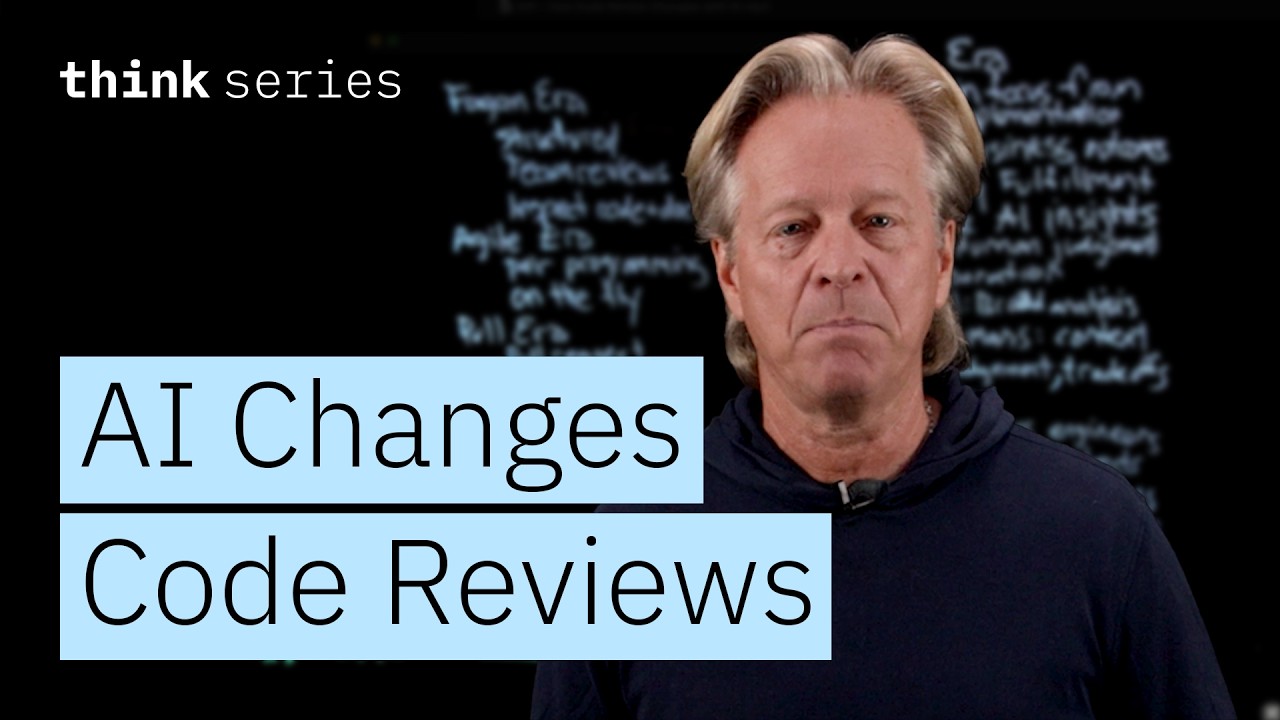
The evolution of software code reviews has progressed from highly structured methods like Fagan inspections and pair programming, through the version control mechanisms of pull requests (consensus reviews), to automated system checks via CI/CD pipelines. The current shift, driven by AI and Large Language Models (LLMs), is moving the focus away from reviewing implementation details (syntax) toward validating business outcomes, requirements fulfillment, and overall intent.
Key takeaways
-
Historical Shift in Code Review Focus
2:20
Reviews progressed from line-by-line inspections (Fagan Inspection) to on-the-fly peer review (paired programming), then to versioning/diff analysis via pull requests (consensus reviews).
-
The Automation Era (CI/CD)
6:15
This phase introduced system checks for code quality, compliance (internal/external regulations), and vulnerabilities, establishing 'system reviews' where automated systems validate adherence.
-
AI-Driven Outcome Validation
7:40
The AI era shifts the focus from implementation details to business outcomes and requirement fulfillment. AI assists by performing broad analysis (writing code, docs, architectures), allowing human engineers to set context, make judgments, and validate against desired business results.
Technical details
-
Code Review Evolution
140s
The progression of reviews includes: Fagan Inspection (structured team review); Paired Programming (on-the-fly peer review); Pull Requests/Consensus Reviews (managing versions and diffs in a repository); CI/CD Automation Era (system checks for quality, compliance, security); AI Era (using LLMs to validate intent and outcomes).
-
Review Types
460s
The review focus has evolved from 'syntax reviews' (how code is written) to 'consensus reviews' (approving versions/diffs) and finally to 'outcome reviews' (did we build what was intended?).
-
AI Integration
520s
LLMs are integrated into the development process, assisting with code generation, documentation, architecture building, and analyzing merging differences. This requires human judgment to compare AI output against business outcomes.
Mentioned resources
- IBM Technology
- AI Code Review Guide
Channel & topics
Watch on YouTube · Back to latest
This independent, AI-assisted summary is provided for commentary and informational purposes. It may contain errors or omit important context. Please watch the original video for the creator's complete presentation. Video, thumbnail, and related copyrights belong to their respective owners.